Xin Wong Ru, Kwok Li-Lian, Yong Wong Fuh
Department of Radiation Oncology, National Cancer Centre Singapore, Singapore.
J Breast Cancer. 2017 Jun;20(2):183-191. doi: 10.4048/jbc.2017.20.2.183. Epub 2017 Jun 26.
This study was undertaken to examine the impact of screening and race on breast cancer outcomes in Singapore.
An institutional database was reviewed, and invasive ductal carcinoma (IDC) and ductal carcinoma (DCIS) data were analyzed separately. Overall survival (OS), disease-free survival (DFS), and cancer-specific survival (CSS) were assessed.
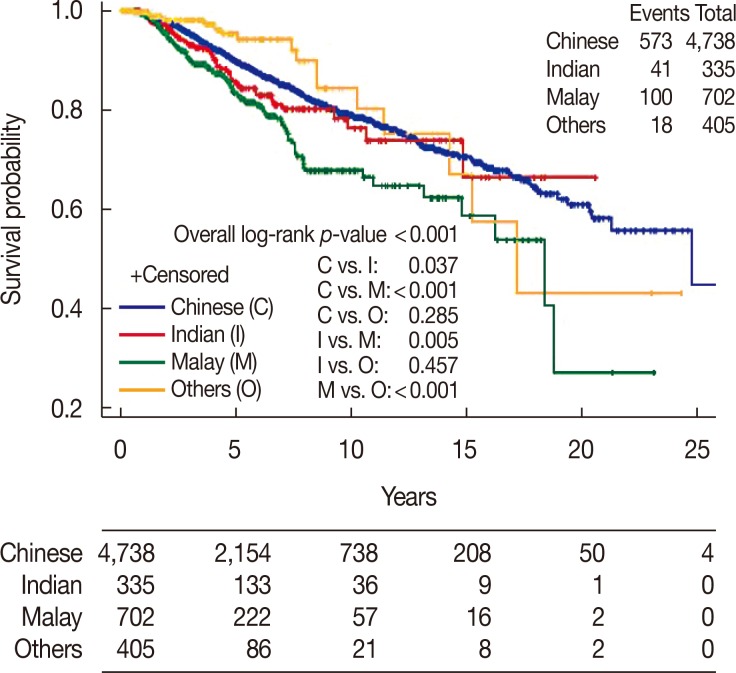
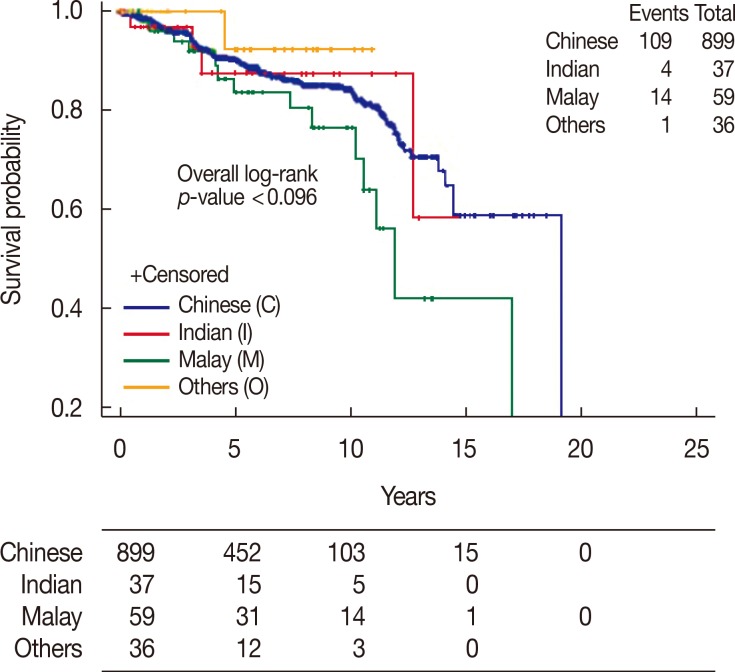
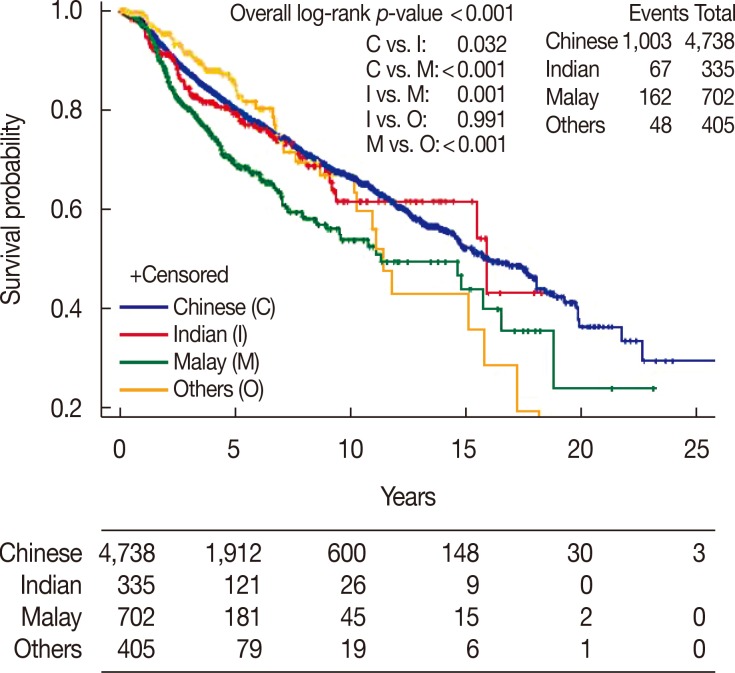
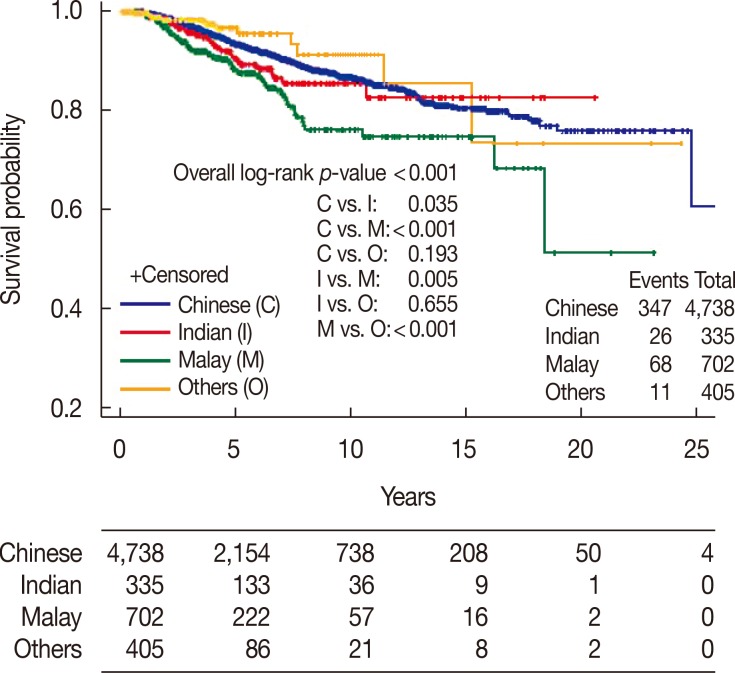
The study included 6,180 IDC and 1,031 DCIS patients. The median follow-up time was 4.1 years. Among IDC patients, Malay women were the youngest when first diagnosed, and were more likely to present with advanced stage disease. Malay women also had the highest proportion of T3 and T4 tumors at 14.2%, compared with Chinese women at 8.7% and Indian women at 9.6% (<0.001). Malay women had a higher incidence of node-positive disease at 58.3% compared with Chinese women at 46.4% and Indian women at 54.9% (<0.001). Malay subjects also had higher-grade tumors; 61.8% had grade 3 tumors compared with 45.8% of Chinese women and 52% of Indian women (<0.001). Furthermore, tumors in Malay subjects were less endocrine-sensitive and more human epidermal growth factor receptor 2 enriched. Malay women had the lowest 5- and 10-year OS, DFS, and CSS rates (<0.001). After separating clinically and screen-detected tumors, multivariate analysis showed that race was still significant for outcomes. For screen-detected tumors, the OS hazard ratio (HR) for Malay women compared to Chinese women was 5.78 (95% confidence interval [CI], 2.64-12.64), the DFS HR was 2.18 (95% CI, 1.19-3.99), and the CSS HR was 5.93 (95% CI, 2.15-16.39). For DCIS, there were no statistically significant differences in the tumor size, grade, histology subtypes, or hormone sensitivity.
Malay race is a poor prognostic factor in both clinically and screen-detected IDC. Special attention should be given to the detection and follow-up of breast cancer in this group.
本研究旨在探讨筛查和种族对新加坡乳腺癌治疗结果的影响。
回顾一个机构数据库,并分别分析浸润性导管癌(IDC)和导管原位癌(DCIS)的数据。评估总生存期(OS)、无病生存期(DFS)和癌症特异性生存期(CSS)。
该研究纳入了6180例IDC患者和1031例DCIS患者。中位随访时间为4.1年。在IDC患者中,马来女性首次确诊时最年轻,且更有可能出现晚期疾病。马来女性T3和T4肿瘤的比例最高,为14.2%,而中国女性为8.7%,印度女性为9.6%(<0.001)。马来女性淋巴结阳性疾病的发生率较高,为58.3%,而中国女性为46.4%,印度女性为54.9%(<0.001)。马来受试者也有更高分级的肿瘤;61.8%的患者有3级肿瘤,而中国女性为45.8%,印度女性为52%(<0.001)。此外,马来受试者的肿瘤对内分泌的敏感性较低,且富含人表皮生长因子受体2。马来女性的5年和10年OS、DFS和CSS率最低(<0.001)。在将临床发现和筛查发现的肿瘤分开后,多变量分析表明种族对治疗结果仍具有显著意义。对于筛查发现的肿瘤,与中国女性相比,马来女性的OS风险比(HR)为5.78(95%置信区间[CI],2.64 - 12.64),DFS HR为2.18(95%CI, 1.19 - 3.99),CSS HR为5.93(95%CI, 2.15 - 16.39)。对于DCIS,肿瘤大小、分级、组织学亚型或激素敏感性方面无统计学显著差异。
在临床发现和筛查发现的IDC中,马来种族都是一个不良预后因素。应特别关注该群体乳腺癌的检测和随访。