McFarlane Samy I, Mielke Michelle M, Uglialoro Anthony, Keating Sheila M, Holman Susan, Minkoff Howard, Crystal Howard A, Gustafson Deborah R
Department of Medicine, Division of Endocrinology, State University of New York - Downstate Medical Center, Brooklyn, NY, USA.
Department of Health Sciences Research, Division of Epidemiology, and Department of Neurology Mayo Clinic, Rochester, MN, USA.
J Neurol Neurophysiol. 2017 Feb;8(1). doi: 10.4172/2155-9562.1000413. Epub 2017 Feb 8.
To explore the gut-brain axis by examining gut hormone levels and cognitive test scores in women with (HIV+) and without (HIV-) HIV infection.
DESIGN/METHODS: Participants included 356 women (248 HIV+, 108 at risk HIV-) in the Brooklyn Women's Interagency HIV Study (WIHS) with measured levels of ghrelin, amylin and gastric inhibitory peptide (GIP), also known as glucose-dependent insulinotropic polypeptide. Cross-sectional analyses using linear regression models estimated the relationship between gut hormones and Trails A, Trails B, Stroop interference time, Stroop word recall, Stroop color naming and reading, and Symbol Digit Modalities Test (SDMT) with consideration for age, HIV infection status, Wide Range Achievement Test score (WRAT), CD4 count, insulin resistance, drug use, and race/ethnicity.
Among women at mid-life with chronic (at least 10 years) HIV infection or among those at risk, ghrelin, amylin and GIP were differentially related to cognitive test performance by cognitive domain. Better performance on cognitive tests was generally associated with higher ghrelin, amylin and GIP levels. However, the strength of association varied, as did significance level by HIV status.
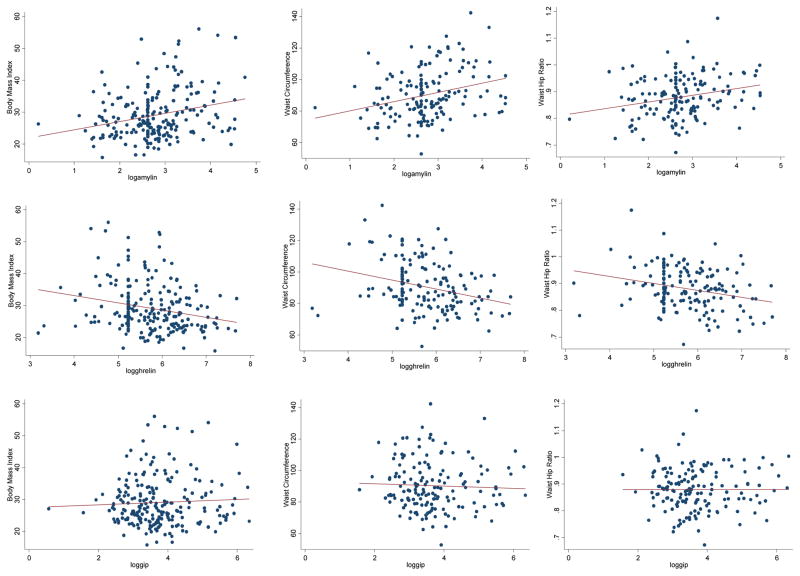
Previous analyses in WIHS participants have suggested that higher BMI, waist, and WHR are associated with better cognitive function among women at mid-life with HIV infection. This study indicates that higher gut hormone levels are also associated with better cognition. Gut hormones may provide additional mechanistic insights regarding the association between obesity and Type 2 diabetes and cognition in middle-aged HIV+ and at risk HIV- women. In addition, measuring these hormones longitudinally would add to the understanding of mechanisms of actions of these hormones and their use as potential clinical tools for early identification and intervention on cognitive decline in this vulnerable population.
通过检测感染人类免疫缺陷病毒(HIV+)和未感染HIV(HIV-)的女性的肠道激素水平和认知测试分数,探索肠-脑轴。
设计/方法:参与者包括布鲁克林妇女跨部门HIV研究(WIHS)中的356名女性(248名HIV+,108名HIV感染风险者),她们的胃饥饿素、胰淀素和胃抑制肽(GIP,也称为葡萄糖依赖性促胰岛素多肽)水平已被测量。使用线性回归模型进行横断面分析,在考虑年龄、HIV感染状态、广泛成就测验分数(WRAT)、CD4细胞计数、胰岛素抵抗、药物使用以及种族/民族的情况下,估计肠道激素与连线测验A、连线测验B、斯特鲁普干扰时间、斯特鲁普单词回忆、斯特鲁普颜色命名与阅读以及符号数字模式测验(SDMT)之间的关系。
在患有慢性(至少10年)HIV感染的中年女性或有感染风险的女性中,胃饥饿素、胰淀素和GIP与认知测试表现的关系因认知领域而异。认知测试表现较好通常与较高的胃饥饿素、胰淀素和GIP水平相关。然而,关联强度有所不同,HIV状态的显著性水平也不同。
先前对WIHS参与者的分析表明,较高的体重指数、腰围和腰臀比与感染HIV的中年女性更好的认知功能相关。本研究表明,较高的肠道激素水平也与更好的认知相关。肠道激素可能为肥胖、2型糖尿病与中年HIV+及HIV感染风险女性认知之间的关联提供更多的机制见解。此外,纵向测量这些激素将有助于理解这些激素的作用机制,以及它们作为潜在临床工具用于早期识别和干预这一脆弱人群认知衰退的用途。