Tsoi H, Lam K C, Dong Y, Zhang X, Lee C K, Zhang J, Ng S C, Ng S S M, Zheng S, Chen Y, Fang J, Yu J
Institute of Digestive Disease and Department of Medicine and Therapeutics, State Key Laboratory of Digestive Disease, Li Ka Shing Institute of Health Sciences, CUHK-Shenzhen Research Institute, The Chinese University of Hong Kong, Prince of Wales Hospital, Shatin, NT, Hong Kong SAR, China.
Department of Surgery, The Chinese University of Hong Kong, Shatin, NT, Hong Kong SAR, China.
Oncogene. 2017 Nov 2;36(44):6109-6118. doi: 10.1038/onc.2017.86. Epub 2017 Jul 10.
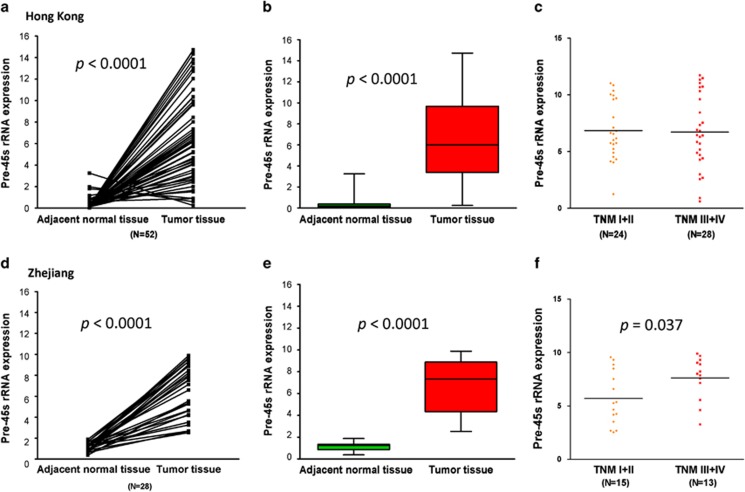
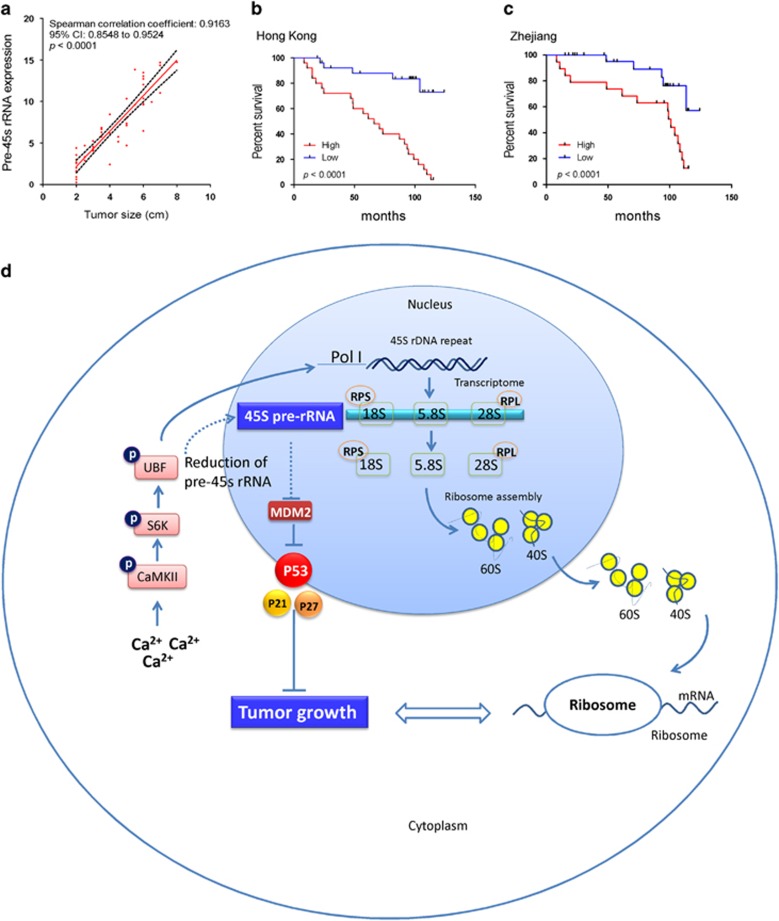
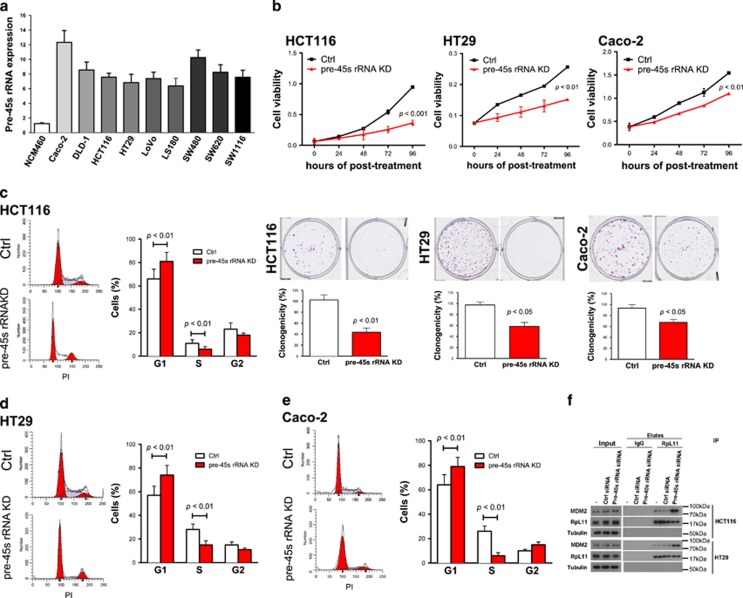
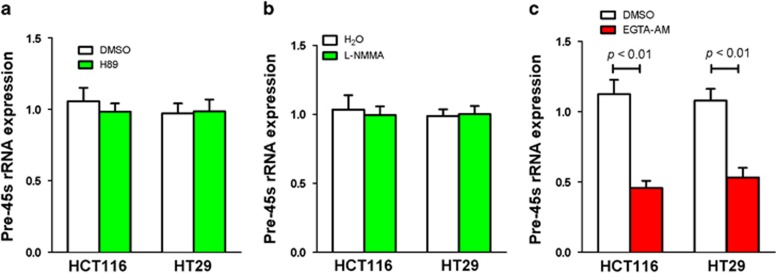
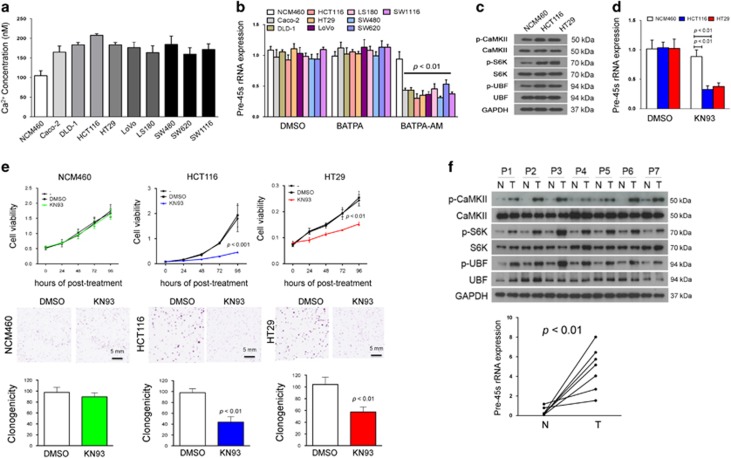
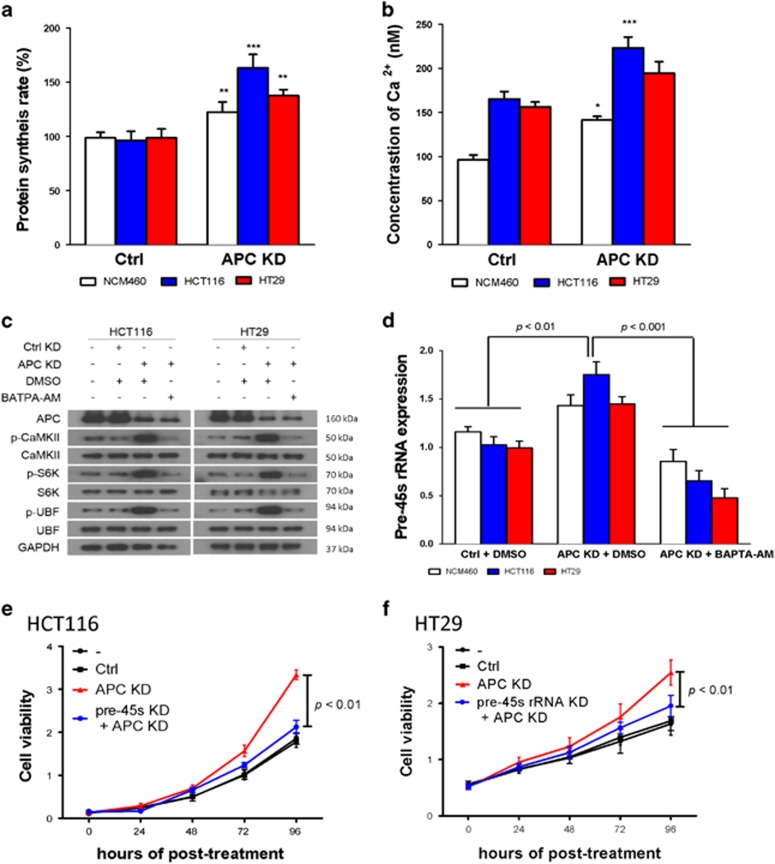
One characteristic of cancer cells is the abnormally high rate of cell metabolism to sustain their enhanced proliferation. However, the behind mechanism of this phenomenon is still elusive. Here we find that enhanced precursor 45s ribosomal RNA (pre-45s rRNA) is one of the core mechanisms in promoting the pathogenesis of colorectal cancer (CRC). Pre-45s rRNA expression is significantly higher in primary CRC tumor tissues samples and cancer cell lines compared with the non-tumorous colon tissues, and is associated with tumor sizes. Knockdown of pre-45s rRNA inhibits G1/S cell-cycle transition by stabilizing p53 through inducing murine double minute 2 (MDM2) and ribosomal protein L11 (RpL11) interaction. In addition, we revealed that high rate of cancer cell metabolism triggers the passive release of calcium ion from endoplasmic reticulum to the cytoplasm. The elevated calcium ion in the cytoplasm activates the signaling cascade of calcium/calmodulin-dependent protein kinase II, ribosomal S6 kinase (S6K) and ribosomal S6K (CaMKII-S6K-UBF). The activated UBF promotes the transcription of rDNA, which therefore increases pre-45s rRNA. Disruption of CaMKII-S6K-UBF axis by either RNAi or pharmaceutical approaches leads to reduction of pre-45s rRNA expression, which subsequently suppresses cell proliferation in colon cancer cells by causing cell-cycle arrest. Knockdown of APC activates CaMKII-S6K-UBF cascade and thus enhances pre-45s rRNA expression. Moreover, the high expression level of pre-45s rRNA is associated with poor survival of CRC patients in two independent cohorts. Our study identifies a novel mechanism in CRC pathogenesis mediated by pre-45s rRNA and a prognostic factor of pre-45s rRNA in CRC patients.
癌细胞的一个特征是细胞代谢速率异常高,以维持其增强的增殖。然而,这一现象背后的机制仍然难以捉摸。在这里,我们发现增强的前体45s核糖体RNA(pre-45s rRNA)是促进结直肠癌(CRC)发病机制的核心机制之一。与非肿瘤性结肠组织相比,原发性CRC肿瘤组织样本和癌细胞系中pre-45s rRNA表达显著更高,且与肿瘤大小相关。敲低pre-45s rRNA通过诱导小鼠双微体2(MDM2)和核糖体蛋白L11(RpL11)相互作用来稳定p53,从而抑制G1/S细胞周期转变。此外,我们发现癌细胞的高代谢率触发了钙离子从内质网向细胞质的被动释放。细胞质中升高的钙离子激活了钙/钙调蛋白依赖性蛋白激酶II、核糖体S6激酶(S6K)和核糖体S6K(CaMKII-S6K-UBF)的信号级联反应。激活的UBF促进rDNA的转录,从而增加pre-45s rRNA。通过RNA干扰或药物方法破坏CaMKII-S6K-UBF轴会导致pre-45s rRNA表达降低,进而通过引起细胞周期停滞来抑制结肠癌细胞的增殖。敲低APC会激活CaMKII-S6K-UBF级联反应,从而增强pre-45s rRNA表达。此外,在两个独立队列中,pre-45s rRNA的高表达水平与CRC患者的不良生存相关。我们的研究确定了由pre-45s rRNA介导的CRC发病机制中的一种新机制以及CRC患者中pre-45s rRNA的一个预后因素。