Kim Hyungjoo, Ahn Tae Sung, Kim Chang-Jin, Bae Sang Byung, Kim Han Jo, Lee Chang-Seuk, Kim Tae Hyun, Im Jungkyun, Lee Sang Hun, Son Myoung Won, Lee Moon Soo, Baek Moo Jun, Jeong Dongjun
Soonchunhyang Medical Science Research Institute, College of Medicine, Soonchunhyang University, Dongnam-gu, Cheonan, Chungcheongnam-do 330-721, Republic of Korea.
Department of Surgery, College of Medicine, Soonchunhyang University, Dongnam-gu, Cheonan, Chungcheongnam-do 330-721, Republic of Korea.
Oncol Lett. 2017 Jul;14(1):553-560. doi: 10.3892/ol.2017.6203. Epub 2017 May 18.
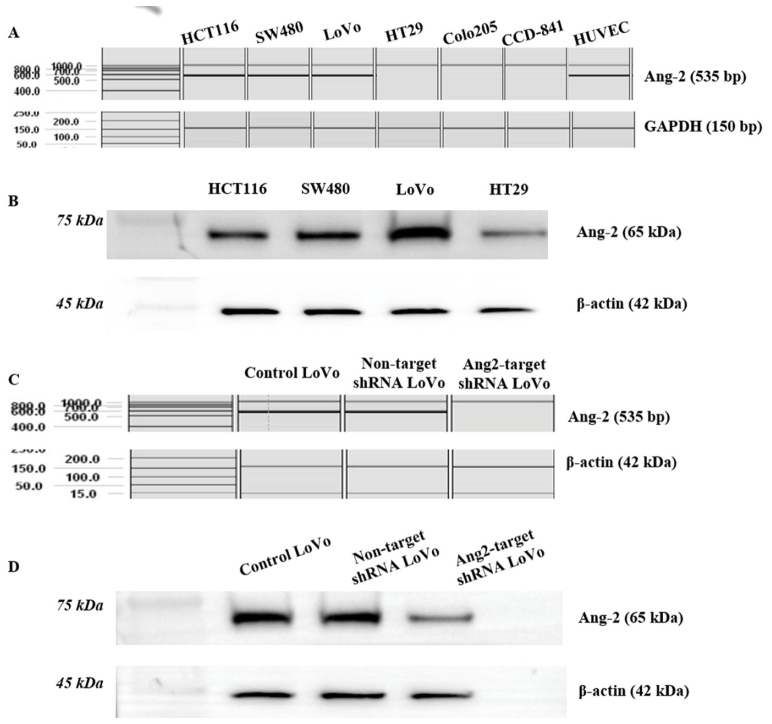
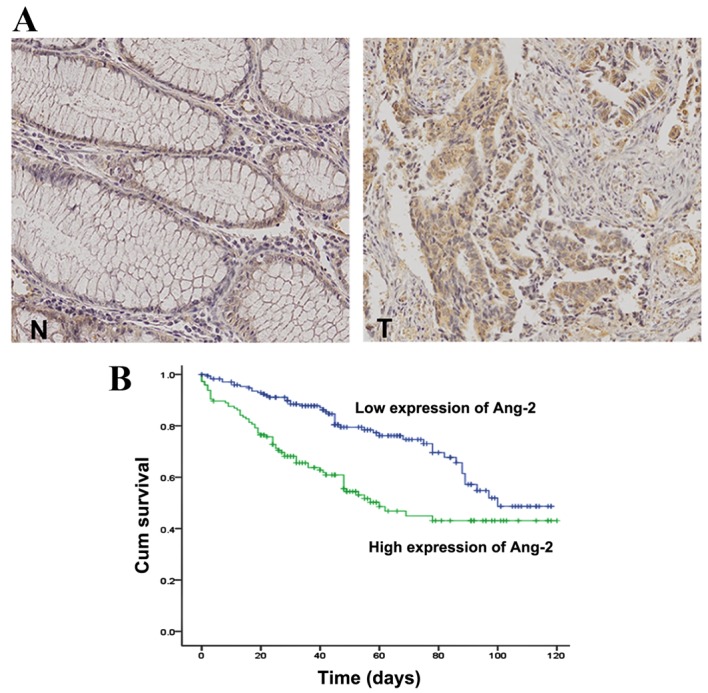
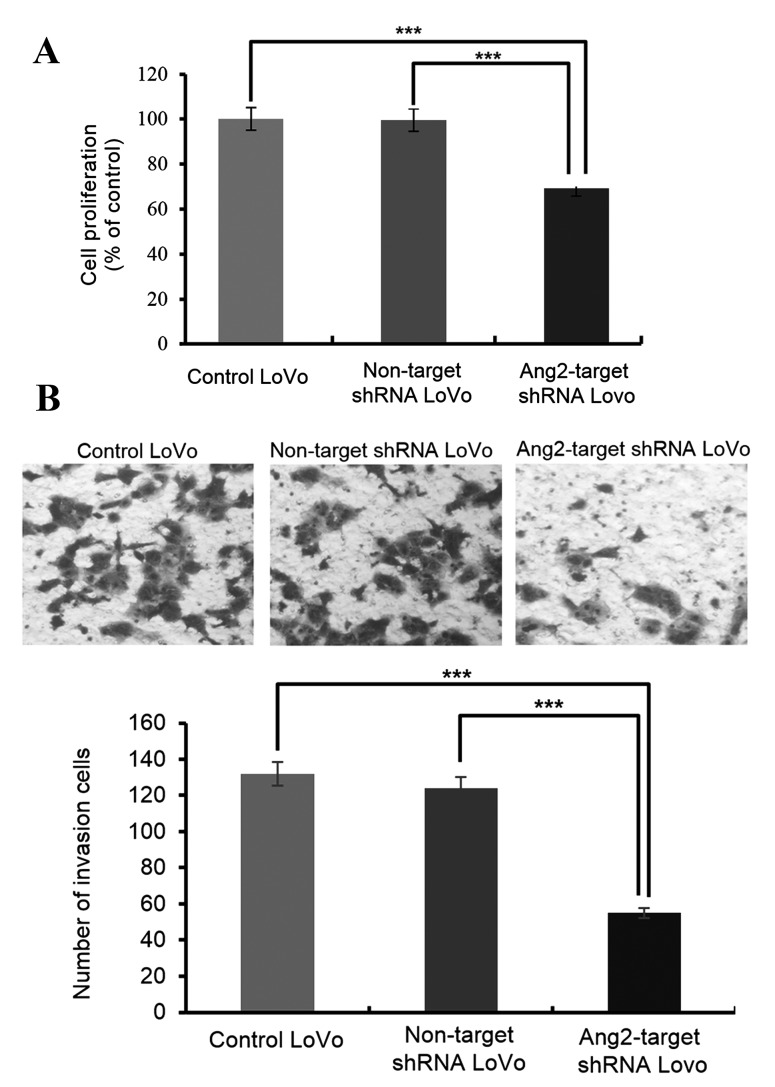
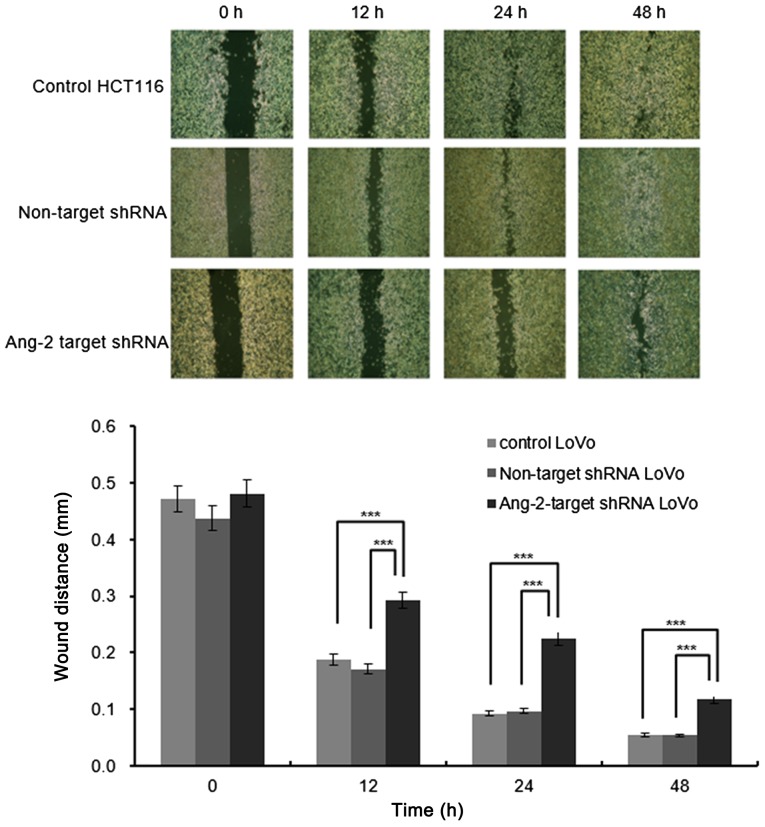
Angiopoietin-2 (Ang-2) has been investigated in cancer primarily in terms of its angiogenic function, and its role as an oncogene has yet to be elucidated. The current study hypothesized that Ang-2 may be an oncogene and have a function in tumor progression. An investigation of the function of Ang-2 in the LoVo colorectal cancer (CRC) cell line , which expresses a high level of Ang-2, was performed by knocking down endogenous expression with a targeted short hairpin RNA. The aggressive phenotypic effects of Ang-2 on experimental and control group cells were assessed using cell proliferation, migration and invasion assays. The association between Ang-2 expression levels and clinicopathological factors was evaluated in 415 CRC tissues using immunohistochemistry. Suppressing Ang-2 expression decreased cellular proliferation, invasion and migration in an study. Ang-2 overexpression was observed in 46% of patients with CRC and was significantly associated with pT (P=0.048), pN (P<0.001), venous invasion (P=0.023), lymphatic invasion (P<0.001) and tumor-node-metastasis stage (P=0.022). Furthermore, Ang-2 overexpression was an independent prognostic factor in pN stages 1 and 2. These results reveal that Ang-2 may be an oncogene in colorectal carcinogenesis and its expression may exert aggressive phenotypic effects during tumor progression. In addition, Ang-2 expression may serve as a prognostic marker and a potential drug target.
血管生成素-2(Ang-2)在癌症研究中主要集中于其血管生成功能,而其作为癌基因的作用尚未阐明。当前研究假设Ang-2可能是一种癌基因并在肿瘤进展中发挥作用。通过用靶向短发夹RNA敲低内源性表达,对高表达Ang-2的LoVo结直肠癌(CRC)细胞系中Ang-2的功能进行了研究。使用细胞增殖、迁移和侵袭试验评估Ang-2对实验组和对照组细胞的侵袭性表型效应。采用免疫组织化学方法评估415例CRC组织中Ang-2表达水平与临床病理因素之间的关联。在一项研究中,抑制Ang-2表达可降低细胞增殖、侵袭和迁移。46%的CRC患者中观察到Ang-2过表达,且与pT(P=0.048)、pN(P<0.001)、静脉侵犯(P=0.023)、淋巴管侵犯(P<0.001)和肿瘤-淋巴结-转移分期(P=0.022)显著相关。此外,Ang-2过表达是pN 1期和2期的独立预后因素。这些结果表明,Ang-2可能是结直肠癌发生中的一种癌基因,其表达可能在肿瘤进展过程中发挥侵袭性表型效应。此外,Ang-2表达可能作为一种预后标志物和潜在的药物靶点。