Deyssenroth Maya A, Peng Shouneng, Hao Ke, Lambertini Luca, Marsit Carmen J, Chen Jia
Department of Environmental Medicine and Public Health, Icahn School of Medicine at Mount Sinai, New York, NY, 10029, USA.
Department of Genetics and Genomic Sciences, Icahn School of Medicine at Mount Sinai, New York, NY, 10029, USA.
BMC Genomics. 2017 Jul 10;18(1):520. doi: 10.1186/s12864-017-3878-0.
The placenta is the principal organ regulating intrauterine growth and development, performing critical functions on behalf of the developing fetus. The delineation of functional networks and pathways driving placental processes has the potential to provide key insight into intrauterine perturbations that result in adverse birth as well as later life health outcomes.
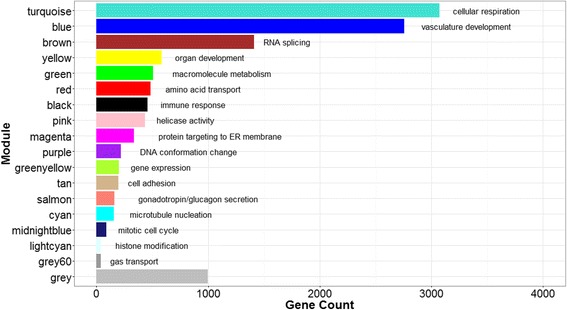
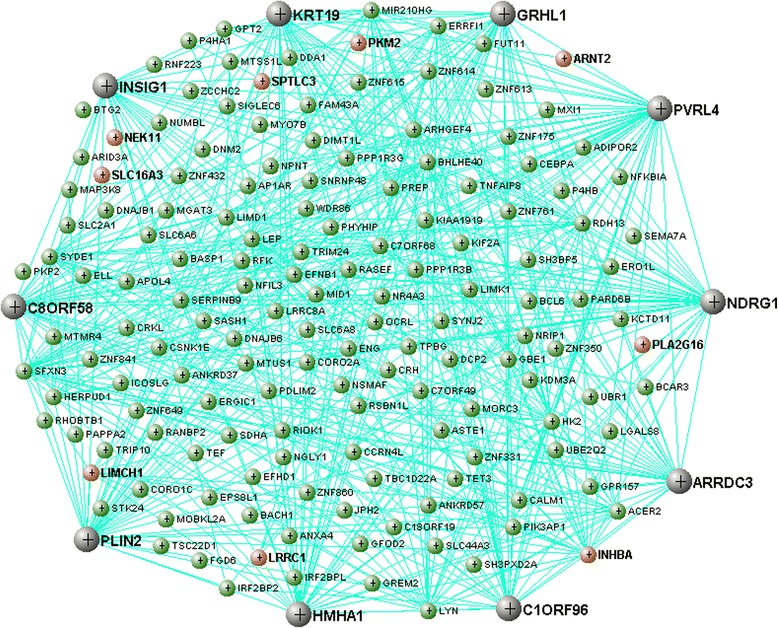
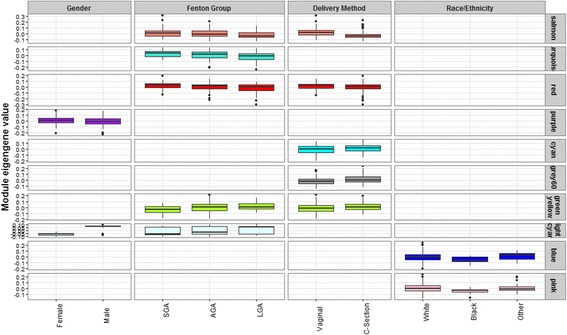
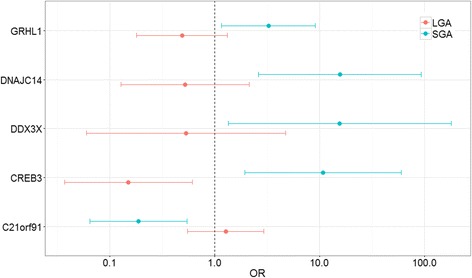
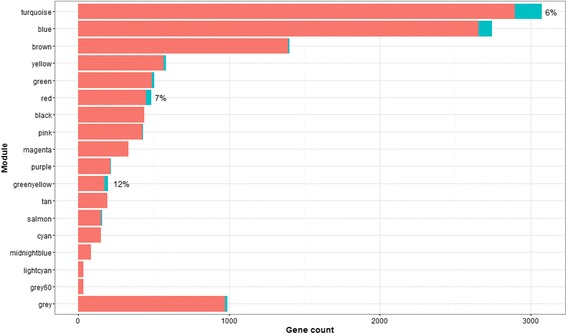
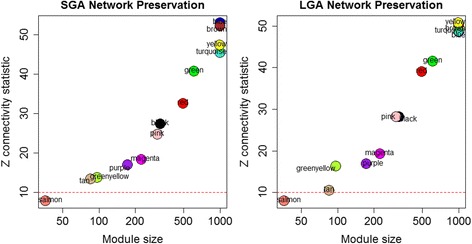
We generated the transcriptome-wide profile of 200 term human placenta using the Illumina HiSeq 2500 platform and characterized the functional placental gene network using weighted gene coexpression network analysis (WGCNA). We identified 17 placental coexpression network modules that were dominated by functional processes including growth, organ development, gas exchange and immune response. Five network modules, enriched for processes including cellular respiration, amino acid transport, hormone signaling, histone modifications and gene expression, were associated with birth weight; hub genes of all five modules (CREB3, DDX3X, DNAJC14, GRHL1 and C21orf91) were significantly associated with fetal growth restriction, and one hub gene (CREB3) was additionally associated with fetal overgrowth.
In this largest RNA-Seq based transcriptome-wide profiling study of human term placenta conducted to date, we delineated a placental gene network with functional relevance to fetal growth using a network-based approach with superior scale reduction capacity. Our study findings not only implicate potential molecular mechanisms underlying fetal growth but also provide a reference placenta gene network to inform future studies investigating placental dysfunction as a route to future disease endpoints.
胎盘是调节子宫内生长和发育的主要器官,代表发育中的胎儿执行关键功能。描绘驱动胎盘过程的功能网络和途径有可能为导致不良出生以及后期健康结果的子宫内扰动提供关键见解。
我们使用Illumina HiSeq 2500平台生成了200个足月人类胎盘的全转录组图谱,并使用加权基因共表达网络分析(WGCNA)对功能性胎盘基因网络进行了表征。我们确定了17个胎盘共表达网络模块,这些模块主要由包括生长、器官发育、气体交换和免疫反应在内的功能过程主导。五个网络模块富含包括细胞呼吸、氨基酸转运、激素信号传导、组蛋白修饰和基因表达等过程,与出生体重相关;所有五个模块的中心基因(CREB3、DDX3X、DNAJC14、GRHL1和C21orf91)与胎儿生长受限显著相关,其中一个中心基因(CREB3)还与胎儿过度生长相关。
在迄今为止进行的基于RNA测序的最大规模的足月人类胎盘全转录组分析研究中,我们使用具有卓越规模缩减能力的基于网络的方法描绘了一个与胎儿生长功能相关的胎盘基因网络。我们的研究结果不仅暗示了胎儿生长潜在的分子机制,还提供了一个参考胎盘基因网络,为未来研究胎盘功能障碍作为未来疾病终点的途径提供信息。