Epidemiology Branch, Division of Intramural Population Health Research, Eunice Kennedy Shriver National Institute of Child Health and Human Development, National Institutes of Health, 6710B Rockledge Dr, room 3204, Bethesda, MD, 20892, USA.
Division of Intramural Population Health Research, Eunice Kennedy Shriver National Institute of Child Health and Human Development, National Institutes of Health, Bethesda, MD, USA.
Clin Epigenetics. 2020 Jun 3;12(1):78. doi: 10.1186/s13148-020-00873-x.
Birthweight marks an important milestone of health across the lifespan, including cardiometabolic disease risk in later life. The placenta, a transient organ at the maternal-fetal interface, regulates fetal growth. Identifying genetic loci where DNA methylation in placenta is associated with birthweight can unravel genomic pathways that are dysregulated in aberrant fetal growth and cardiometabolic diseases in later life.
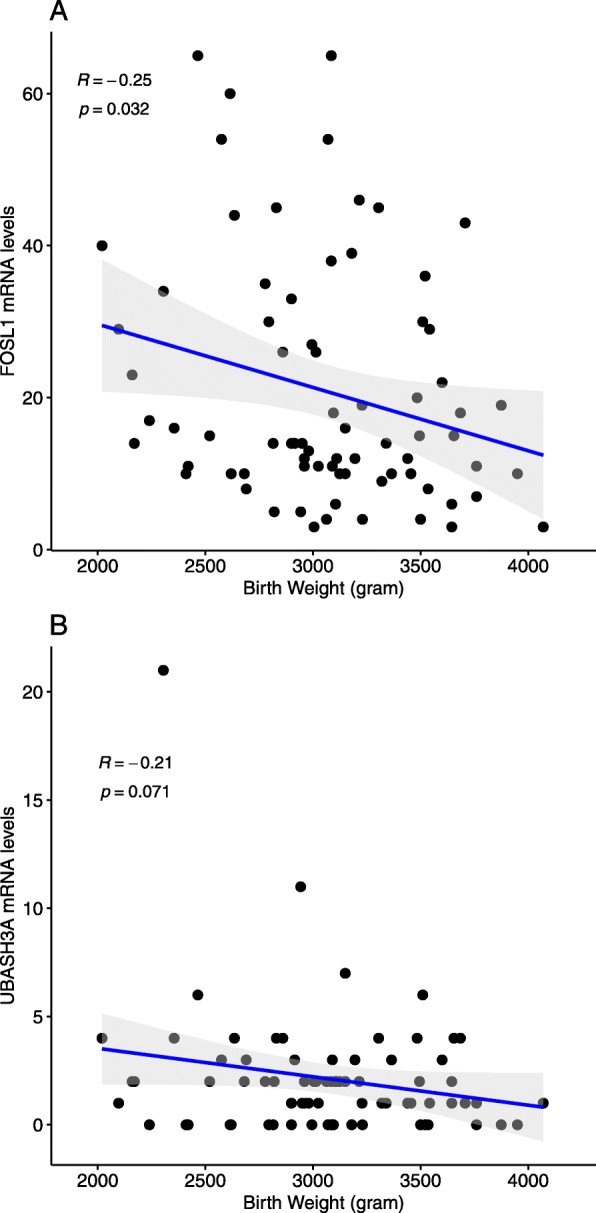
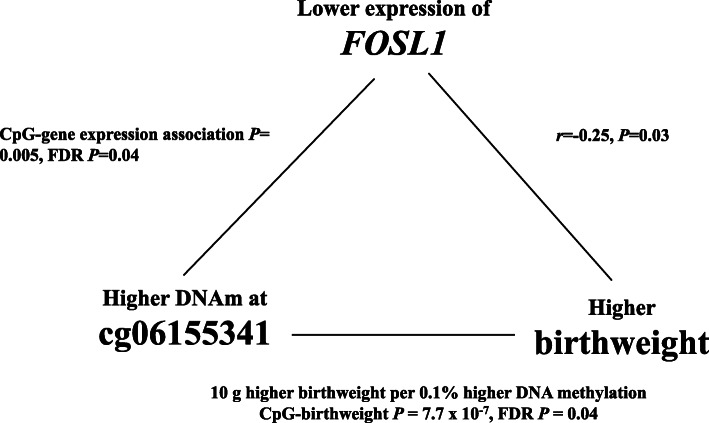
We performed placental epigenome-wide association study (EWAS) of birthweight in an ethnic diverse cohort of pregnant women (n = 301). Methylation at 15 cytosine-(phosphate)-guanine sites (CpGs) was associated with birthweight (false discovery rate (FDR) < 0.05). Methylation at four (26.7%) CpG sites was associated with placental transcript levels of 15 genes (FDR < 0.05), including genes known to be associated with adult lipid traits, inflammation and oxidative stress. Increased methylation at cg06155341 was associated with higher birthweight and lower FOSL1 expression, and lower FOSL1 expression was correlated with higher birthweight. Given the role of the FOSL1 transcription factor in regulating developmental processes at the maternal-fetal interface, epigenetic mechanisms at this locus may regulate fetal development. We demonstrated trans-tissue portability of methylation at four genes (MLLT1, PDE9A, ASAP2, and SLC20A2) implicated in birthweight by a previous study in cord blood. We also found that methylation changes known to be related to maternal underweight, preeclampsia and adult type 2 diabetes were associated with lower birthweight in placenta.
We identified novel placental DNA methylation changes associated with birthweight. Placental epigenetic mechanisms may underlie dysregulated fetal development and early origins of adult cardiometabolic diseases.
ClinicalTrials.gov, NCT00912132.
出生体重是一生中健康的一个重要里程碑,包括晚年患心血管代谢疾病的风险。胎盘是母体-胎儿界面上的一种短暂器官,调节胎儿生长。确定胎盘 DNA 甲基化与出生体重相关的遗传位点,可以揭示基因组途径在异常胎儿生长和晚年心血管代谢疾病中的失调。
我们在一个种族多样化的孕妇队列中进行了胎盘全基因组关联研究(EWAS)与出生体重相关的研究(n = 301)。15 个胞嘧啶-磷酸-鸟嘌呤位点(CpG)的甲基化与出生体重相关(错误发现率(FDR)<0.05)。四个 CpG 位点的甲基化与 15 个基因的胎盘转录水平相关(FDR <0.05),包括已知与成人脂质特征、炎症和氧化应激相关的基因。cg06155341 位点的甲基化增加与出生体重增加和 FOSL1 表达降低相关,而 FOSL1 表达降低与出生体重增加相关。鉴于 FOSL1 转录因子在调节母体-胎儿界面的发育过程中的作用,该基因座的表观遗传机制可能调节胎儿发育。我们通过之前在脐带血中进行的研究,证明了四个基因(MLLT1、PDE9A、ASAP2 和 SLC20A2)中与出生体重相关的甲基化在组织间具有可转移性。我们还发现,与母亲体重不足、子痫前期和成人 2 型糖尿病相关的已知甲基化变化与胎盘出生体重较低有关。
我们发现了与出生体重相关的新的胎盘 DNA 甲基化变化。胎盘表观遗传机制可能是胎儿发育失调和成人心血管代谢疾病早期起源的基础。
ClinicalTrials.gov,NCT00912132。