Sánchez-Vizcaíno Fernando, Noble Peter-John M, Jones Phil H, Menacere Tarek, Buchan Iain, Reynolds Suzanna, Dawson Susan, Gaskell Rosalind M, Everitt Sally, Radford Alan D
Institute of Infection and Global Health, University of Liverpool, Waterhouse Building (2nd Floor, Block F), 1-5 Brownlow Street, Liverpool, L69 3GL, UK.
Health Protection Research Unit in Emerging and Zoonotic Infections, National Institute for Health Research, University of Liverpool, Liverpool, UK.
BMC Vet Res. 2017 Jul 11;13(1):218. doi: 10.1186/s12917-017-1138-9.
Understanding the distribution and determinants of disease in animal populations must be underpinned by knowledge of animal demographics. For companion animals, these data have been difficult to collect because of the distributed nature of the companion animal veterinary industry. Here we describe key demographic features of a large veterinary-visiting pet population in Great Britain as recorded in electronic health records, and explore the association between a range of animal's characteristics and socioeconomic factors.
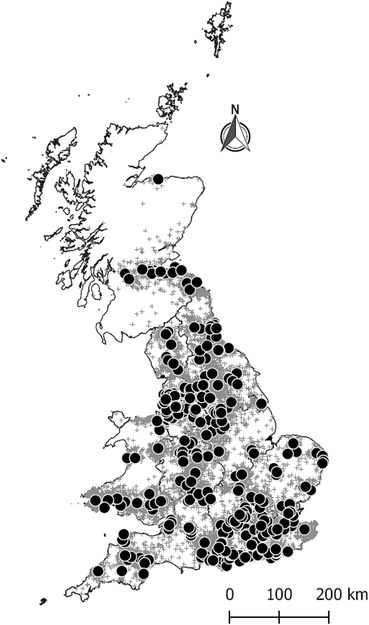
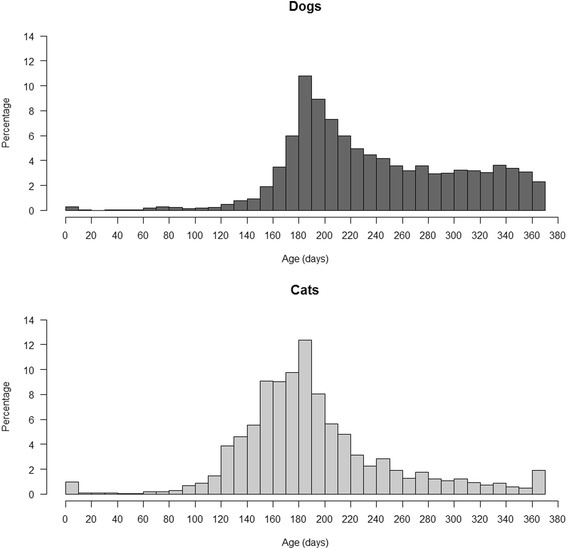
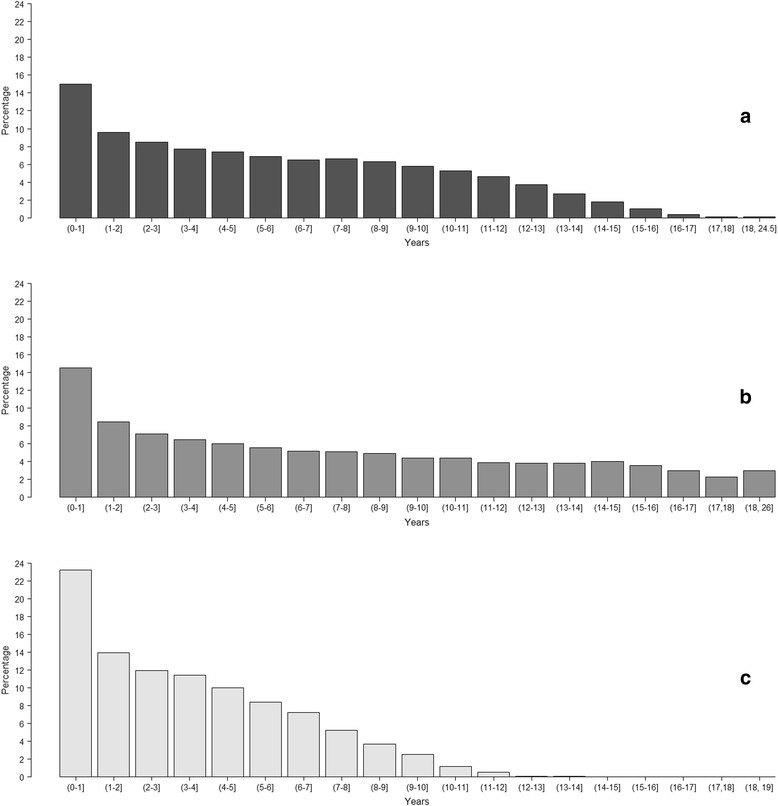
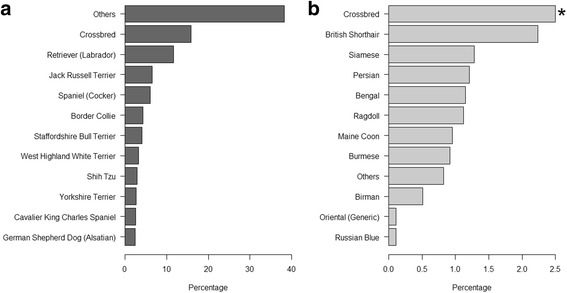
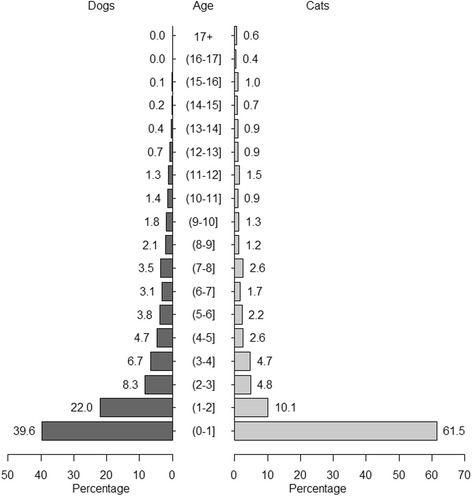
Electronic health records were captured by the Small Animal Veterinary Surveillance Network (SAVSNET), from 143 practices (329 sites) in Great Britain. Mixed logistic regression models were used to assess the association between socioeconomic factors and species and breed ownership, and preventative health care interventions. Dogs made up 64.8% of the veterinary-visiting population, with cats, rabbits and other species making up 30.3, 2.0 and 1.6% respectively. Compared to cats, dogs and rabbits were more likely to be purebred and younger. Neutering was more common in cats (77.0%) compared to dogs (57.1%) and rabbits (45.8%). The insurance and microchipping relative frequency was highest in dogs (27.9 and 53.1%, respectively). Dogs in the veterinary-visiting population belonging to owners living in least-deprived areas of Great Britain were more likely to be purebred, neutered, insured and microchipped. The same association was found for cats in England and for certain parameters in Wales and Scotland.
The differences we observed within these populations are likely to impact on the clinical diseases observed within individual veterinary practices that care for them. Based on this descriptive study, there is an indication that the population structures of companion animals co-vary with human and environmental factors such as the predicted socioeconomic level linked to the owner's address. This 'co-demographic' information suggests that further studies of the relationship between human demographics and pet ownership are warranted.
了解动物种群中疾病的分布和决定因素必须以动物种群统计学知识为基础。对于伴侣动物而言,由于伴侣动物兽医行业的分散性质,这些数据很难收集。在此,我们描述了英国一个大型接受兽医诊疗的宠物群体在电子健康记录中记录的关键种群统计学特征,并探讨了一系列动物特征与社会经济因素之间的关联。
小动物兽医监测网络(SAVSNET)收集了来自英国143家诊所(329个地点)的电子健康记录。使用混合逻辑回归模型评估社会经济因素与物种及品种拥有情况以及预防性医疗保健干预措施之间的关联。狗占接受兽医诊疗群体的64.8%,猫、兔子和其他物种分别占30.3%、2.0%和1.6%。与猫相比,狗和兔子更可能是纯种且年龄更小。绝育在猫中更为常见(77.0%),而狗为(57.1%),兔子为(45.8%)。保险和微芯片植入的相对频率在狗中最高(分别为27.9%和53.1%)。在英国最不贫困地区居住的主人所养的接受兽医诊疗的狗更可能是纯种、已绝育、有保险且植入了微芯片。在英格兰的猫以及威尔士和苏格兰的某些参数中也发现了同样的关联。
我们在这些群体中观察到的差异可能会影响照顾它们的各个兽医诊所中所观察到的临床疾病。基于这项描述性研究,有迹象表明伴侣动物的种群结构与人类和环境因素共同变化,例如与主人住址相关的预测社会经济水平。这种“共同种群统计学”信息表明有必要进一步研究人类种群统计学与宠物拥有情况之间的关系。