Budhiraja Meenal, Savic Ivanka, Lindner Philip, Jokinen Jussi, Tiihonen Jari, Hodgins Sheilagh
Department of Clinical Neuroscience, Karolinska University Hospital, Psychiatry Building R5:00, 171 76, Stockholm, Sweden.
Cogn Affect Behav Neurosci. 2017 Aug;17(4):869-885. doi: 10.3758/s13415-017-0519-7.
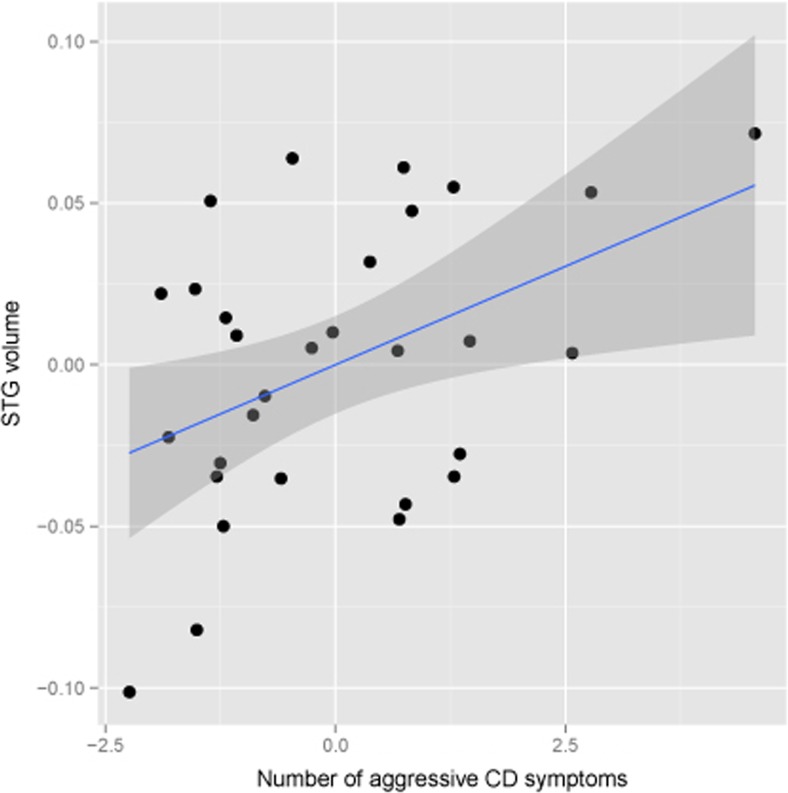
The phenotype and genotype of antisocial behavior among females are different from those among males. Previous studies have documented structural brain alterations in males with antisocial behavior, yet little is known about the neural correlates of female antisocial behavior. The present study examined young women who had presented conduct disorder (CDW) prior to age 15 to determine whether brain abnormalities are present in adulthood and whether the observed abnormalities are associated with comorbid disorders or maltreatment that typically characterize this population. Using magnetic resonance imaging and voxel-based morphometry, we compared gray matter volumes (GMV) of 31 women who presented CD by midadolescence and 25 healthy women (HW), age, on average, 23 years. Participants completed structured, validated interviews to diagnose mental disorders, and validated questionnaires to document physical and sexual abuse. Relative to HW, CDW presented increased GMV in the left superior temporal gyrus that was associated with past alcohol and drug dependence, current use of alcohol and drugs, and current anxiety and depression symptoms and maltreatment. Additionally, CDW displayed reduced GMV in lingual gyrus, hippocampus, and anterior cingulate cortex that was associated with past comorbid disorders, current alcohol and drugs use, current anxiety and depression symptoms, and maltreatment. The CDW also presented reduced total GMV that was associated with past comorbid disorders and current anxiety/depression symptoms. Alterations of brain structure were observed among young adult females with prior CD, relative to HW, all of which were associated with internalizing and externalizing disorders and maltreatment that typically accompany CD.
女性反社会行为的表型和基因型与男性不同。以往研究记录了有反社会行为男性的大脑结构改变,但对于女性反社会行为的神经关联知之甚少。本研究对15岁前出现品行障碍(CDW)的年轻女性进行了检查,以确定成年后是否存在大脑异常,以及观察到的异常是否与通常表征该人群的共病或虐待有关。使用磁共振成像和基于体素的形态测量法,我们比较了31名在青春期中期出现品行障碍的女性和25名平均年龄为23岁的健康女性(HW)的灰质体积(GMV)。参与者完成了结构化、经过验证的访谈以诊断精神障碍,并完成了经过验证的问卷以记录身体和性虐待情况。相对于HW,CDW在左侧颞上回的GMV增加,这与过去的酒精和药物依赖、当前的酒精和药物使用、当前的焦虑和抑郁症状以及虐待有关。此外,CDW在舌回、海马体和前扣带回皮质的GMV减少,这与过去的共病、当前的酒精和药物使用、当前的焦虑和抑郁症状以及虐待有关。CDW的总GMV也减少,这与过去的共病和当前的焦虑/抑郁症状有关。相对于HW,在有既往品行障碍的年轻成年女性中观察到大脑结构改变,所有这些改变都与通常伴随品行障碍的内化和外化障碍以及虐待有关。