Cruickshanks Nichola, Zhang Ying, Yuan Fang, Pahuski Mary, Gibert Myron, Abounader Roger
Department of Microbiology, Immunology & Cancer Biology, University of Virginia, Charlottesville, VA 22908, USA.
Department of Neurology and The Cancer Center, Department of Microbiology, Immunology & Cancer Biology, University of Virginia, Charlottesville, VA 22908, USA.
Cancers (Basel). 2017 Jul 11;9(7):87. doi: 10.3390/cancers9070087.
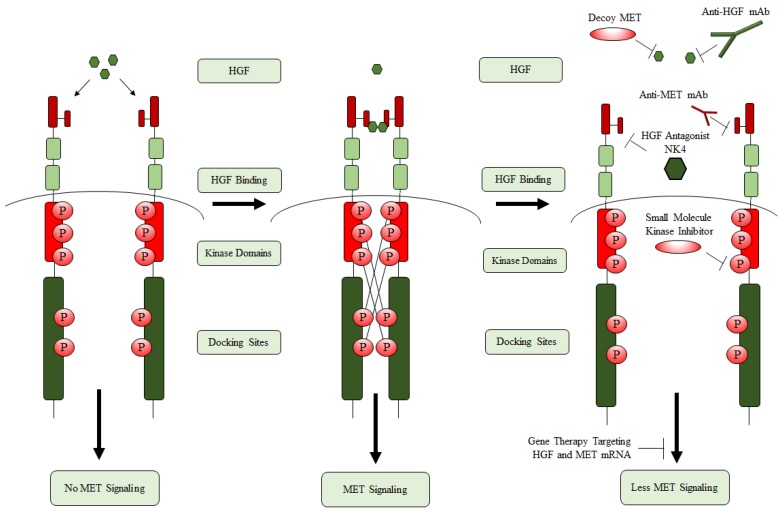
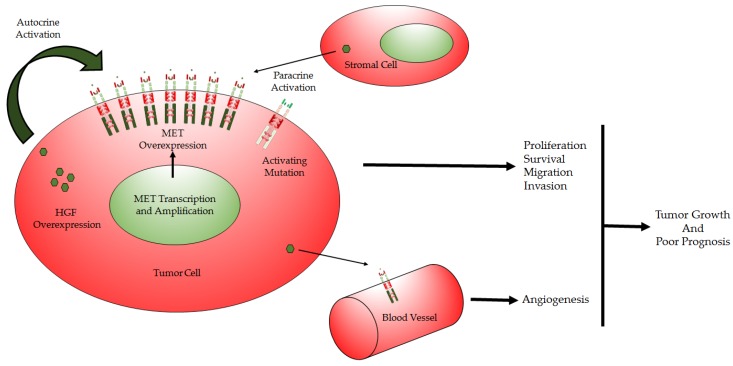
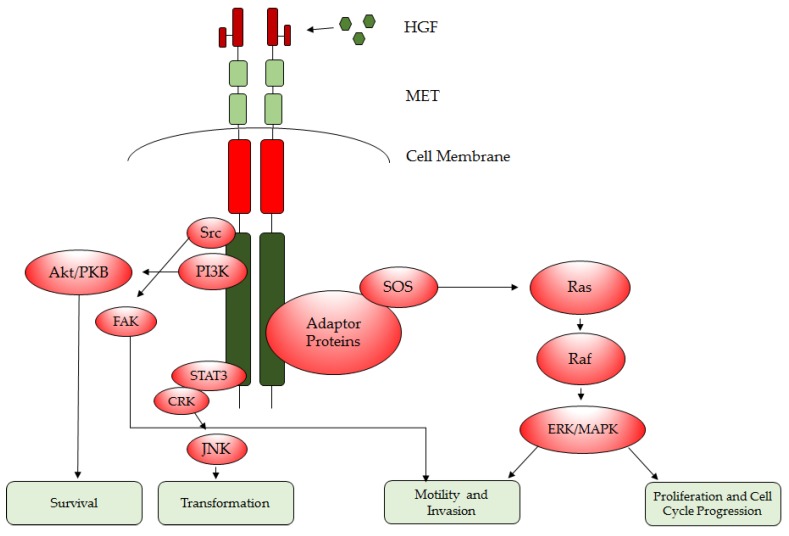
Glioblastoma (GBM) is a lethal brain tumor with dismal prognosis. Current therapeutic options, consisting of surgery, chemotherapy and radiation, have only served to marginally increase patient survival. Receptor tyrosine kinases (RTKs) are dysregulated in approximately 90% of GBM; attributed to this, research has focused on inhibiting RTKs as a novel and effective therapy for GBM. Overexpression of RTK mesenchymal epithelial transition (MET), and its ligand, hepatocyte growth factor (HGF), in GBM highlights a promising new therapeutic target. This review will discuss the role of MET in cell cycle regulation, cell proliferation, evasion of apoptosis, cell migration and invasion, angiogenesis and therapeutic resistance in GBM. It will also discuss the modes of deregulation of HGF/MET and their regulation by microRNAs. As the HGF/MET pathway is a vital regulator of multiple pro-survival pathways, efforts and strategies for its exploitation for GBM therapy are also described.
胶质母细胞瘤(GBM)是一种预后极差的致命性脑肿瘤。目前的治疗选择,包括手术、化疗和放疗,仅略微提高了患者的生存率。约90%的GBM中受体酪氨酸激酶(RTK)存在失调;因此,研究聚焦于抑制RTK作为GBM的一种新型有效治疗方法。RTK间充质上皮转化(MET)及其配体肝细胞生长因子(HGF)在GBM中的过表达凸显了一个有前景的新治疗靶点。本综述将讨论MET在GBM的细胞周期调控、细胞增殖、凋亡逃避、细胞迁移和侵袭、血管生成及治疗抵抗中的作用。还将讨论HGF/MET失调的模式及其受微小RNA的调控。由于HGF/MET通路是多种促生存通路的重要调节因子,也将描述利用该通路进行GBM治疗的努力和策略。