Tissera Kavinda, Liyanapathirana Veranja, Dissanayake Nilanthi, Pinto Vasanthi, Ekanayake Asela, Tennakoon Manjula, Adasooriya Dinuka, Nanayakkara Dulmini
Postgraduate Institute of Science, University of Peradeniya, Peradeniya, Sri Lanka.
Department of Microbiology, Faculty of Medicine, University of Peradeniya, Peradeniya, Sri Lanka.
BMC Infect Dis. 2017 Jul 11;17(1):490. doi: 10.1186/s12879-017-2590-7.
Infections with multi drug resistant (MDR) organisms are a major problem in intensive care units (ICUs). Proper infection control procedures are mandatory to combat the spread of resistant organisms within ICUs. Well stablished surveillance programmes will enhance the adherence of the staff to infection control protocols. The study was conducted to assess the feasibility of using basic molecular typing methods and routine hospital data for laboratory surveillance of resistance organisms in resource limited settings.
A retrospective study was conducted using consecutive Gram negative isolates obtained from an ICU over a six month period. Antibiotic sensitivity patterns and random amplified polymorphic DNA (RAPD) based typing was performed on the given isolates.
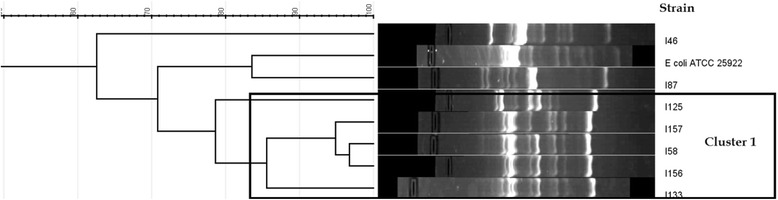
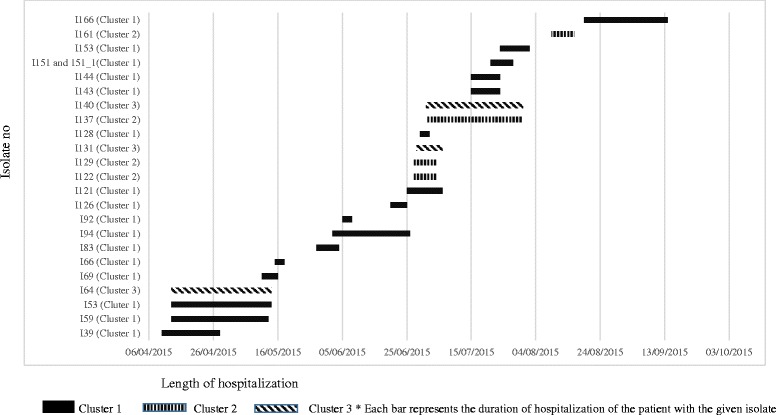
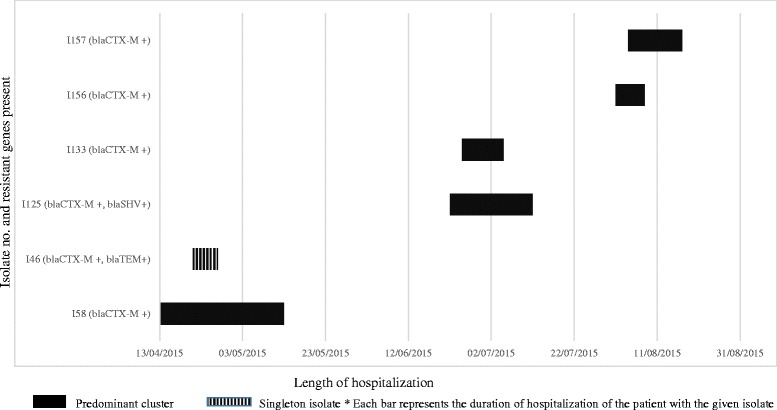
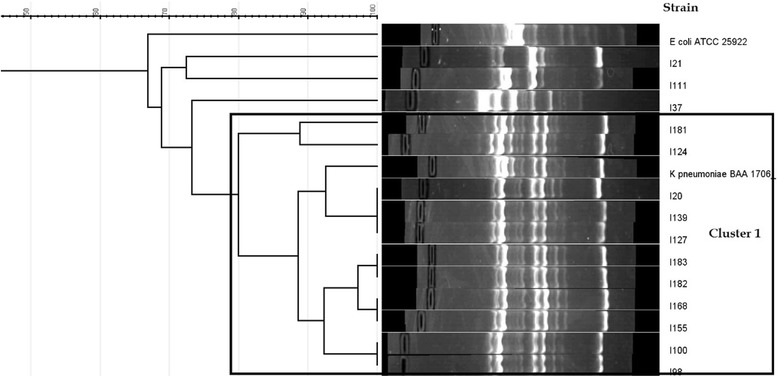
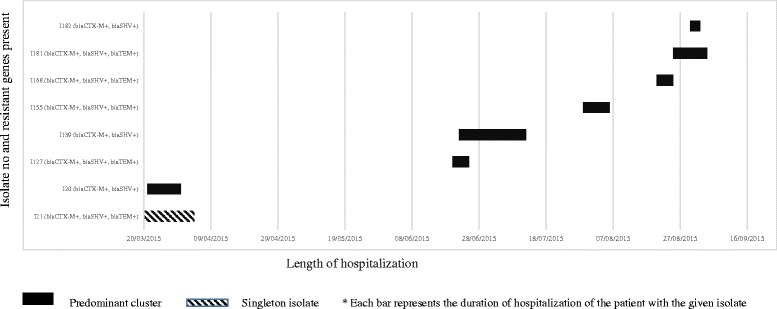
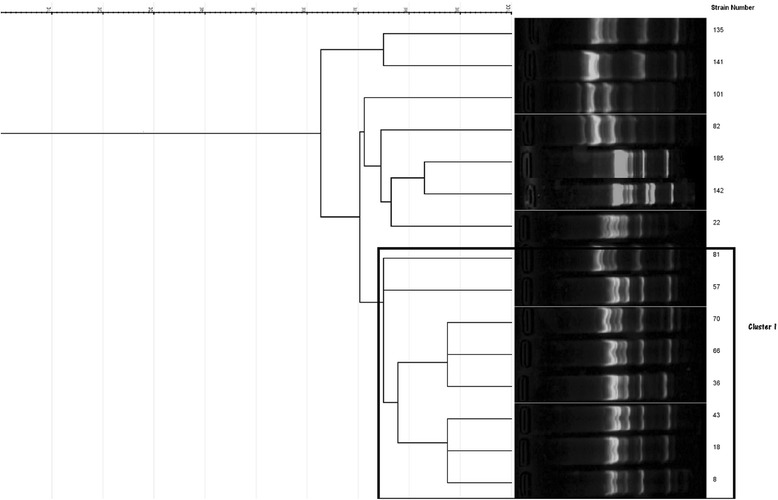
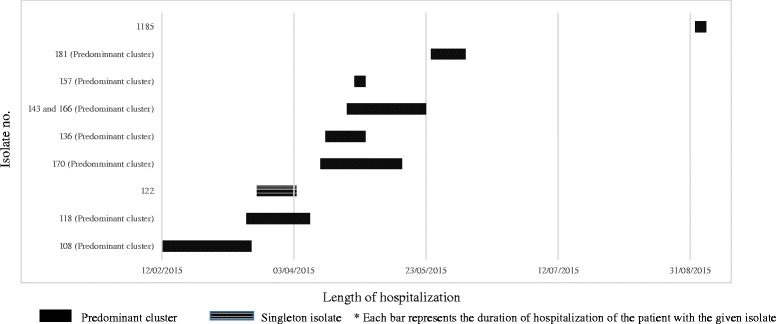
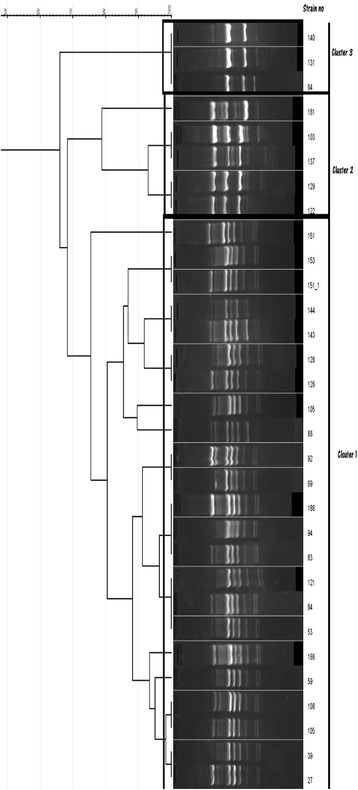
Of the seventy isolates included in the study, seven were E.coli. All E.coli were MDRs and Extended Spectrum β lactamse (ESBL) producers carrying bla . Fourteen isolates were K.pneumoniae, and all were MDRs and ESBL producers. All K.pneumoniae harboured bla while 13 harboured bla . The MDR rate among P.aeruginosa was 13% (n=15) while all acinetobacters (n=30) were MDRs. Predominant clusters were identified within all four types of Gram negatives using RAPD and the ICU stay of patients overlapped temporally.
We propose that simple surveillance methods like RAPD based typing and basic hospital data can be used to convince hospital staff to adhere to infection control protocols more effectively, in low and middle income countries.
多重耐药(MDR)菌感染是重症监护病房(ICU)的一个主要问题。必须采取适当的感染控制措施来对抗耐药菌在ICU内的传播。完善的监测方案将提高工作人员对感染控制方案的依从性。本研究旨在评估在资源有限的环境中,使用基本分子分型方法和医院常规数据对耐药菌进行实验室监测的可行性。
采用回顾性研究,使用在6个月期间从ICU获得的连续革兰阴性菌分离株。对给定的分离株进行抗生素敏感性模式分析和基于随机扩增多态性DNA(RAPD)的分型。
在纳入研究的70株分离株中,7株为大肠杆菌。所有大肠杆菌均为多重耐药菌且产超广谱β-内酰胺酶(ESBL),携带bla基因。14株为肺炎克雷伯菌,均为多重耐药菌且产ESBL。所有肺炎克雷伯菌均携带bla基因,13株携带bla基因。铜绿假单胞菌的多重耐药率为13%(n = 15),而所有不动杆菌(n = 30)均为多重耐药菌。使用RAPD在所有四种革兰阴性菌类型中均鉴定出主要聚类,且患者在ICU的住院时间在时间上有重叠。
我们建议,在低收入和中等收入国家,像基于RAPD的分型和医院基本数据这样的简单监测方法可用于更有效地说服医院工作人员遵守感染控制方案。