Usonis Vytautas, Ivaskevicius Rimvydas, Diez-Domingo Javier, Esposito Susanna, Falup-Pecurariu Oana G, Finn Adam, Rodrigues Fernanda, Spoulou Vana, Syrogiannopoulos George A, Greenberg David
Clinic of Children's Diseases, Vilnius University, Vilnius, Lithuania.
FISABIO-Public Health, (CSISP), Valencia, Spain.
Pneumonia (Nathan). 2016 May 2;8:5. doi: 10.1186/s41479-016-0005-y. eCollection 2016.
The aim of this study was to review the current status and usage of guidelines in the diagnosis and treatment of community-acquired pneumonia (CAP) in European countries and to compare to established guidelines in the United States (US), United Kingdom (UK), and the World Health Organization (WHO).
A questionnaire was developed and distributed by the Community-Acquired Pneumonia Paediatric Research Initiative (CAP-PRI) working group and distributed to medical centres across Europe.
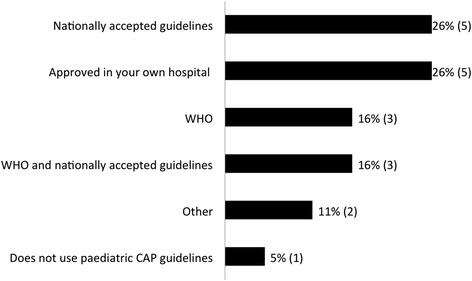
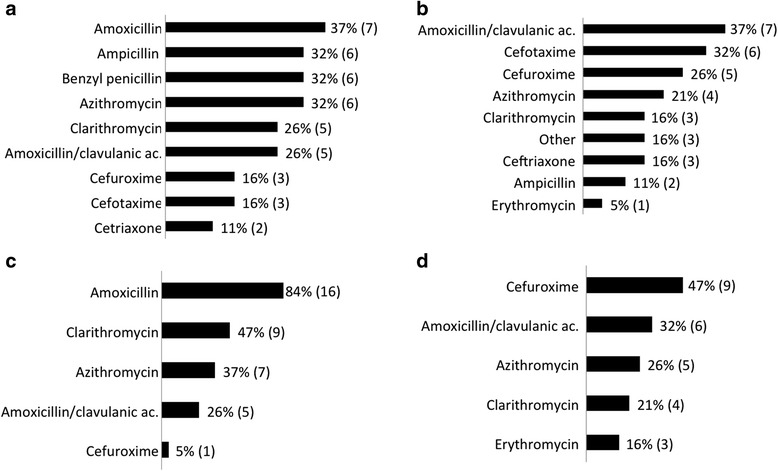
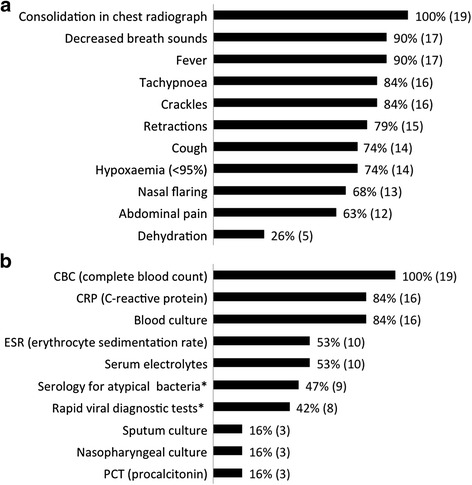
Out of 19 European centres, 6 (31.6 %) used WHO guidelines (3 in combination with other guidelines), 5 (26.3 %) used national guidelines, and 5 (26.3 %) used local guidelines. Chest radiograph and complete blood count were the most common diagnostic examinations, while evaluation of clinical symptoms and laboratory tests varied significantly. Tachypnoea and chest recession were considered criteria for diagnosis in all three guidelines. In US and UK guidelines blood cultures, atypical bacterial and viral detection tests were recommended. In European centres in outpatient settings, amoxicillin was used in 16 (84 %) centers, clarithromycin in 9 (37 %) centers and azithromycin in 7 (47 %) centers, whereas in hospital settings antibiotic treatment varied widely. Amoxicillin is recommended as the first drug of choice for outpatient treatment in all guidelines.
Although local variations in clinical criteria, laboratory tests, and antibiotic resistance rates may necessitate some differences in standard empirical antibiotic regimens, there is considerable scope for standardisation across European centres for the diagnosis and treatment of CAP.
本研究旨在回顾欧洲国家社区获得性肺炎(CAP)诊断和治疗指南的现状及使用情况,并与美国、英国和世界卫生组织(WHO)的既定指南进行比较。
社区获得性肺炎儿科研究倡议(CAP-PRI)工作组编制并分发了一份问卷,该问卷被分发给欧洲各地的医疗中心。
在19个欧洲中心中,6个(31.6%)使用WHO指南(3个与其他指南联合使用),5个(26.3%)使用国家指南,5个(26.3%)使用当地指南。胸部X光片和全血细胞计数是最常见的诊断检查,而临床症状评估和实验室检查差异显著。呼吸急促和胸廓凹陷在所有三个指南中均被视为诊断标准。在美国和英国的指南中,推荐进行血培养、非典型细菌和病毒检测。在欧洲中心的门诊环境中,16个(84%)中心使用阿莫西林,9个(37%)中心使用克拉霉素,7个(47%)中心使用阿奇霉素,而在医院环境中抗生素治疗差异很大。所有指南均推荐阿莫西林作为门诊治疗的首选药物。
尽管临床标准、实验室检查和抗生素耐药率的局部差异可能需要在标准经验性抗生素治疗方案上存在一些差异,但欧洲各中心在CAP的诊断和治疗方面仍有很大的标准化空间。