Wlodarska Marta, Luo Chengwei, Kolde Raivo, d'Hennezel Eva, Annand John W, Heim Cortney E, Krastel Philipp, Schmitt Esther K, Omar Abdifatah S, Creasey Elizabeth A, Garner Ashley L, Mohammadi Sina, O'Connell Daniel J, Abubucker Sahar, Arthur Timothy D, Franzosa Eric A, Huttenhower Curtis, Murphy Leon O, Haiser Henry J, Vlamakis Hera, Porter Jeffrey A, Xavier Ramnik J
The Broad Institute of MIT and Harvard, Cambridge, MA 02142, USA; Chemical Biology and Therapeutics, Novartis Institutes for BioMedical Research, Cambridge, MA 02139, USA.
The Broad Institute of MIT and Harvard, Cambridge, MA 02142, USA; Center for Computational and Integrative Biology, Massachusetts General Hospital, Boston, MA 02114, USA.
Cell Host Microbe. 2017 Jul 12;22(1):25-37.e6. doi: 10.1016/j.chom.2017.06.007.
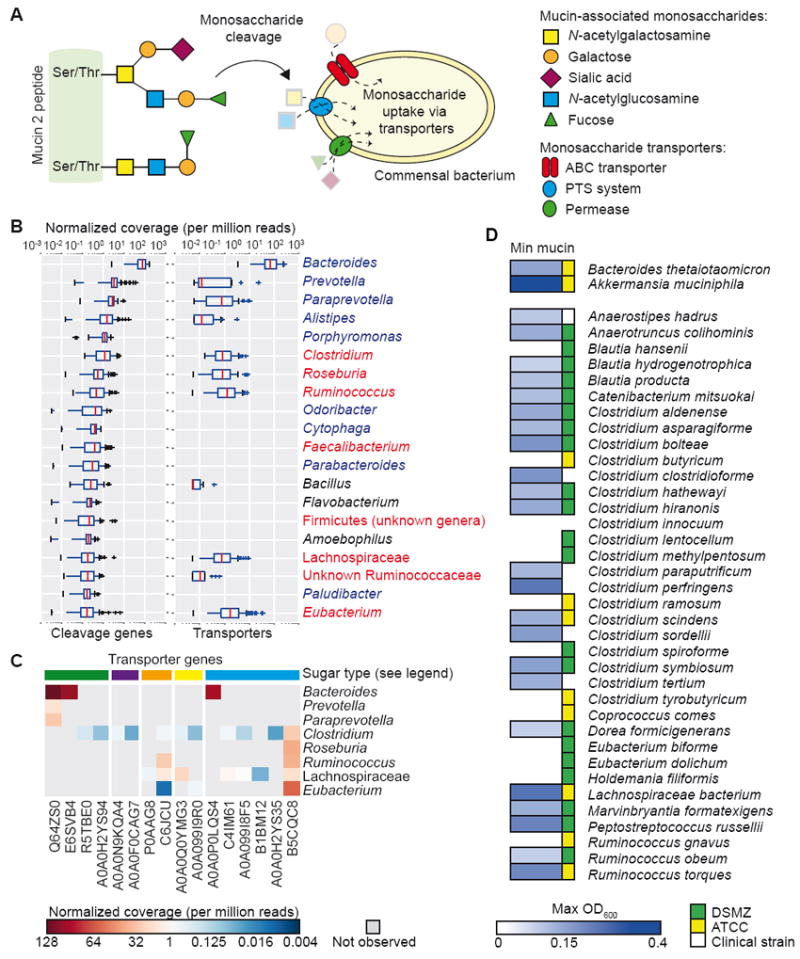
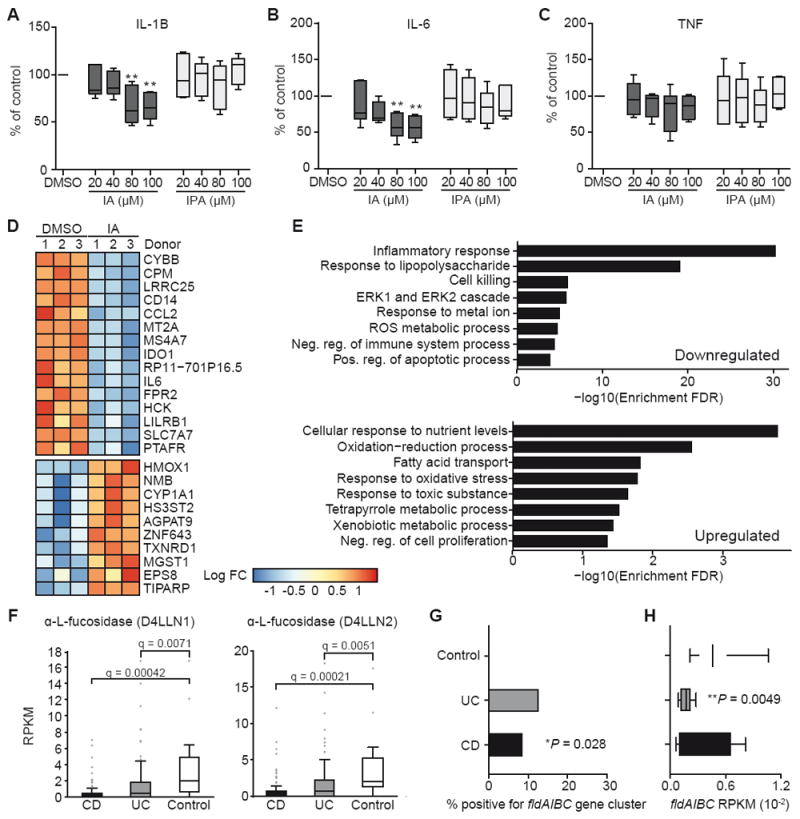
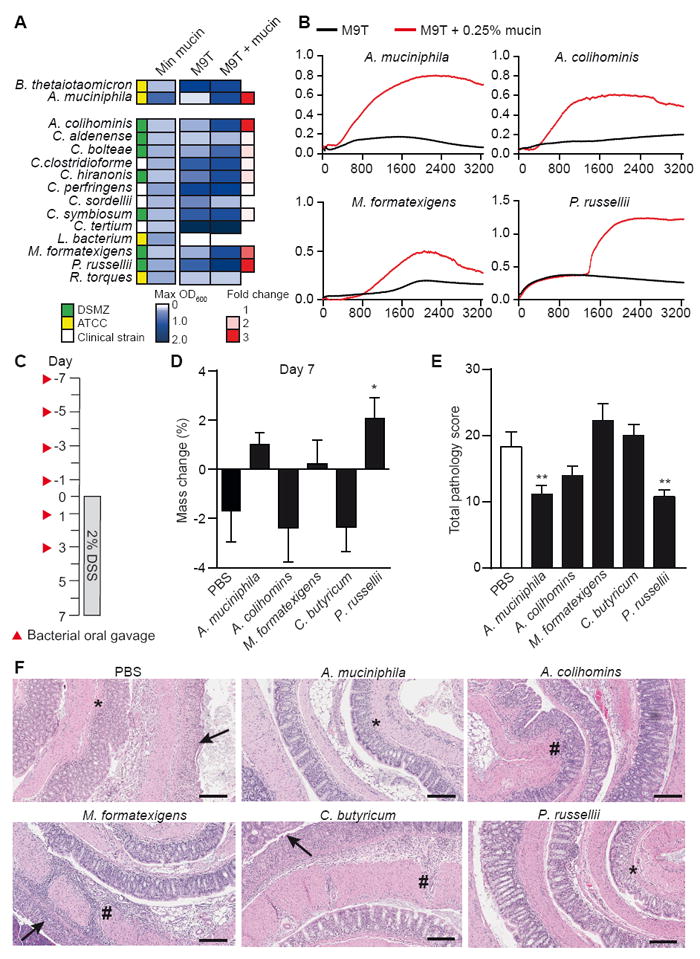
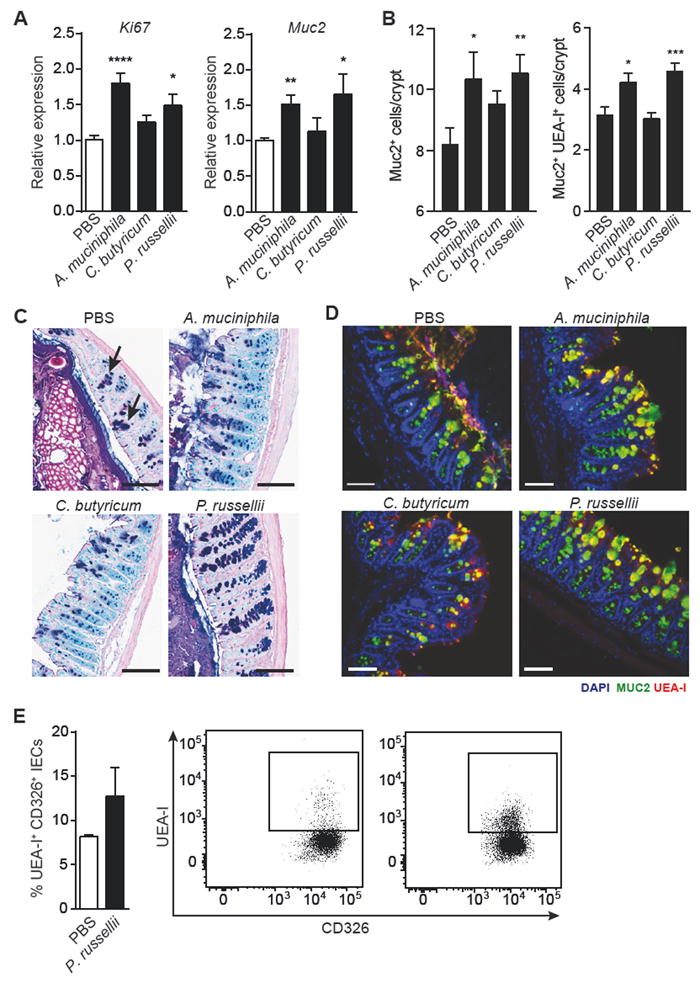
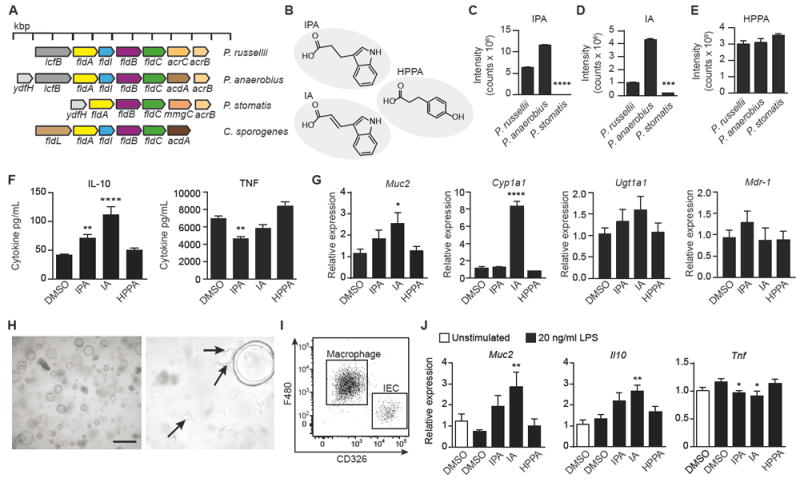
Host factors in the intestine help select for bacteria that promote health. Certain commensals can utilize mucins as an energy source, thus promoting their colonization. However, health conditions such as inflammatory bowel disease (IBD) are associated with a reduced mucus layer, potentially leading to dysbiosis associated with this disease. We characterize the capability of commensal species to cleave and transport mucin-associated monosaccharides and identify several Clostridiales members that utilize intestinal mucins. One such mucin utilizer, Peptostreptococcus russellii, reduces susceptibility to epithelial injury in mice. Several Peptostreptococcus species contain a gene cluster enabling production of the tryptophan metabolite indoleacrylic acid (IA), which promotes intestinal epithelial barrier function and mitigates inflammatory responses. Furthermore, metagenomic analysis of human stool samples reveals that the genetic capability of microbes to utilize mucins and metabolize tryptophan is diminished in IBD patients. Our data suggest that stimulating IA production could promote anti-inflammatory responses and have therapeutic benefits.
肠道中的宿主因素有助于选择促进健康的细菌。某些共生菌可以利用粘蛋白作为能量来源,从而促进它们的定殖。然而,诸如炎症性肠病(IBD)等健康状况与粘液层减少有关,这可能导致与该疾病相关的生态失调。我们描述了共生菌切割和转运粘蛋白相关单糖的能力,并鉴定了几种利用肠道粘蛋白的梭菌目成员。一种这样的粘蛋白利用菌,即拉氏消化链球菌,可降低小鼠对上皮损伤的易感性。几种消化链球菌含有一个基因簇,能够产生色氨酸代谢物吲哚丙烯酸(IA),它可促进肠道上皮屏障功能并减轻炎症反应。此外,对人类粪便样本的宏基因组分析表明,IBD患者中微生物利用粘蛋白和代谢色氨酸的遗传能力有所下降。我们的数据表明,刺激IA的产生可以促进抗炎反应并具有治疗益处。