Theodosiou Theodosios, Efstathiou Georgios, Papanikolaou Nikolas, Kyrpides Nikos C, Bagos Pantelis G, Iliopoulos Ioannis, Pavlopoulos Georgios A
Bioinformatics & Computational Biology Laboratory, Division of Basic Sciences, University of Crete Medical School, 70013 Heraklion, Crete, Greece.
Joint Genome Institute, Lawrence Berkeley Lab, United States Department of Energy, 2800 Mitchell Drive, Walnut Creek, CA, 94598, USA.
BMC Res Notes. 2017 Jul 14;10(1):278. doi: 10.1186/s13104-017-2607-8.
Nowadays, due to the technological advances of high-throughput techniques, Systems Biology has seen a tremendous growth of data generation. With network analysis, looking at biological systems at a higher level in order to better understand a system, its topology and the relationships between its components is of a great importance. Gene expression, signal transduction, protein/chemical interactions, biomedical literature co-occurrences, are few of the examples captured in biological network representations where nodes represent certain bioentities and edges represent the connections between them. Today, many tools for network visualization and analysis are available. Nevertheless, most of them are standalone applications that often (i) burden users with computing and calculation time depending on the network's size and (ii) focus on handling, editing and exploring a network interactively. While such functionality is of great importance, limited efforts have been made towards the comparison of the topological analysis of multiple networks.
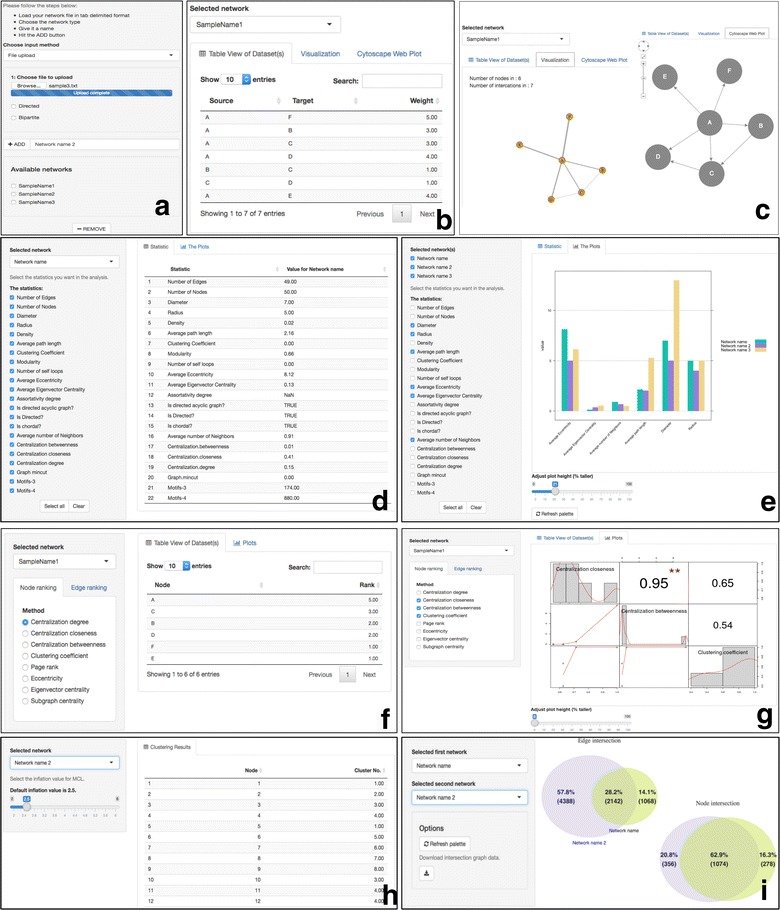
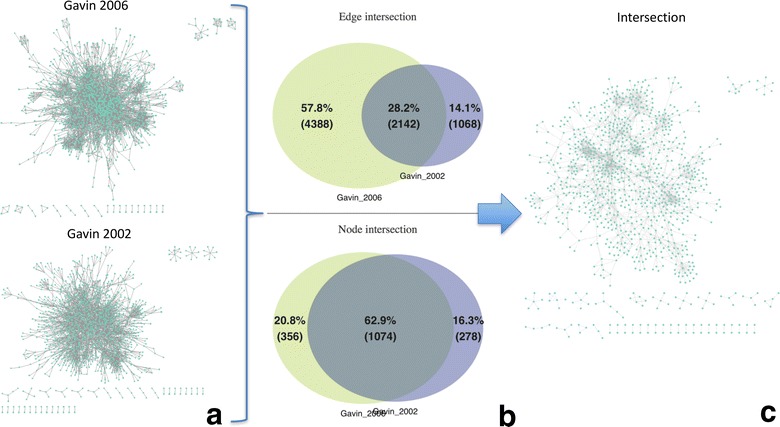
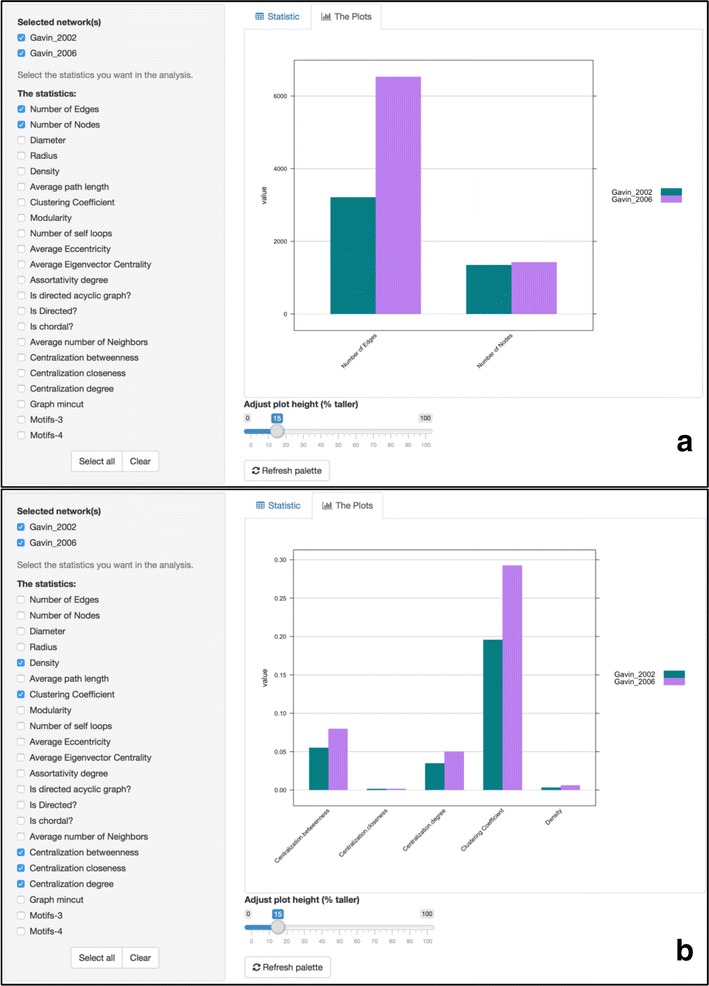
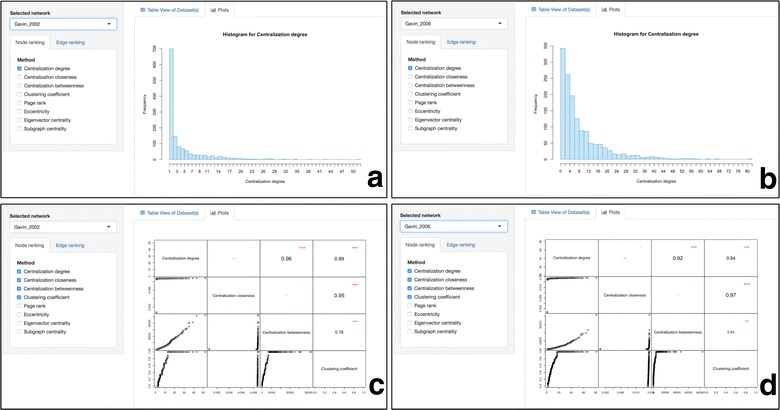
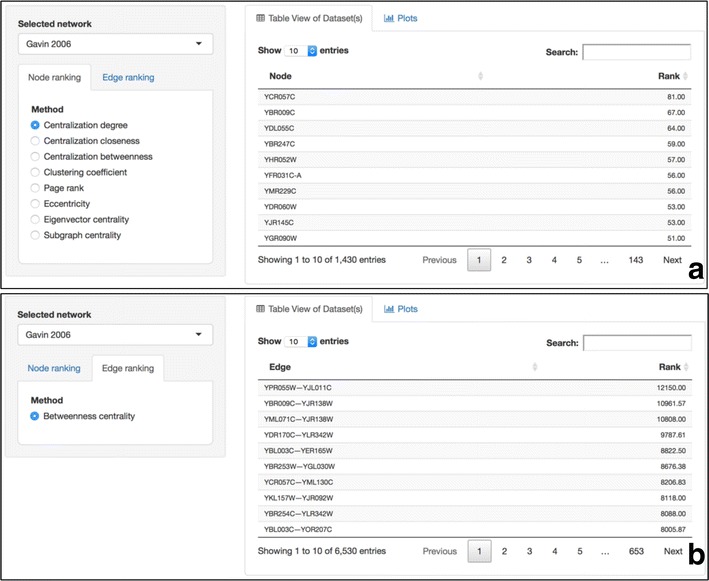
Network Analysis Provider (NAP) is a comprehensive web tool to automate network profiling and intra/inter-network topology comparison. It is designed to bridge the gap between network analysis, statistics, graph theory and partially visualization in a user-friendly way. It is freely available and aims to become a very appealing tool for the broader community. It hosts a great plethora of topological analysis methods such as node and edge rankings. Few of its powerful characteristics are: its ability to enable easy profile comparisons across multiple networks, find their intersection and provide users with simplified, high quality plots of any of the offered topological characteristics against any other within the same network. It is written in R and Shiny, it is based on the igraph library and it is able to handle medium-scale weighted/unweighted, directed/undirected and bipartite graphs. NAP is available at http://bioinformatics.med.uoc.gr/NAP .
如今,由于高通量技术的进步,系统生物学领域的数据生成量大幅增长。通过网络分析,从更高层次审视生物系统,以更好地理解系统、其拓扑结构及其组成部分之间的关系至关重要。基因表达、信号转导、蛋白质/化学相互作用、生物医学文献共现等,是生物网络表示中捕获的一些示例,其中节点代表特定生物实体,边代表它们之间的连接。如今,有许多用于网络可视化和分析的工具。然而,它们中的大多数都是独立应用程序,通常(i)根据网络大小给用户带来计算和计算时间负担,(ii)专注于交互式地处理、编辑和探索网络。虽然此类功能很重要,但在多个网络的拓扑分析比较方面所做的努力有限。
网络分析提供程序(NAP)是一个全面的网络工具,用于自动进行网络分析和网络内/网络间拓扑比较。它旨在以用户友好的方式弥合网络分析、统计学、图论和部分可视化之间的差距。它是免费提供的,旨在成为广大社区非常有吸引力的工具。它拥有大量拓扑分析方法,如节点和边排名。它的一些强大特性包括:能够轻松跨多个网络进行分析比较,找到它们的交集,并为用户提供同一网络内任何两个提供的拓扑特征的简化、高质量绘图。它用R和Shiny编写,基于igraph库,能够处理中等规模的加权/未加权、有向/无向和二分图。NAP可在http://bioinformatics.med.uoc.gr/NAP获取。