Neuroscience Center of Excellence, School of Medicine, Louisiana State University Health New Orleans, New Orleans, LA, USA.
Department of Chemistry and Loker Hydrocarbon Research Institute, University of Southern California, Los Angeles, CA, USA.
Sci Rep. 2017 Jul 13;7(1):5279. doi: 10.1038/s41598-017-05433-7.
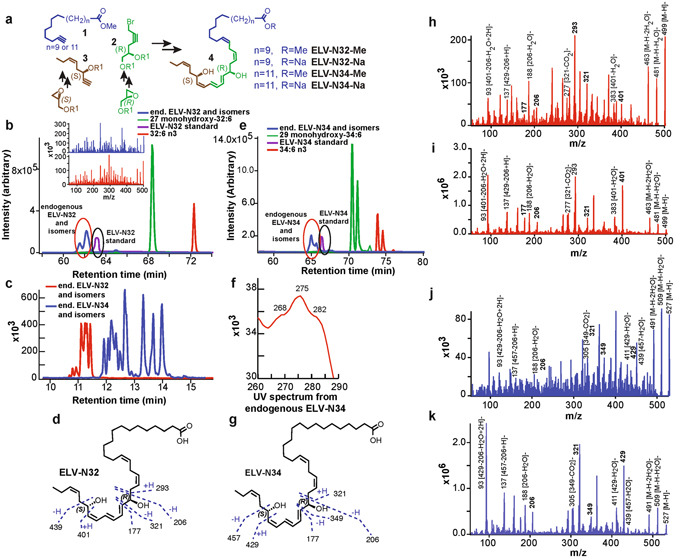
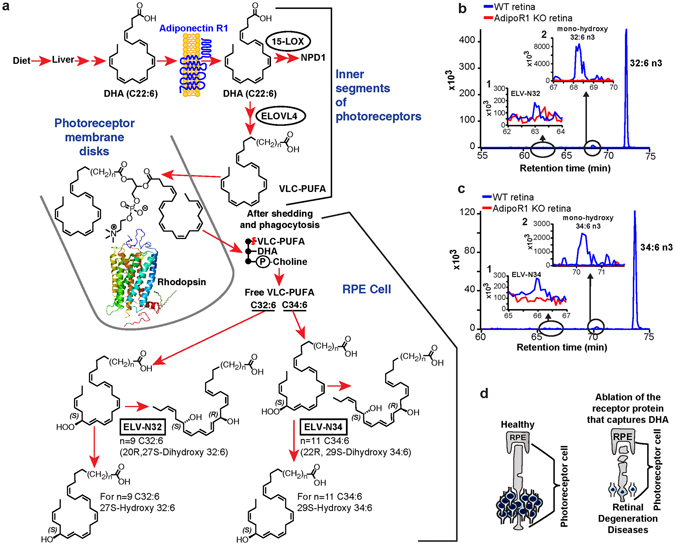
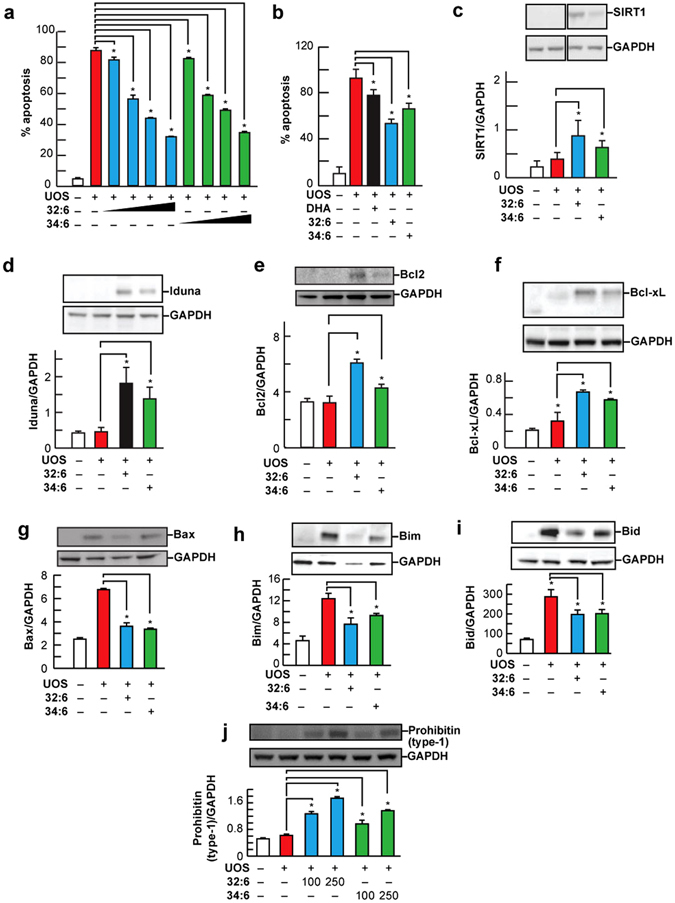
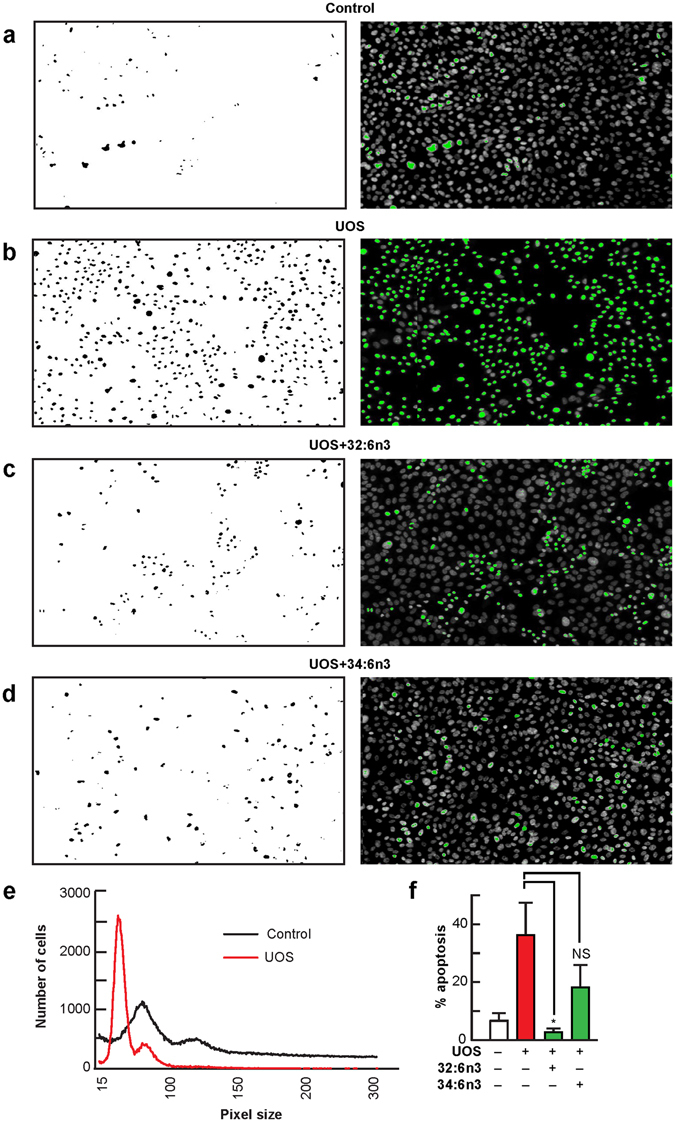
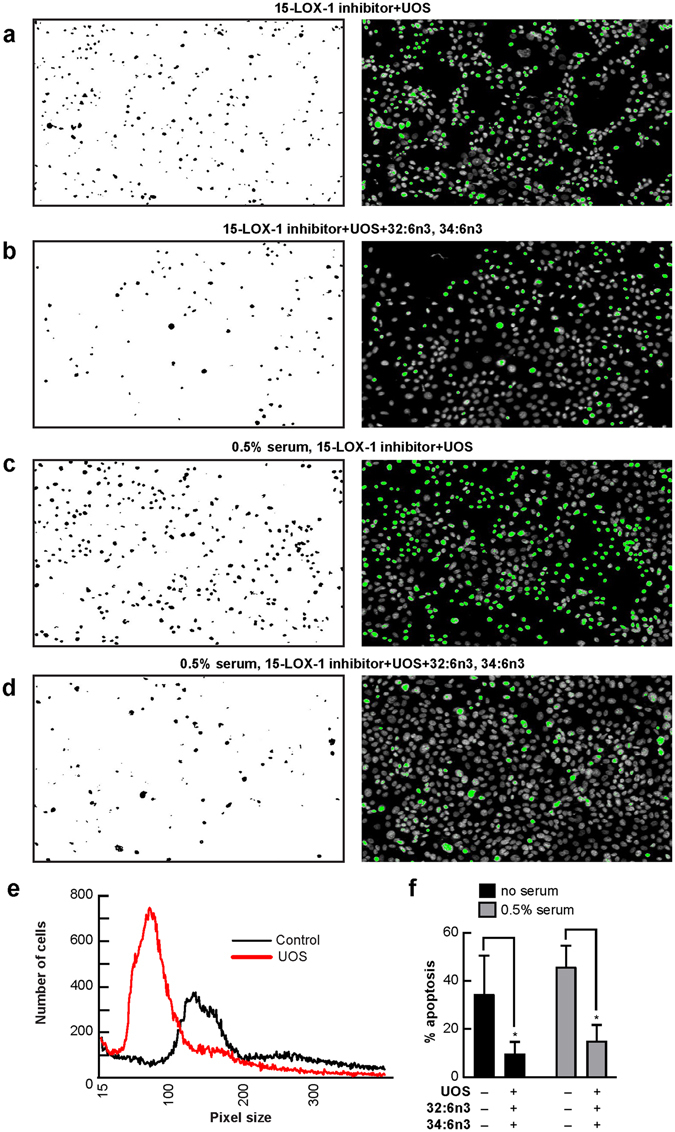
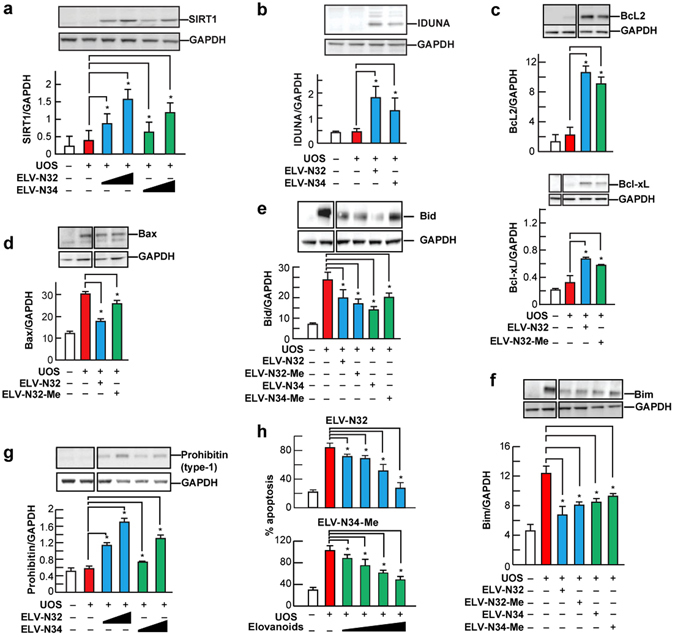
Docosahexaenoic acid (DHA, 22:6 n-3) is abundant in the retina and is enzymatically converted into pro-homeostatic docosanoids. The DHA- or eicosapentaenoic acid (EPA)-derived 26 carbon fatty acid is a substrate of elongase ELOVL4, which is expressed in photoreceptor cells and generates very long chain (≥C28) polyunsaturated fatty acids including n-3 (VLC-PUFAs,n-3). While ELOVL4 mutations are linked to vision loss and neuronal dysfunctions, the roles of VLC-PUFAs remain unknown. Here we report a novel class of lipid mediators biosynthesized in human retinal pigment epithelial (RPE) cells that are oxygenated derivatives of VLC-PUFAs,n-3; we termed these mediators elovanoids (ELV). ELVs have structures reminiscent of docosanoids but with different physicochemical properties and alternatively-regulated biosynthetic pathways. The structures, stereochemistry, and bioactivity of ELVs were determined using synthetic materials produced by stereo-controlled chemical synthesis. ELVs enhance expression of pro-survival proteins in cells undergoing uncompensated oxidative stress. Our findings unveil a novel autocrine/paracrine pro-homeostatic RPE cell signaling that aims to sustain photoreceptor cell integrity and reveal potential therapeutic targets for retinal degenerations.
二十二碳六烯酸(DHA,22:6n-3)在视网膜中含量丰富,并且可以通过酶促转化为前稳态的二十二碳六烯酸衍生的类二十烷酸。DHA 或二十碳五烯酸(EPA)衍生的 26 碳脂肪酸是延长酶 ELOVL4 的底物,ELOVL4 在感光细胞中表达,并生成非常长链(≥C28)多不饱和脂肪酸,包括 n-3(VLC-PUFAs,n-3)。虽然 ELOVL4 突变与视力丧失和神经元功能障碍有关,但 VLC-PUFAs 的作用仍不清楚。在这里,我们报道了一类新型的在人视网膜色素上皮(RPE)细胞中生物合成的脂质介质,它们是 VLC-PUFAs,n-3 的氧化衍生物;我们将这些介质称为 elovanoids(ELV)。ELV 的结构让人联想到 docosanoids,但具有不同的物理化学性质和不同的生物合成途径。ELV 的结构、立体化学和生物活性是使用立体控制化学合成生产的合成材料确定的。ELV 增强了在未补偿的氧化应激下细胞中存活蛋白的表达。我们的发现揭示了一种新型的自分泌/旁分泌的前稳态 RPE 细胞信号,旨在维持光感受器细胞的完整性,并为视网膜变性提供了潜在的治疗靶点。