Chapman Roger W, Williamson Kate D
Nuffield Department of Medicine, Oxford University, Oxford, UK.
Translational Gastroenterology Unit, Oxford University Hospital, Oxford, UK.
Curr Hepatol Rep. 2017;16(2):124-129. doi: 10.1007/s11901-017-0341-2. Epub 2017 Apr 27.
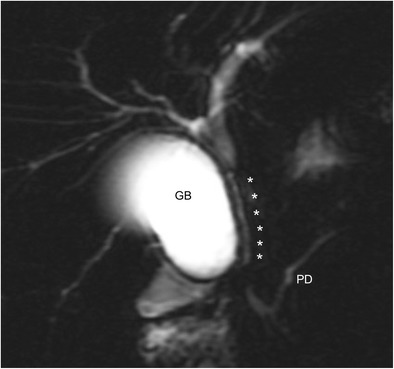
Cholangiocarcinoma is a devastating, unpredictable complication of large duct primary sclerosing cholangitis (PSC), which occurs in 5-15% of patients. The aim of this review is to discuss whether dominant strictures (DS) occurring in the larger bile ducts in PSC are a risk factor for the development of cholangiocarcinoma.
The development of DS is related to specific genetic polymorphisms affecting the innate immune system and the microbiome. In a recent study, the mean survival of PSC patients with DS was much worse (13.7 years) than for those without a DS (23 years). Survival difference was related to a 26% risk of cholangiocarcinoma, which developed only in those with DS. Half of the patients with cholangiocarcinoma presented within 4 months of the diagnosis of PSC. In another study, the risk of developing cholangiocarcinoma was directly related to the presence of underlying IBD, although this remains controversial. Efforts are being made towards surveying for cholangiocarcinoma including magnetic resonance imaging, endoscopic surveillance and serum tumour markers, but so far, an effective surveillance strategy has not been identified. DS should be treated endoscopically in the setting of symptoms, and there is limited evidence to suggest this may impact protectively on progression to cholangiocarcinoma.
It is established that the presence of symptomatic DS occurring in the larger bile ducts in PSC can be the first presentation of cholangiocarcinoma. There is an increasing body of evidence that even when proven to be benign, dominant biliary strictures predispose to the future development of cholangiocarcinoma. Regular surveillance should be targeted at this selected high-risk group of PSC patients.
胆管癌是大胆管原发性硬化性胆管炎(PSC)一种严重且不可预测的并发症,发生率为5%-15%。本综述旨在探讨PSC患者大胆管中出现的主导狭窄(DS)是否为胆管癌发生的危险因素。
DS的发生与影响先天免疫系统和微生物群的特定基因多态性有关。在最近一项研究中,患有DS的PSC患者的平均生存期(13.7年)比无DS的患者(23年)差得多。生存差异与仅在患有DS的患者中出现的26%的胆管癌风险有关。一半胆管癌患者在PSC诊断后4个月内出现。在另一项研究中,胆管癌发生风险与潜在炎症性肠病(IBD)的存在直接相关,尽管这仍存在争议。目前正在努力通过磁共振成像、内镜监测和血清肿瘤标志物等手段筛查胆管癌,但到目前为止,尚未确定有效的监测策略。在出现症状时,DS应接受内镜治疗,且仅有有限证据表明这可能对胆管癌进展有保护作用。
已证实,PSC患者大胆管中出现的有症状DS可能是胆管癌的首发表现。越来越多的证据表明,即使经证实为良性,主导性胆管狭窄也易导致未来胆管癌的发生。应针对这一选定的PSC高危患者群体进行定期监测。