Wang Lei, Sun Xiaoliang, Weiszmann Jakob, Weckwerth Wolfram
Department of Ecogenomics and Systems Biology, University of ViennaVienna, Austria.
Vienna Metabolomics Center, University of ViennaVienna, Austria.
Front Plant Sci. 2017 Jun 30;8:1066. doi: 10.3389/fpls.2017.01066. eCollection 2017.
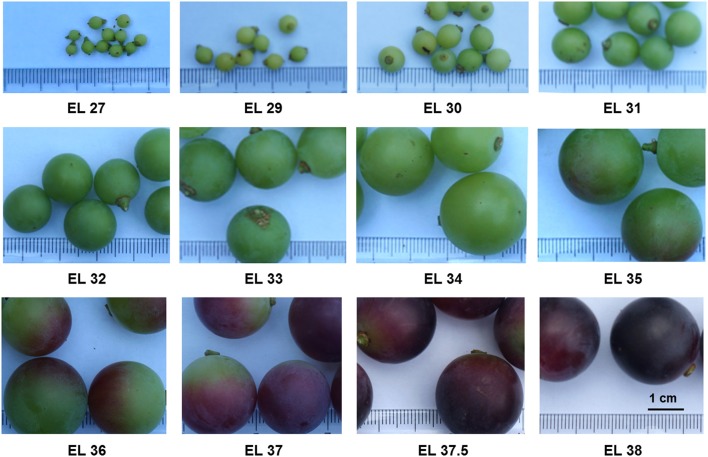
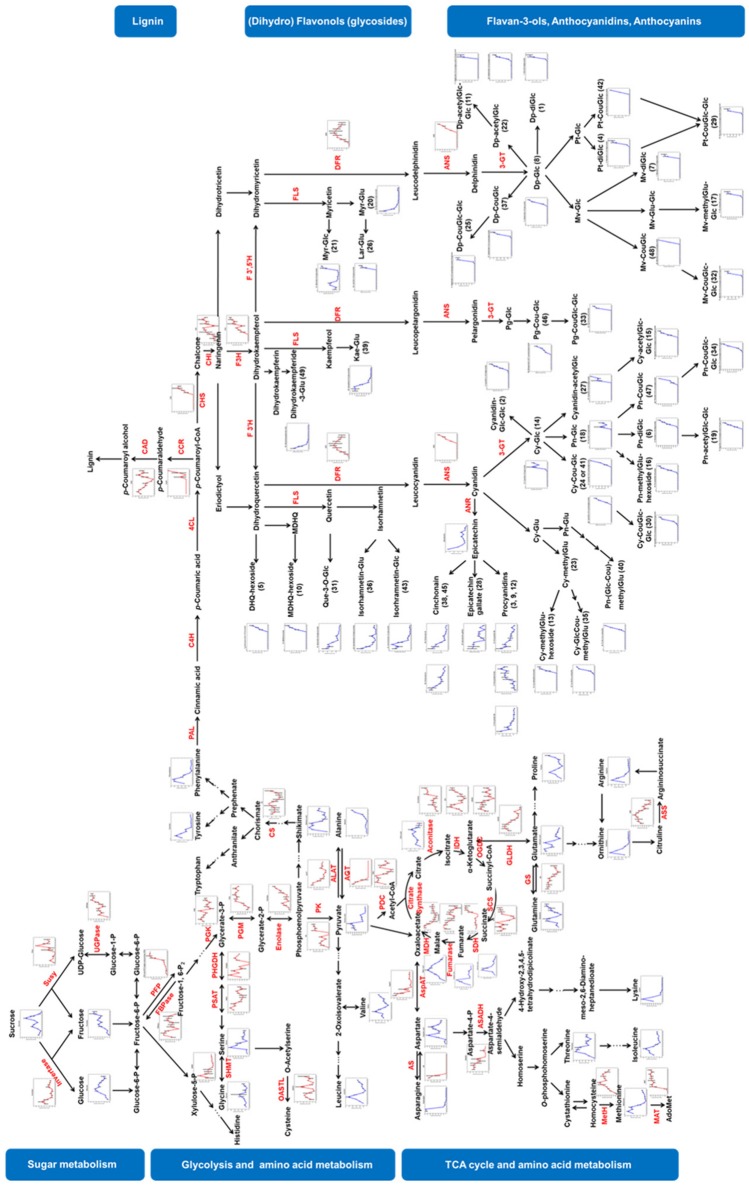
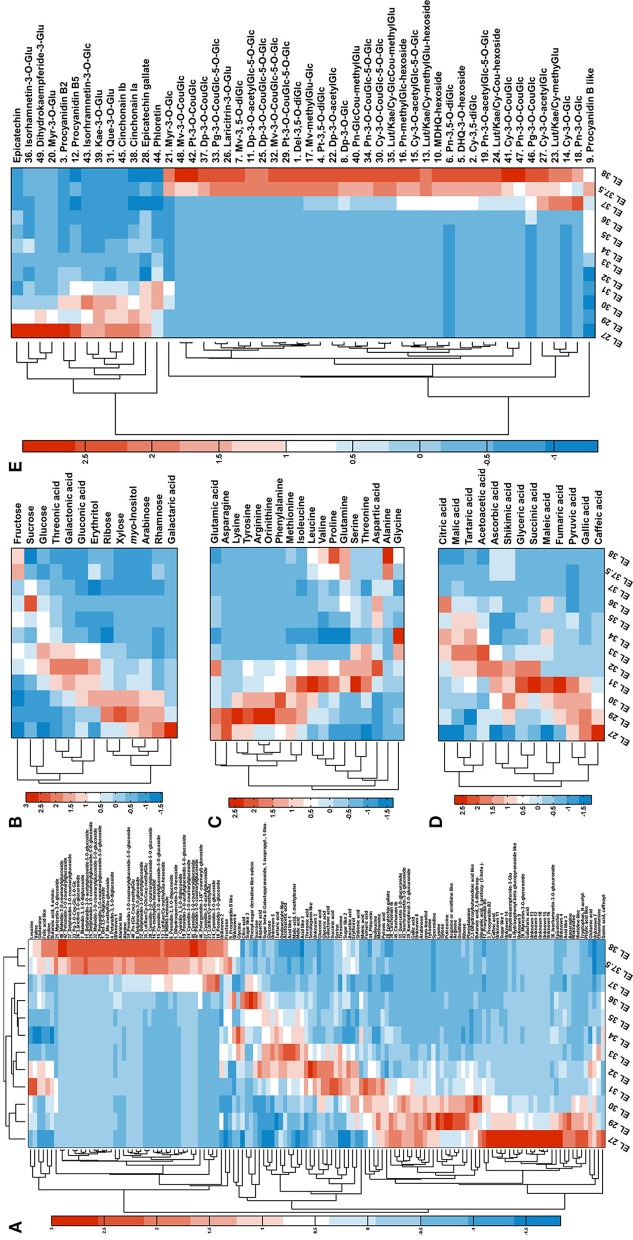
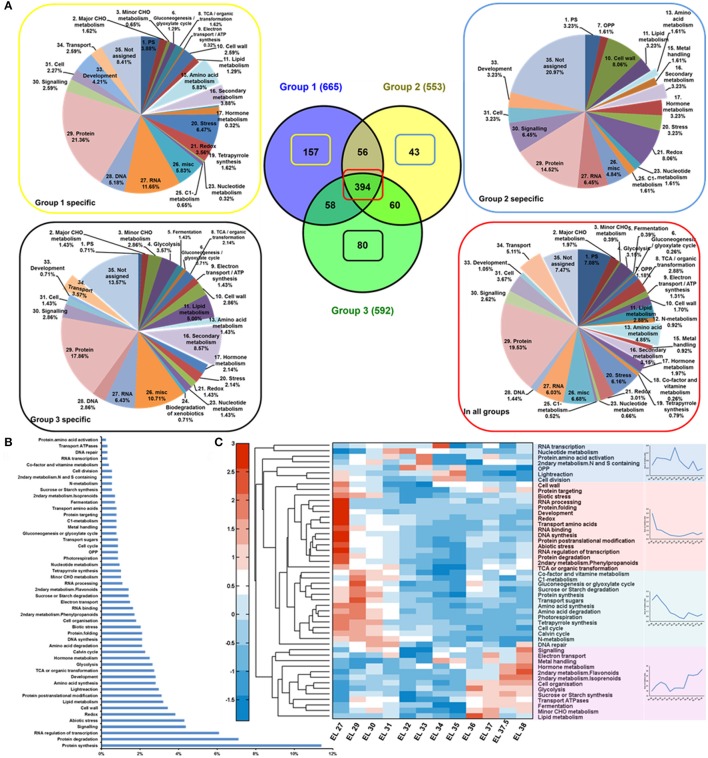
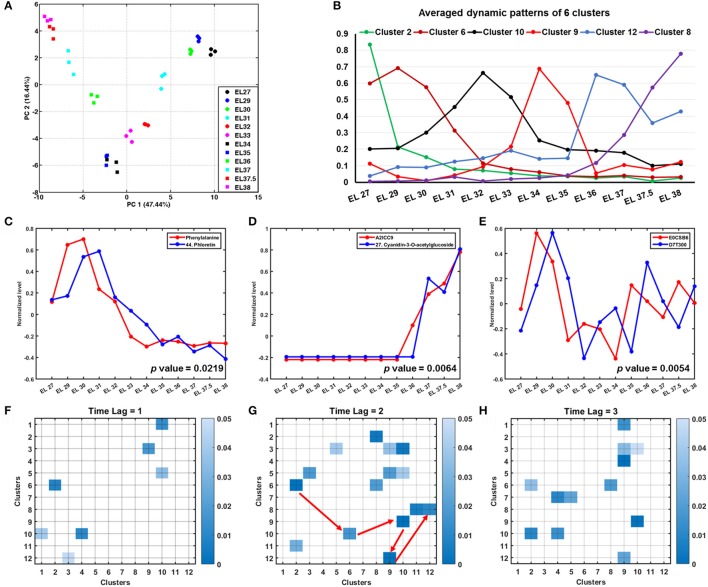
Grapevine is a fruit crop with worldwide economic importance. The grape berry undergoes complex biochemical changes from fruit set until ripening. This ripening process and production processes define the wine quality. Thus, a thorough understanding of berry ripening is crucial for the prediction of wine quality. For a systemic analysis of grape berry development we applied mass spectrometry based platforms to analyse the metabolome and proteome of Early Campbell at 12 stages covering major developmental phases. Primary metabolites involved in central carbon metabolism, such as sugars, organic acids and amino acids together with various bioactive secondary metabolites like flavonols, flavan-3-ols and anthocyanins were annotated and quantified. At the same time, the proteomic analysis revealed the protein dynamics of the developing grape berries. Multivariate statistical analysis of the integrated metabolomic and proteomic dataset revealed the growth trajectory and corresponding metabolites and proteins contributing most to the specific developmental process. K-means clustering analysis revealed 12 highly specific clusters of co-regulated metabolites and proteins. Granger causality network analysis allowed for the identification of time-shift correlations between metabolite-metabolite, protein- protein and protein-metabolite pairs which is especially interesting for the understanding of developmental processes. The integration of metabolite and protein dynamics with their corresponding biochemical pathways revealed an energy-linked metabolism before veraison with high abundances of amino acids and accumulation of organic acids, followed by protein and secondary metabolite synthesis. Anthocyanins were strongly accumulated after veraison whereas other flavonoids were in higher abundance at early developmental stages and decreased during the grape berry developmental processes. A comparison of the anthocyanin profile of Early Campbell to other cultivars revealed similarities to Concord grape and indicates the strong effect of genetic background on metabolic partitioning in primary and secondary metabolism.
葡萄是一种具有全球经济重要性的水果作物。从坐果到成熟,葡萄浆果会经历复杂的生化变化。这种成熟过程和生产过程决定了葡萄酒的品质。因此,深入了解浆果成熟对于预测葡萄酒品质至关重要。为了对葡萄浆果发育进行系统分析,我们应用基于质谱的平台,在涵盖主要发育阶段的12个时期对早坎贝尔葡萄的代谢组和蛋白质组进行分析。对参与中心碳代谢的初级代谢物,如糖类、有机酸和氨基酸,以及各种生物活性次生代谢物,如黄酮醇、黄烷-3-醇和花青素进行了注释和定量。同时,蛋白质组分析揭示了发育中的葡萄浆果的蛋白质动态变化。对整合的代谢组学和蛋白质组学数据集进行多变量统计分析,揭示了生长轨迹以及对特定发育过程贡献最大的相应代谢物和蛋白质。K均值聚类分析揭示了12个由共同调控的代谢物和蛋白质组成的高度特异性聚类。格兰杰因果网络分析有助于识别代谢物-代谢物、蛋白质-蛋白质和蛋白质-代谢物对之间的时移相关性,这对于理解发育过程特别有意义。代谢物和蛋白质动态变化与其相应生化途径的整合表明,在转色期之前存在与能量相关的代谢,氨基酸含量高且有机酸积累,随后是蛋白质和次生代谢物合成。转色期后花青素大量积累,而其他黄酮类化合物在发育早期含量较高,在葡萄浆果发育过程中减少。早坎贝尔葡萄与其他品种的花青素谱比较显示与康科德葡萄相似,表明遗传背景对初级和次级代谢中代谢分配的强烈影响。