
氧化应激、营养与癌症发生之间的关联
Correlation between Oxidative Stress, Nutrition, and Cancer Initiation.
作者信息
Saha Subbroto Kumar, Lee Soo Bin, Won Jihye, Choi Hye Yeon, Kim Kyeongseok, Yang Gwang-Mo, Dayem Ahmed Abdal, Cho Ssang-Goo
机构信息
Department of Stem Cell and Regenerative Biotechnology, Incurable Disease Animal Model & Stem Cell Institute (IDASI), Konkuk University, Seoul 05029, Korea.
出版信息
Int J Mol Sci. 2017 Jul 17;18(7):1544. doi: 10.3390/ijms18071544.
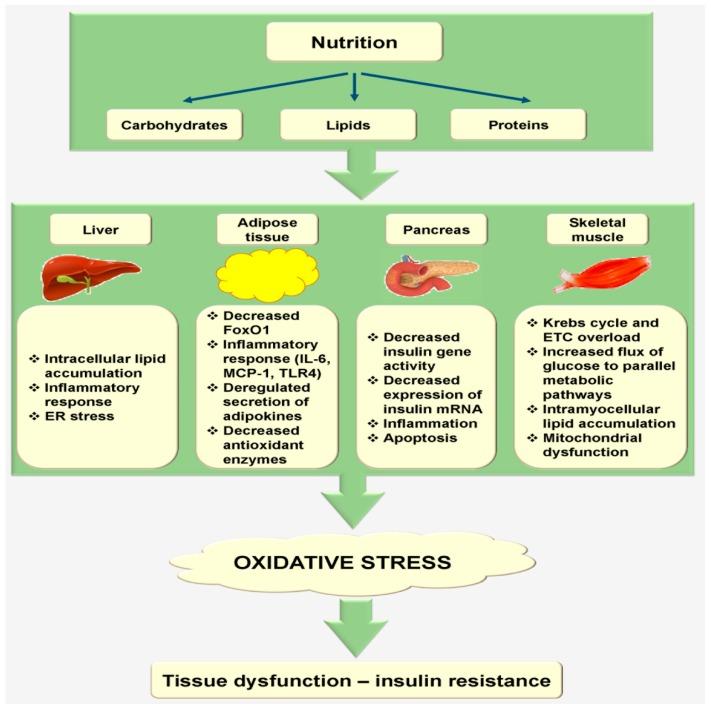
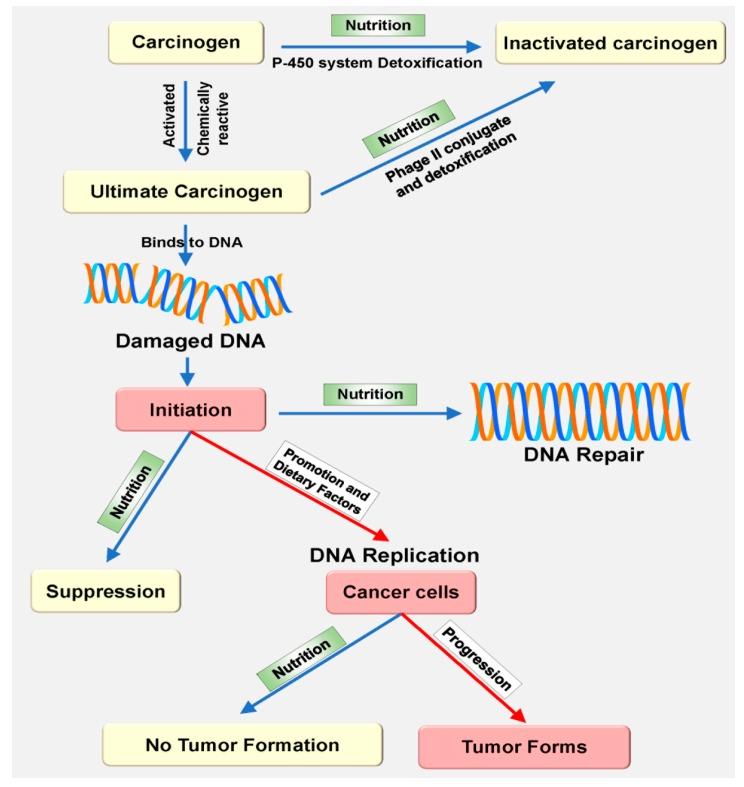
Inadequate or excessive nutrient consumption leads to oxidative stress, which may disrupt oxidative homeostasis, activate a cascade of molecular pathways, and alter the metabolic status of various tissues. Several foods and consumption patterns have been associated with various cancers and approximately 30-35% of the cancer cases are correlated with overnutrition or malnutrition. However, several contradictory studies are available regarding the association between diet and cancer risk, which remains to be elucidated. Concurrently, oxidative stress is a crucial factor for cancer progression and therapy. Nutritional oxidative stress may be induced by an imbalance between antioxidant defense and pro-oxidant load due to inadequate or excess nutrient supply. Oxidative stress is a physiological state where high levels of reactive oxygen species (ROS) and free radicals are generated. Several signaling pathways associated with carcinogenesis can additionally control ROS generation and regulate ROS downstream mechanisms, which could have potential implications in anticancer research. Cancer initiation may be modulated by the nutrition-mediated elevation in ROS levels, which can stimulate cancer initiation by triggering DNA mutations, damage, and pro-oncogenic signaling. Therefore, in this review, we have provided an overview of the relationship between nutrition, oxidative stress, and cancer initiation, and evaluated the impact of nutrient-mediated regulation of antioxidant capability against cancer therapy.
营养摄入不足或过量会导致氧化应激,这可能会破坏氧化稳态,激活一系列分子途径,并改变各种组织的代谢状态。几种食物和消费模式与各种癌症有关,约30-35%的癌症病例与营养过剩或营养不良相关。然而,关于饮食与癌症风险之间的关联存在一些相互矛盾的研究,这仍有待阐明。同时,氧化应激是癌症进展和治疗的关键因素。由于营养供应不足或过量,抗氧化防御与促氧化负荷之间的失衡可能会引发营养性氧化应激。氧化应激是一种产生高水平活性氧(ROS)和自由基的生理状态。一些与致癌作用相关的信号通路还可以控制ROS的产生并调节ROS的下游机制,这可能在抗癌研究中具有潜在意义。癌症的发生可能受到营养介导的ROS水平升高的调节,ROS水平升高可通过引发DNA突变、损伤和促癌信号传导来刺激癌症的发生。因此,在本综述中,我们概述了营养、氧化应激与癌症发生之间的关系,并评估了营养介导的抗氧化能力调节对癌症治疗的影响。



 Zotero 插件