Ariizumi Hirotsugu, Sasaki Yosuke, Harada Hiroshi, Uto Yui, Azuma Remi, Isobe Tomohide, Kishimoto Koji, Shiozawa Eisuke, Takimoto Masafumi, Ohike Nobuyuki, Mori Hiraku
Department of Hematology, Showa University Fujigaoka Hospital, Japan.
Department of Pathology, Showa University School of Medicine, Japan.
Intern Med. 2017;56(14):1855-1861. doi: 10.2169/internalmedicine.56.8125. Epub 2017 Jul 15.
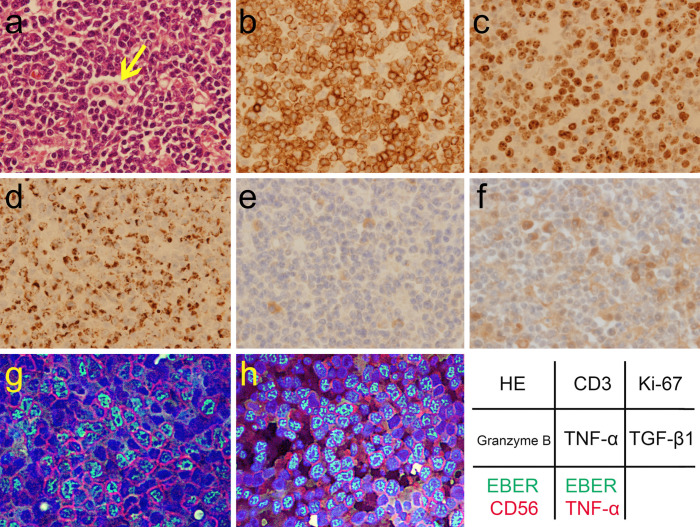
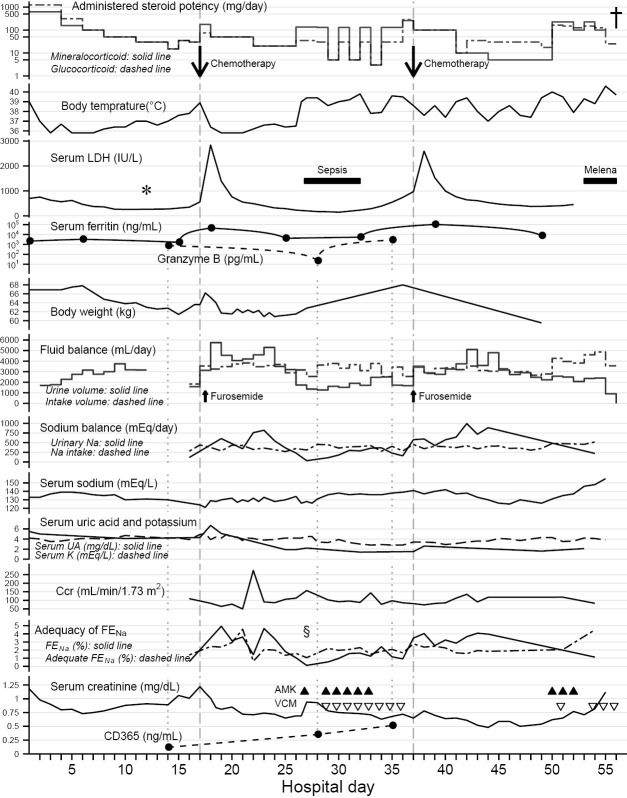
The pathogenesis of cerebral/renal salt-wasting syndrome remains unknown. We herein present a case of salt-wasting syndrome with a natural killer-cell neoplasm without cerebral invasion. A 78-year-old man with hemophagocytic syndrome received two cycles of chemotherapy that did not induce tumor lysis syndrome, but repeatedly caused polyuria and natriuresis. The expression of tumor necrosis factor-α in the neoplasm led us to hypothesize that an oncolysis-induced cytokine storm may have caused renal tubular damage and salt wasting. Our theory may explain the pathogenic mechanism of cerebral/renal salt-wasting syndrome associated with other entities, including cerebral disorders, owing to the elevation of cytokine levels after subarachnoid hemorrhage.
脑/肾性失盐综合征的发病机制尚不清楚。我们在此报告一例患有自然杀伤细胞肿瘤且无脑侵犯的失盐综合征病例。一名患有噬血细胞综合征的78岁男性接受了两个周期的化疗,化疗未诱发肿瘤溶解综合征,但反复导致多尿和钠尿。肿瘤中肿瘤坏死因子-α的表达使我们推测,肿瘤溶解诱导的细胞因子风暴可能导致了肾小管损伤和失盐。我们的理论可能解释了与包括脑部疾病在内的其他实体相关的脑/肾性失盐综合征的致病机制,这是由于蛛网膜下腔出血后细胞因子水平升高所致。