Jeon Yeon Jin, Lee Hyun Young, Jung In Ah, Cho Won-Kyoung, Cho Bin, Suh Byung-Kyu
Department of Pediatrics, College of Medicine, The Catholic University of Korea, Seoul, Korea.
Ann Pediatr Endocrinol Metab. 2015 Dec;20(4):220-5. doi: 10.6065/apem.2015.20.4.220. Epub 2015 Dec 31.
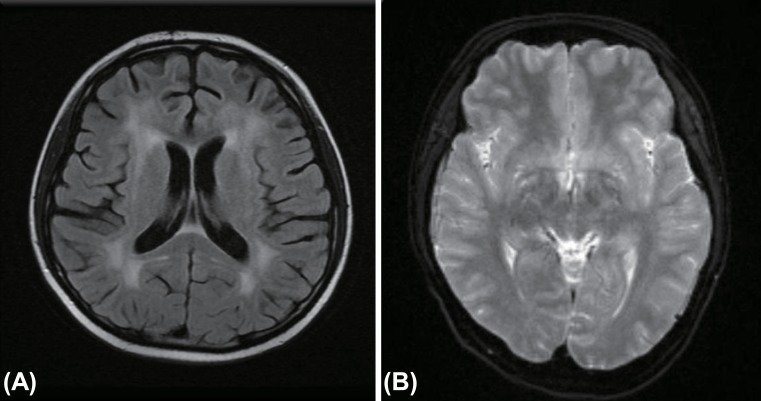
Cerebral salt-wasting syndrome (CSWS) is a rare disease characterized by a extracellular volume depletion and hyponatremia induced by marked natriuresis. It is mainly reported in patients who experience a central nervous system insult, such as cerebral hemorrhage or encephalitis. The syndrome of inappropriate antidiuretic hormone secretion is a main cause of severe hyponatremia after hematopoietic stem cell transplantation, whereas CSWS is rarely reported. We report 3 patients with childhood acute leukemia who developed CSWS with central nervous system complication after hematopoietic stem cell transplantation. The diagnosis of CSW was made on the basis of severe hyponatremia accompanied by increased urine output with clinical signs of dehydration. All patients showed elevated natriuretic peptide and normal antidiuretic hormone. Aggressive water and sodium replacement treatment was instituted in all 3 patients and 2 of them were effectively recovered, the other one was required to add fludrocortisone administration.
脑性盐耗综合征(CSWS)是一种罕见疾病,其特征为显著利钠导致细胞外液量减少和低钠血症。主要见于经历中枢神经系统损伤的患者,如脑出血或脑炎患者。抗利尿激素分泌不当综合征是造血干细胞移植后严重低钠血症的主要原因,而CSWS鲜有报道。我们报告3例儿童急性白血病患者,在造血干细胞移植后发生CSWS并伴有中枢神经系统并发症。CSW的诊断基于严重低钠血症伴尿量增加及脱水的临床体征。所有患者利钠肽升高而抗利尿激素正常。对所有3例患者均采取积极的水和钠补充治疗,其中2例有效康复,另1例需要加用氟氢可的松治疗。