Qian Wei, Wei Xiaoqin, Guo Kelei, Li Yongtao, Lin Xian, Zou Zhong, Zhou Hongbo, Jin Meilin
State Key Laboratory of Agricultural Microbiology, Huazhong Agricultural University, Wuhan, China.
Department of Preventive Veterinary Medicine, College of Animal Science & Medicine, Huazhong Agricultural University, Wuhan, China.
Front Immunol. 2017 Jul 3;8:779. doi: 10.3389/fimmu.2017.00779. eCollection 2017.
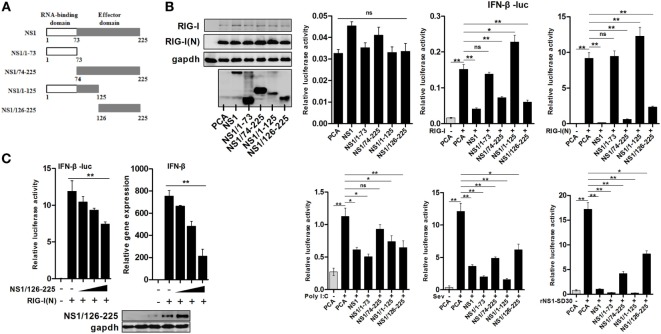
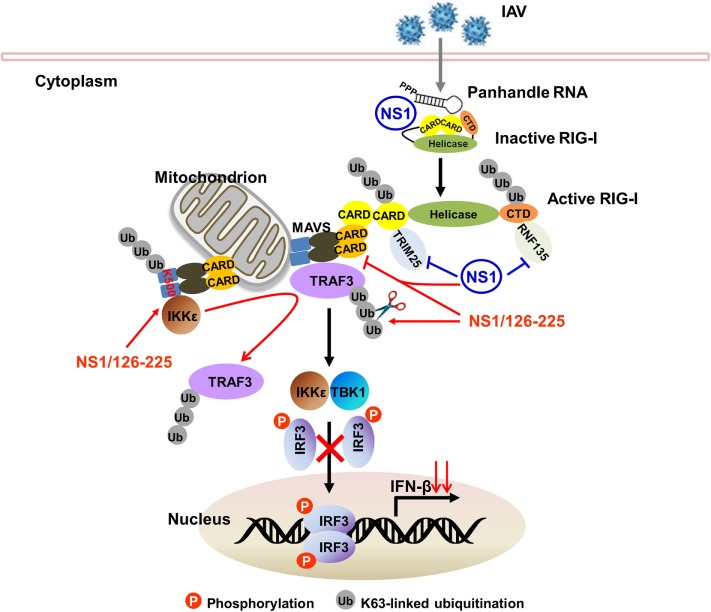
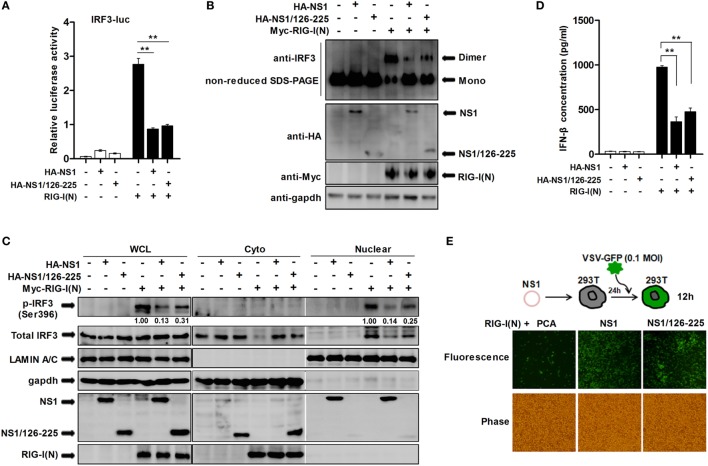
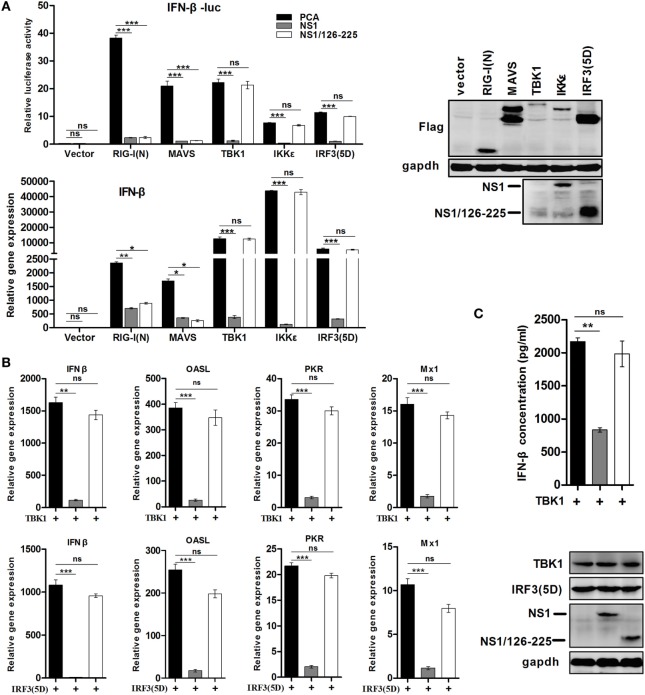
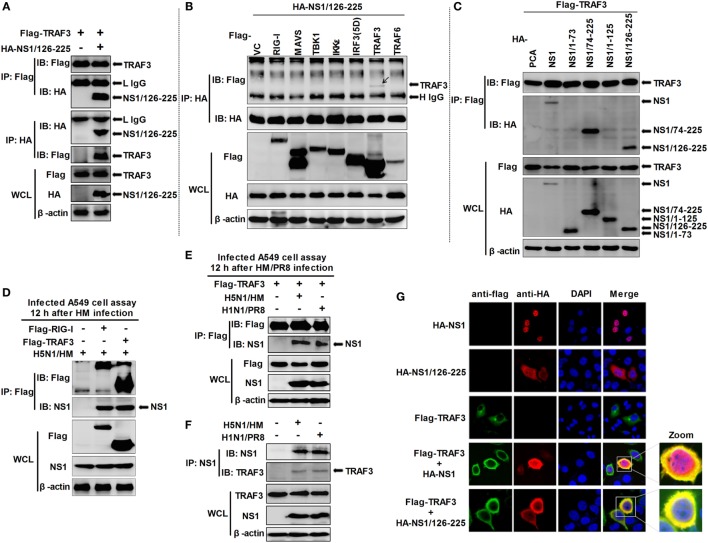
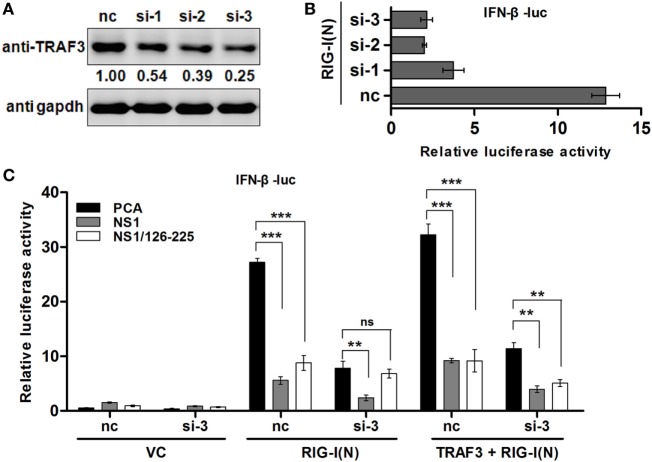
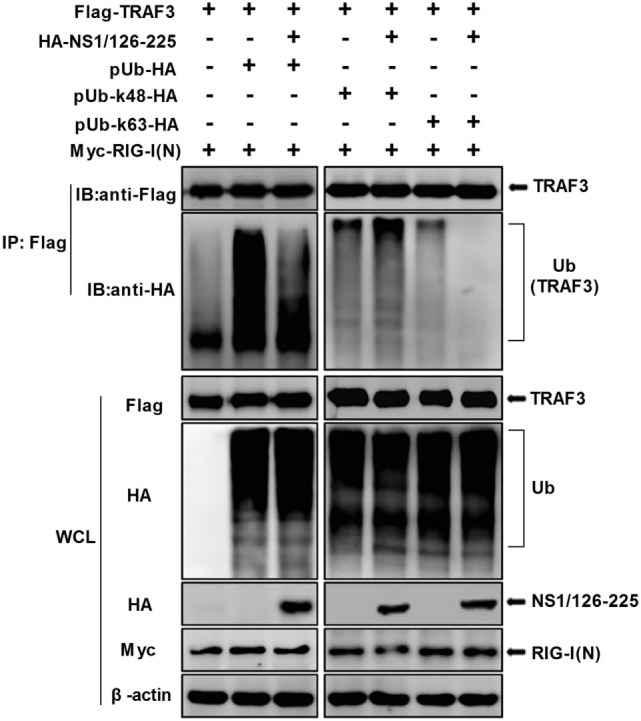
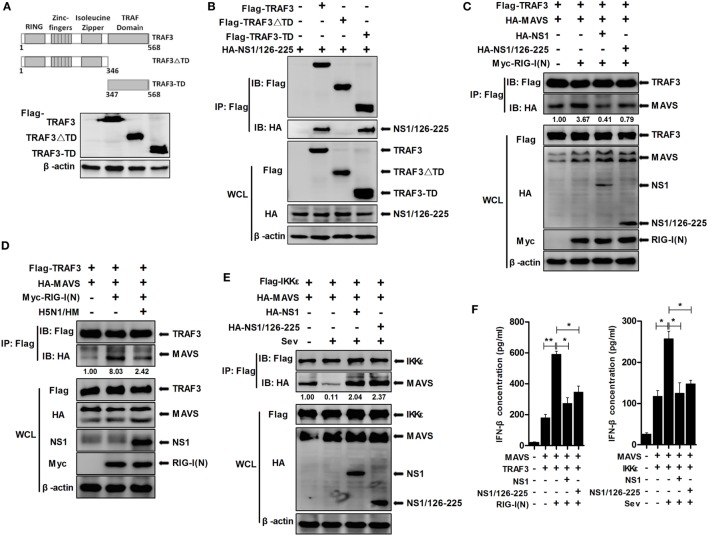
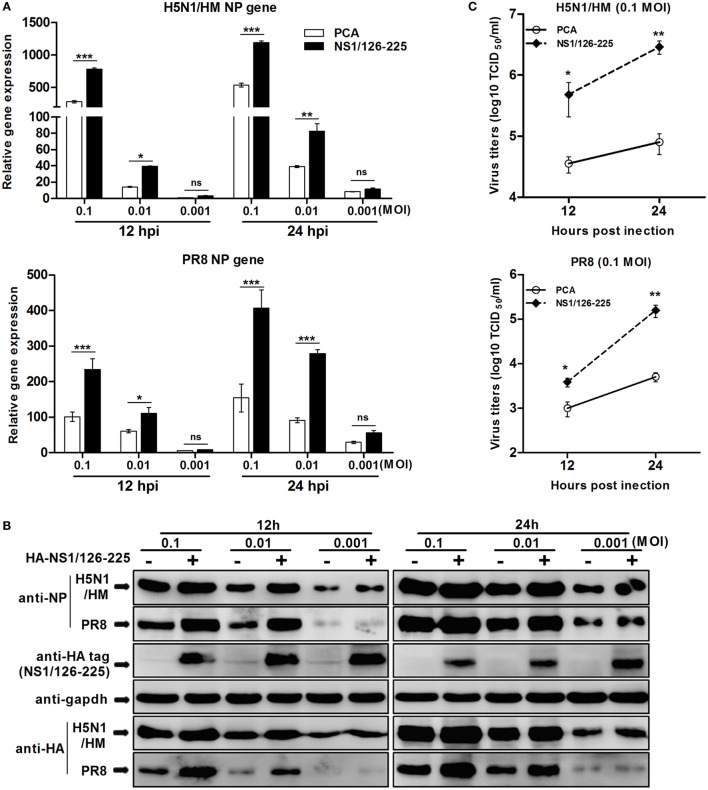
Influenza A virus non-structural protein 1 (NS1) antagonizes interferon response through diverse strategies, particularly by inhibiting the activation of interferon regulatory factor 3 (IRF3) and IFN-β transcription. However, the underlying mechanisms used by the NS1 C-terminal effector domain (ED) to inhibit the activation of IFN-β pathway are not well understood. In this study, we used influenza virus subtype of H5N1 to demonstrate that the NS1 C-terminal ED but not the N-terminal RNA-binding domain, binds TNF receptor-associated factor 3 (TRAF3). This results in an attenuation of the type I IFN signaling pathway. We found that the NS1 C-terminal ED (named NS1/126-225) inhibits the active caspase activation and recruitment domain-containing form of RIG-I [RIG-I(N)]-induced IFN-β reporter activity, the phosphorylation of IRF3, and the induction of IFN-β. Further analysis showed that NS1/126-225 binds to TRAF3 through the TRAF domain, subsequently decreasing TRAF3 K63-linked ubiquitination. NS1/126-225 binding also disrupted the formation of the mitochondrial antiviral signaling (MAVS)-TRAF3 complex, increasing the recruitment of IKKε to MAVS; ultimately shutting down the RIG-I(N)-mediated signal transduction and cellular antiviral responses. This attenuation of cellular antiviral responses leads to evasion of the innate immune response. Taken together, our findings offer an important insight into the interplay between the influenza virus and host innate immunity.
甲型流感病毒非结构蛋白1(NS1)通过多种策略拮抗干扰素反应,特别是通过抑制干扰素调节因子3(IRF3)的激活和IFN-β转录。然而,NS1 C末端效应结构域(ED)抑制IFN-β途径激活的潜在机制尚不清楚。在本研究中,我们使用H5N1流感病毒亚型来证明NS1 C末端ED而非N末端RNA结合结构域与肿瘤坏死因子受体相关因子3(TRAF3)结合。这导致I型干扰素信号通路减弱。我们发现NS1 C末端ED(命名为NS1/126-225)抑制含活性半胱天冬酶激活和招募结构域的RIG-I [RIG-I(N)]诱导的IFN-β报告基因活性、IRF3的磷酸化以及IFN-β的诱导。进一步分析表明,NS1/126-225通过TRAF结构域与TRAF3结合,随后降低TRAF3 K63连接的泛素化。NS1/126-225的结合还破坏了线粒体抗病毒信号(MAVS)-TRAF3复合物的形成,增加了IKKε向MAVS的募集;最终关闭RIG-I(N)介导的信号转导和细胞抗病毒反应。这种细胞抗病毒反应的减弱导致先天免疫反应的逃避。综上所述,我们的研究结果为流感病毒与宿主先天免疫之间的相互作用提供了重要见解。