Department of Orthopaedics, Henan Provincial People's Hospital, No. 7 Weiwu Road, Zhengzhou, 450003, China.
J Biomed Sci. 2017 Jul 18;24(1):46. doi: 10.1186/s12929-017-0353-9.
LncRNA small nucleolar RNA host gene 15 (SNHG15) was reported to play an oncogenic role in tumors. However, the role of SNHG15 and its molecular mechanism in osteosarcoma (OS) cells are largely unknown.
qRT-PCR was performed to evaluate the expression levels of SNHG15 and miR-141 in OS tissues and cells. Cell transfection with different siRNAs, miRNAs or pcDNAs into U2OS and MG63 cells were carried out by Lipofectamine 2000. The effects of SNHG15 and miR-141 on OS cell proliferation, invasion and the levels of autophagy-related proteins were analyzed by MTT assay, Transwell invasion/migration assay and western blot, respectively. Luciferase reporter assay was used to confirm whether SNHG15 could directly interact with miR-141.
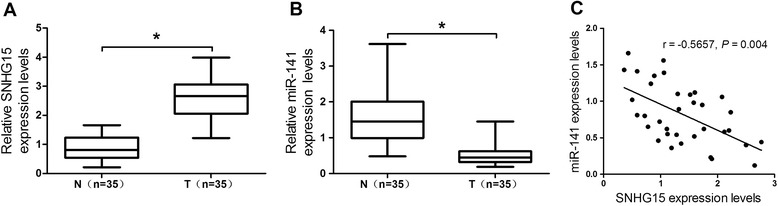
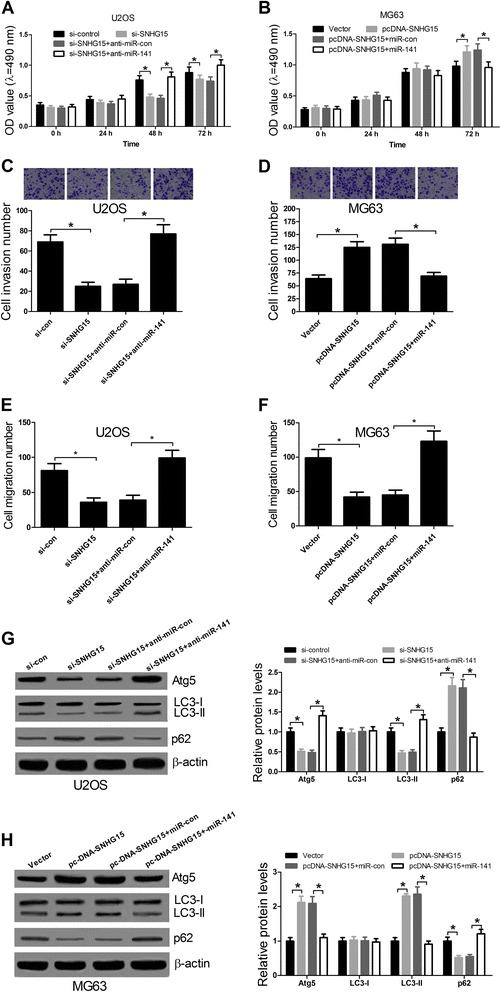
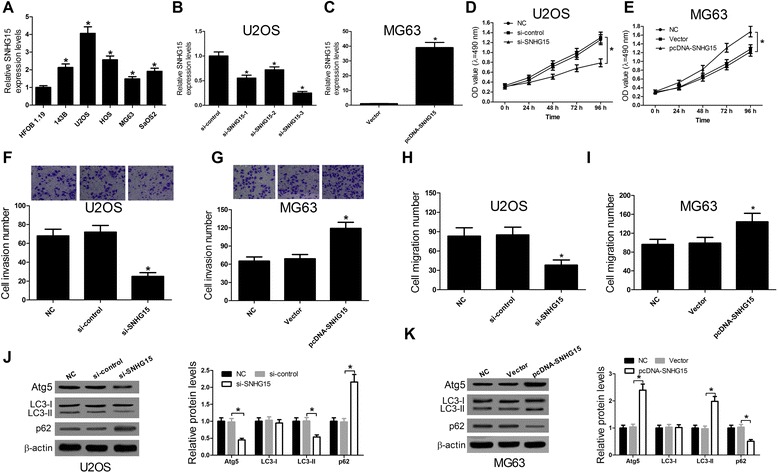
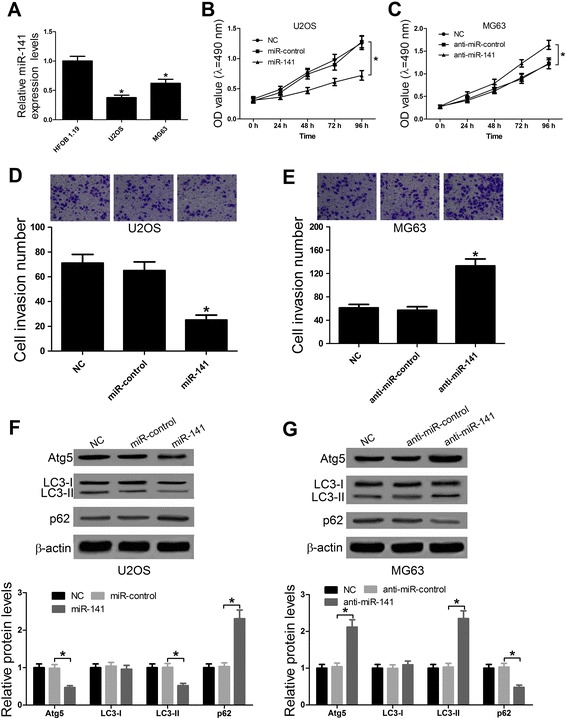
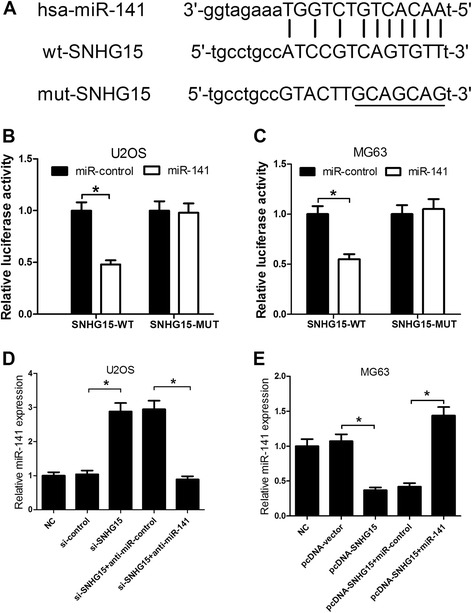
We found that up-regulation of SNHG15 was inversely correlated with miR-141 expression in OS tissues. SNHG15 knockdown and miR-141 overexpression significantly suppressed cell proliferation, invasion, migration and autophagy while SNHG15 overexpression and miR-141 repression exhibited the opposite effects on OS cells. Besides, SNHG15 could directly interact with miR-141 and regulate its expression. Furthermore, miR-141 suppressing significantly overturned the inhibition on proliferation, invasion, migration and autophagy mediated by SNHG15 knockdown while miR-141 overexpression remarkably attenuated SNHG15 overexpression-induced proliferation, invasion, migration and autophagy in OS cells.
Our data showed that SNHG15 contributes to proliferation, invasion, migration and autophagy in OS by negatively regulating miR-141, providing a new potential target and prognostic biomarker for the treatment of OS.
长链非编码 RNA 小核仁 RNA 宿主基因 15(SNHG15)被报道在肿瘤中发挥致癌作用。然而,SNHG15 及其在骨肉瘤(OS)细胞中的分子机制在很大程度上尚不清楚。
通过 qRT-PCR 评估 SNHG15 和 miR-141 在 OS 组织和细胞中的表达水平。通过 Lipofectamine 2000 将不同的 siRNA、miRNA 或 pcDNA 转染到 U2OS 和 MG63 细胞中。通过 MTT 测定、Transwell 侵袭/迁移测定和 Western blot 分别分析 SNHG15 和 miR-141 对 OS 细胞增殖、侵袭和自噬相关蛋白水平的影响。通过荧光素酶报告基因测定证实 SNHG15 是否可以直接与 miR-141 相互作用。
我们发现 SNHG15 的上调与 OS 组织中 miR-141 的表达呈负相关。SNHG15 敲低和 miR-141 过表达显著抑制细胞增殖、侵袭、迁移和自噬,而 SNHG15 过表达和 miR-141 下调对 OS 细胞则表现出相反的作用。此外,SNHG15 可以直接与 miR-141 相互作用并调节其表达。此外,miR-141 抑制显著逆转了 SNHG15 敲低介导的增殖、侵袭、迁移和自噬抑制作用,而 miR-141 过表达显著减弱了 SNHG15 过表达诱导的 OS 细胞增殖、侵袭、迁移和自噬。
我们的数据表明,SNHG15 通过负调控 miR-141 促进 OS 中的增殖、侵袭、迁移和自噬,为 OS 的治疗提供了新的潜在靶点和预后生物标志物。