Department of Ultrasound In Medicine, Shanghai Jiao Tong University Affiliated 6th People's Hospital, Shanghai Institute of Ultrasound in Medicine, Shanghai, 200233, China.
Sci Rep. 2017 Jul 18;7(1):5778. doi: 10.1038/s41598-017-06242-8.
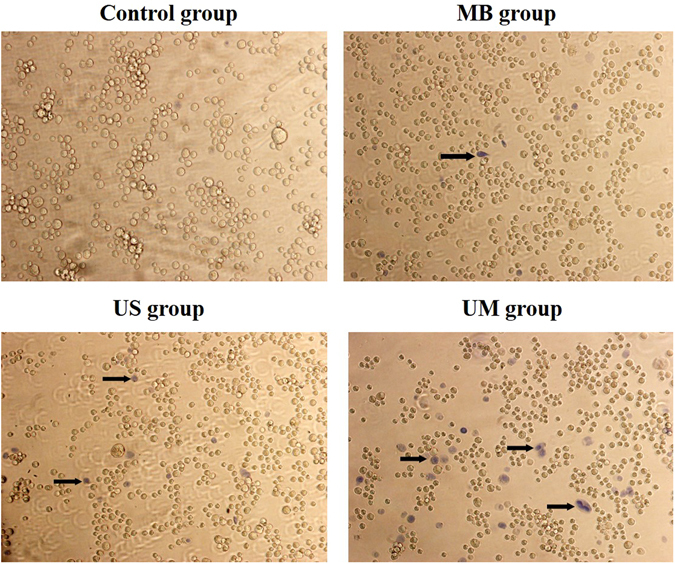
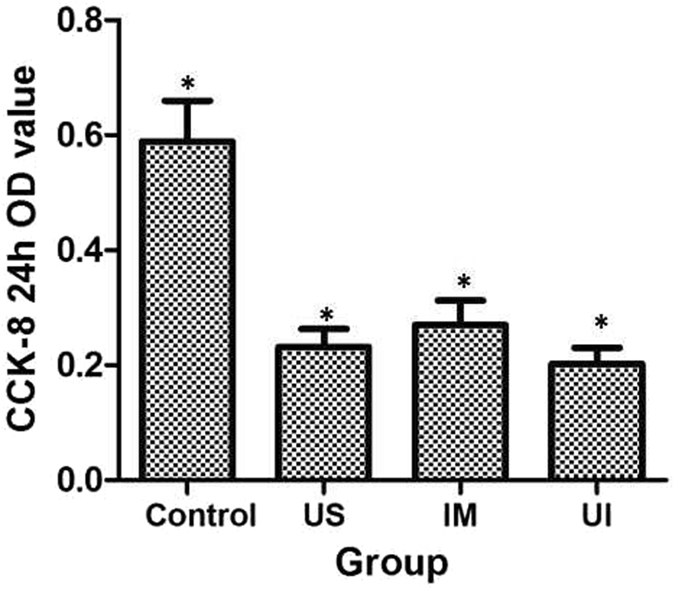
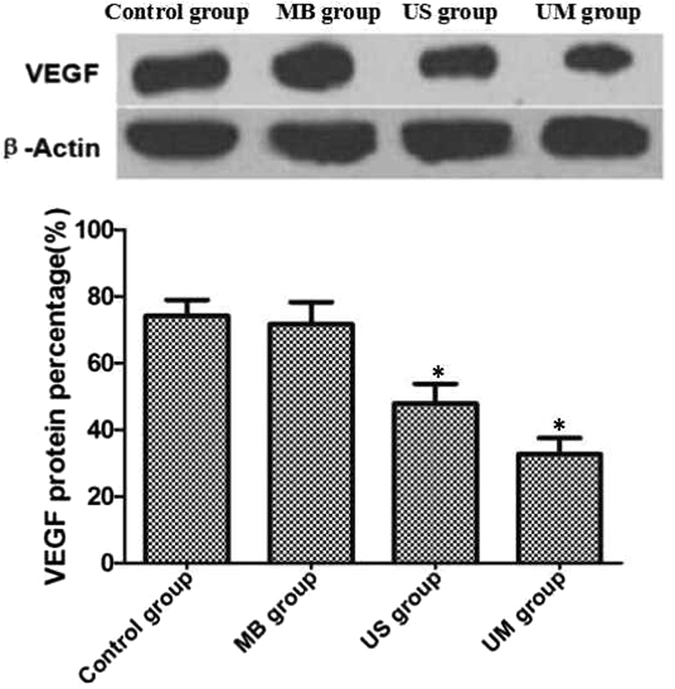
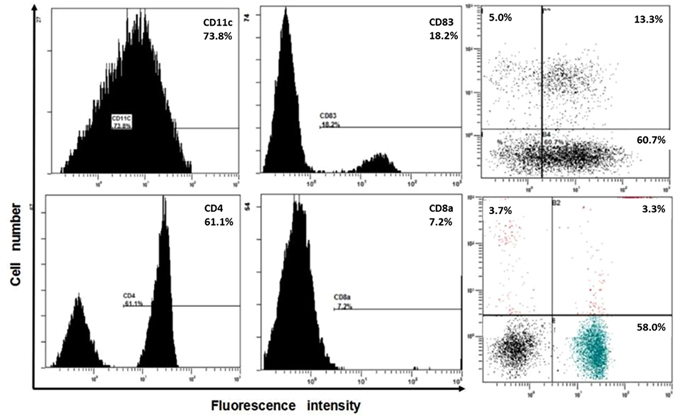
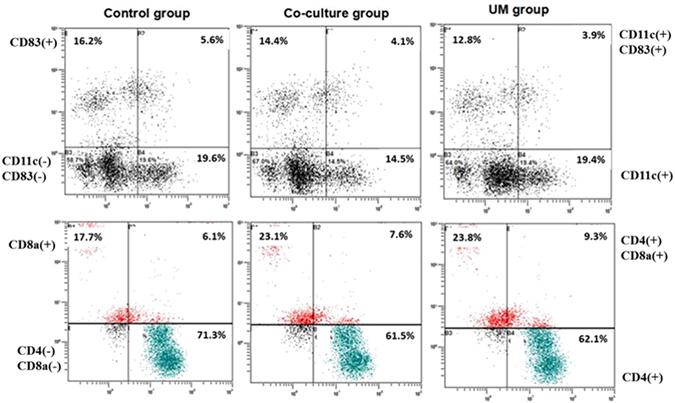
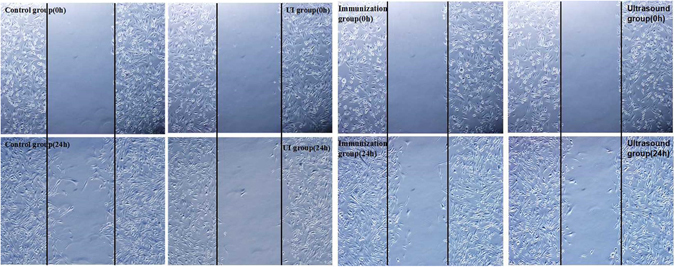
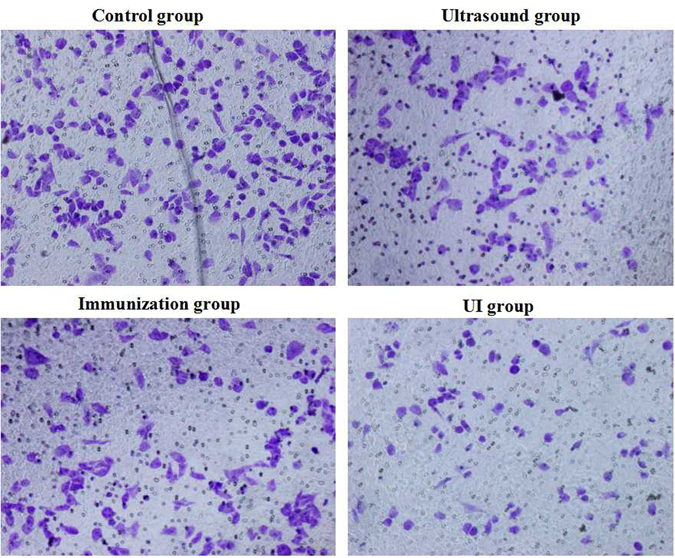
High tumor vascular endothelial growth factor (VEGF) levels are associated with poor treatment outcomes in prostate cancer (PCa), and immune deficiency in the PCa microenvironment, especially suppression of dendritic cell (DC) proliferation, has been confirmed. In this study, we (1) investigated whether VEGF participates in DC suppression in murine PCa cells (RM-1), (2) down-regulated VEGF expression using low-frequency ultrasound and microbubbles (UM), and (3) further explored any synergistic effect on immunological activation. DCs from the bone marrow of BALB/c mice were stimulated by the addition of cytokines (granulocyte-macrophage colony-stimulating factor (GM-CSF) and interleukin-4 (IL-4)), and we analyzed their proliferation status via flow cytometric recognition of the surface antigen markers CD11c and CD83. The results demonstrated that co-culture with RM-1 cells markedly inhibited expression of the general marker CD11c and the mature marker CD83; UM weakened this inhibition by down-regulating VEGF expression. T lymphocytes were extracted from murine spleens, and CD4 and CD8a were identified as the biomarkers of activated cells participating in the anti-tumor immune response. When DCs, T lymphocytes and RM-1 cells were co-cultured, cell migration and invasion assays and cytoactive detection showed that UM could not only directly suppress PCa cell evolution but also promote activation of anti-tumor immunocytes in the VEGF-inhibited microenvironment.
高肿瘤血管内皮生长因子(VEGF)水平与前列腺癌(PCa)的治疗效果差有关,并且 PCa 微环境中的免疫缺陷已经得到证实,特别是树突状细胞(DC)的增殖受到抑制。在这项研究中,我们(1)研究了 VEGF 是否参与了鼠源 PCa 细胞(RM-1)中的 DC 抑制,(2)使用低频超声和微泡(UM)下调 VEGF 表达,(3)进一步探索了对免疫激活的协同作用。通过添加细胞因子(粒细胞巨噬细胞集落刺激因子(GM-CSF)和白细胞介素-4(IL-4))来刺激来自 BALB/c 小鼠骨髓的 DC,我们通过流式细胞术识别表面抗原标志物 CD11c 和 CD83 来分析它们的增殖状态。结果表明,与 RM-1 细胞共培养明显抑制了通用标志物 CD11c 和成熟标志物 CD83 的表达;UM 通过下调 VEGF 表达减弱了这种抑制作用。从鼠脾中提取 T 淋巴细胞,CD4 和 CD8a 被鉴定为参与抗肿瘤免疫反应的活化细胞的标志物。当 DC、T 淋巴细胞和 RM-1 细胞共培养时,细胞迁移和侵袭实验以及细胞活性检测表明,UM 不仅可以直接抑制 PCa 细胞的演进,而且可以促进 VEGF 抑制微环境中抗肿瘤免疫细胞的激活。