Setia Sajita, Subramaniam Kannan, Teo Boon Wee, Tay Jam Chin
Chief Medical Office, Medical Affairs, Pfizer Pte Ltd, Singapore.
Global Medical Affairs, Asia Pacific Region, Pfizer Australia, West Ryde, New South Wales, Australia.
Int J Gen Med. 2017 Jul 3;10:189-197. doi: 10.2147/IJGM.S138789. eCollection 2017.
Out-of-office blood pressure (BP) measurements (home blood pressure monitoring [HBPM] and ambulatory blood pressure monitoring [ABPM]) provide important additional information for effective hypertension detection and management decisions. Therefore, out-of-office BP measurement is now recommended by several international guidelines. This study evaluated the practice and uptake of HBPM and ABPM among physicians from Singapore.
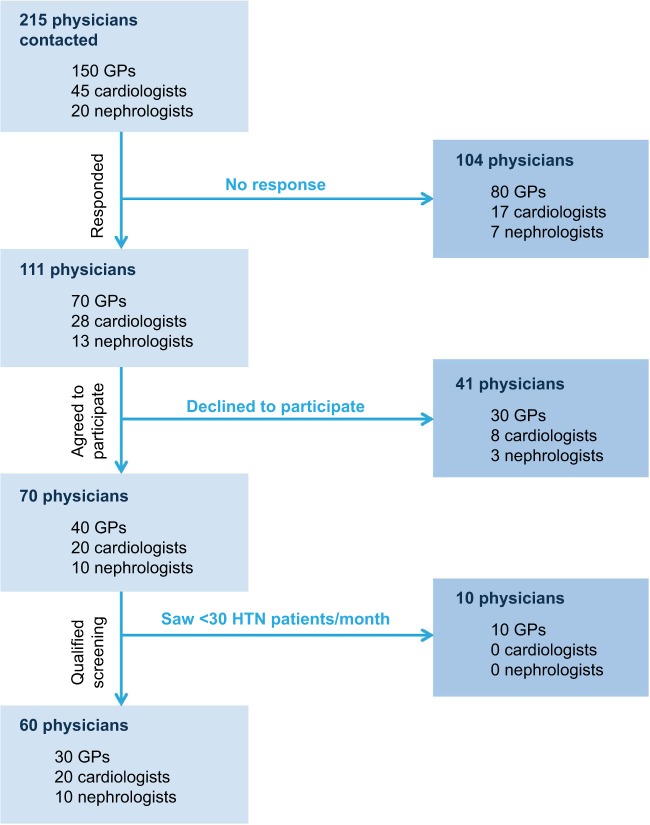
A sample of physicians from Singapore was surveyed between 8 September and 5 October 2016. Those included were in public or private practice had been practicing for ≥3 years, directly cared for patients ≥70% of the time, and treated ≥30 patients for hypertension per month. The questionnaire covered six main categories: general BP management, BP variability (BPV) awareness/diagnosis, HBPM, ABPM, BPV management, and associated training needs.
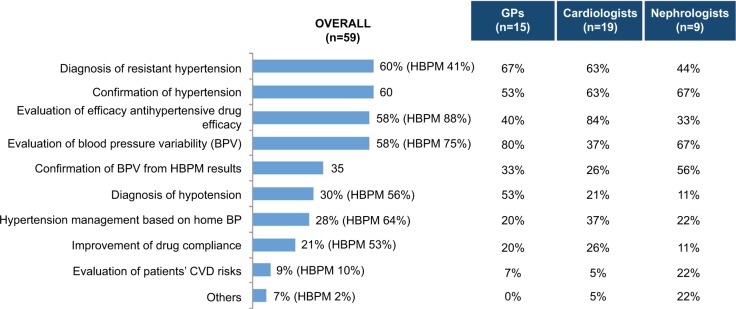
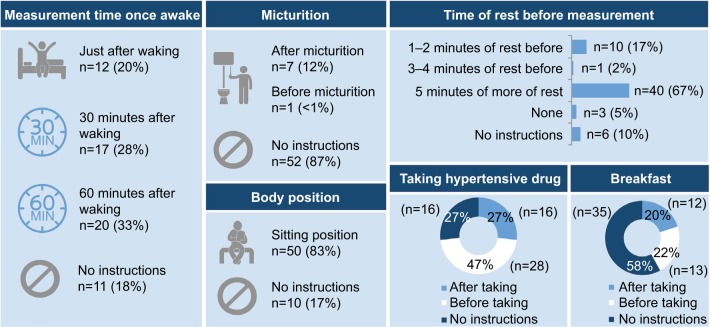
Sixty physicians (30 general practitioners, 20 cardiologists, and 10 nephrologists) were included (77% male, 85% aged 31-60 years, and mean 22-year practice). Physicians recommended HBPM and ABPM to 81% and 27% of hypertensive patients, respectively. HBPM was most often used to monitor antihypertensive therapy (88% of physicians) and 97% thought that ABPM was useful for providing information on BPV. HBPM instructions often differed from current guideline recommendations in terms of frequency, number of measurements, and timing. The proportion of consultation time devoted to discussing HBPM and BPV was one-quarter or less for 73% of physicians, and only 55% said that they had the ability to provide education on HBPM and BPV. Patient inertia, poor patient compliance, lack of medical consultation time, and poor patient access to a BP machine were the most common challenges for implementing out-of-office BP monitoring.
Although physicians from Singapore do recommend out-of-office BP measurement to patients with hypertension, this survey identified several important gaps in knowledge and clinical practice.
诊室外血压测量(家庭血压监测[HBPM]和动态血压监测[ABPM])为有效的高血压检测和管理决策提供了重要的额外信息。因此,目前多项国际指南都推荐进行诊室外血压测量。本研究评估了新加坡医生对HBPM和ABPM的应用情况及接受程度。
2016年9月8日至10月5日对新加坡的一组医生进行了调查。纳入的医生在公立或私立机构执业,执业时间≥3年,直接护理患者的时间≥70%,每月治疗高血压患者≥30例。问卷涵盖六个主要类别:一般血压管理、血压变异性(BPV)认知/诊断、HBPM、ABPM、BPV管理以及相关培训需求。
共纳入60名医生(30名全科医生、20名心脏病专家和10名肾病专家)(77%为男性,85%年龄在31 - 60岁之间,平均执业22年)。医生分别向81%和27%的高血压患者推荐了HBPM和ABPM。HBPM最常用于监测降压治疗(88%的医生),97%的医生认为ABPM有助于提供BPV信息。HBPM的指导在测量频率、测量次数和时间安排方面常常与当前指南建议不同。73%的医生用于讨论HBPM和BPV的咨询时间占比为四分之一或更少,只有55%的医生表示他们有能力提供关于HBPM和BPV的教育。患者惰性、患者依从性差、缺乏医疗咨询时间以及患者难以获得血压测量设备是实施诊室外血压监测最常见的挑战。
尽管新加坡的医生确实向高血压患者推荐诊室外血压测量,但本次调查发现了知识和临床实践方面的几个重要差距。