Callaghan Christian W
University of the Witwatersrand, School of Economic and Business Sciences, Johannesburg, South Africa.
Curr Aging Sci. 2018;11(1):33-44. doi: 10.2174/1874609810666170719100122.
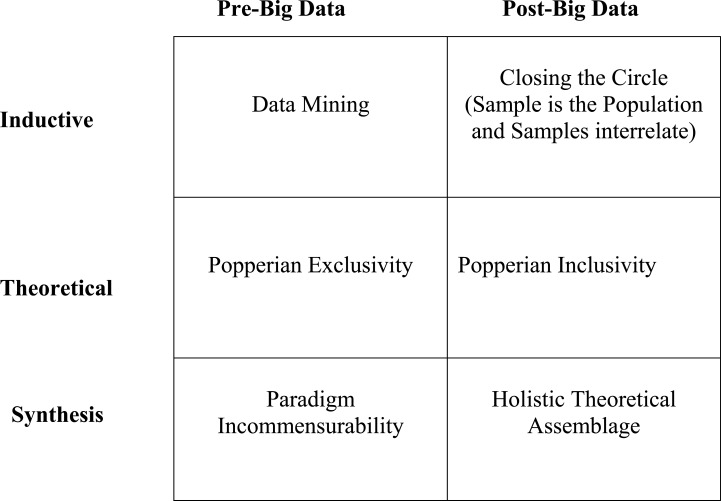
Advances in big data analytics can enable more effective and efficient research processes, with important implications for aging research. Translating these new potentialities to research outcomes, however, remains a challenge, as exponentially increasing big data availability is yet to translate into a commensurate era of 'big knowledge,' or exponential increases in biomedical breakthroughs. Some argue that big data analytics heralds a new era associated with the 'end of theory.' According to this perspective, correlation supersedes causation, and science will ultimately advance without theory and hypotheses testing. On the other hand, others argue that theory cannot be subordinate to data, no matter how comprehensive data coverage may ultimately become.
Given these two tensions, namely (i) between exponential increases in data that have not translated into exponential increases in biomedical research outputs; and (ii) between the promise of comprehensive data coverage and inductive data-driven modes of enquiry versus theory-driven deductive modes, this critical review seeks to offer useful perspectives of big data analytics and to derive certain theoretical implications for aging research.
This work offers a critical review of theory and literature relating big data to aging research.
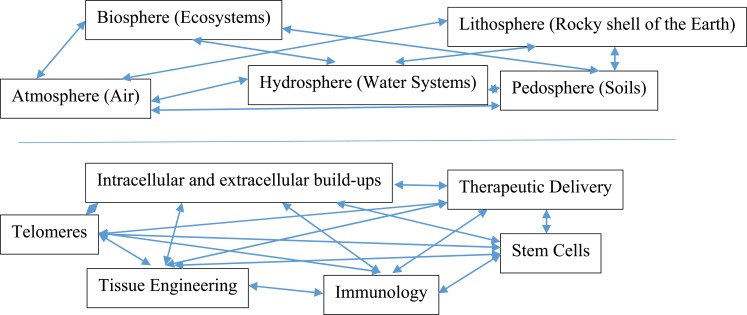
The rise of big data provides important insights into the theory development process itself, highlighting potential for holistic theoretical assemblage to ultimately enable near real time research capability.
Big data may represent a new paradigm of aging research that can dramatically increase the rate of scientific breakthroughs, but innovative theory development remains key to this potential.
大数据分析的进展能够实现更有效且高效的研究过程,这对衰老研究具有重要意义。然而,将这些新的潜力转化为研究成果仍然是一项挑战,因为大数据可用性呈指数级增长,但尚未转化为与之相称的“大知识”时代,即生物医学突破的指数级增长。一些人认为大数据分析预示着一个与“理论终结”相关的新时代。按照这种观点,相关性取代了因果关系,科学最终将在没有理论和假设检验的情况下取得进展。另一方面,其他人则认为,无论数据覆盖最终可能变得多么全面,理论都不能从属于数据。
鉴于这两种矛盾,即(i)数据的指数级增长尚未转化为生物医学研究产出的指数级增长;以及(ii)全面数据覆盖的前景与归纳式数据驱动的探究模式与理论驱动的演绎模式之间的矛盾,本综述旨在提供有关大数据分析的有用观点,并得出对衰老研究的某些理论启示。
这项工作对将大数据与衰老研究相关的理论和文献进行了批判性综述。
大数据的兴起为理论发展过程本身提供了重要见解,突出了整体理论整合最终实现近乎实时研究能力的潜力。
大数据可能代表了衰老研究的一种新范式,能够显著提高科学突破的速度,但创新的理论发展仍然是实现这一潜力的关键。