Elrod James K, Fortenberry John L
Willis-Knighton Health System, 2600 Greenwood Road, Shreveport, LA 71103, USA.
LSU Shreveport, 1 University Place, Shreveport, LA, 71115, USA.
BMC Health Serv Res. 2017 Jul 11;17(Suppl 1):457. doi: 10.1186/s12913-017-2341-x.
The healthcare industry is characterized by intensive, never-ending change occurring on a multitude of fronts. Success in such tumultuous environments requires healthcare providers to be proficient in myriad areas, including the manner in which they organize and deliver services. Less efficient designs drain precious resources and hamper efforts to deliver the best care possible to patients, making it imperative that optimal pathways are identified and pursued. One particular avenue that offers great potential for serving patients efficiently and effectively is known as the hub-and-spoke organization design.
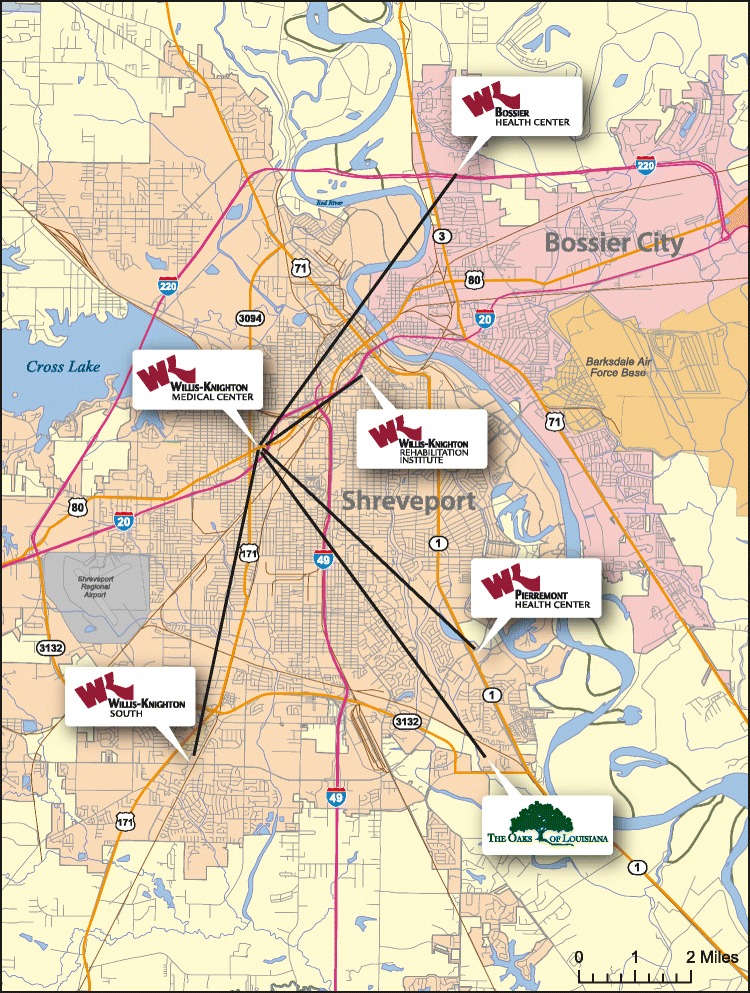
The hub-and-spoke organization design is a model which arranges service delivery assets into a network consisting of an anchor establishment (hub) which offers a full array of services, complemented by secondary establishments (spokes) which offer more limited service arrays, routing patients needing more intensive services to the hub for treatment. Hub-and-spoke networks afford many benefits for healthcare providers, but in order to capitalize fully, proper assembly is required. To advance awareness, knowledge, and use of the hub-and-spoke organization design, this article profiles Willis-Knighton Health System's service delivery network which has utilized the model for over three decades. Among other things, the hub-and-spoke organization design is defined, benefits are stipulated, and applications are discussed, permitting healthcare providers essential insights for the establishment and operation of these networks.
The change-rich nature of the healthcare industry places a premium on incorporating advancements that permit health and medical providers to operate as optimally as possible. The hub-and-spoke organization design represents an option that, when deployed correctly, can greatly assist healthcare establishments in their quests to serve patients well.
医疗行业的特点是在多个方面发生着密集且持续不断的变革。在如此动荡的环境中取得成功,要求医疗服务提供者精通众多领域,包括他们组织和提供服务的方式。效率较低的设计会消耗宝贵的资源,并阻碍为患者提供尽可能最佳护理的努力,因此必须确定并采用最佳途径。一种在高效且有效地服务患者方面具有巨大潜力的特定途径被称为“轮辐式”组织设计。
“轮辐式”组织设计是一种将服务提供资产安排成一个网络的模式,该网络由一个提供全面服务的核心机构(中心)和一些提供更有限服务范围的二级机构(辐条)组成,将需要更深入治疗服务的患者引导至中心进行治疗。“轮辐式”网络为医疗服务提供者带来了许多益处,但为了充分利用这些益处,需要进行适当的整合。为了提高对“轮辐式”组织设计的认识、知识和应用,本文介绍了威利斯 - 奈顿医疗系统的服务提供网络,该网络已经使用这种模式超过三十年。文章除其他内容外,对“轮辐式”组织设计进行了定义,规定了其益处,并讨论了其应用,使医疗服务提供者对这些网络的建立和运营有了重要的见解。
医疗行业丰富多变的性质使得采用能够让健康和医疗服务提供者尽可能高效运作的进步方法变得至关重要。“轮辐式”组织设计是一种选择,当正确部署时,可以极大地帮助医疗机构更好地为患者服务。