Perdikis Dionysios, Volhard Jakob, Müller Viktor, Kaulard Kathrin, Brick Timothy R, Wallraven Christian, Lindenberger Ulman
Center for Lifespan Psychology, Max Planck Institute for Human Development, Berlin, Germany.
Department of Human Perception, Cognition and Action, Max Planck Institute for Biological Cybernetics, Tübingen, Germany.
PLoS One. 2017 Jul 19;12(7):e0181225. doi: 10.1371/journal.pone.0181225. eCollection 2017.
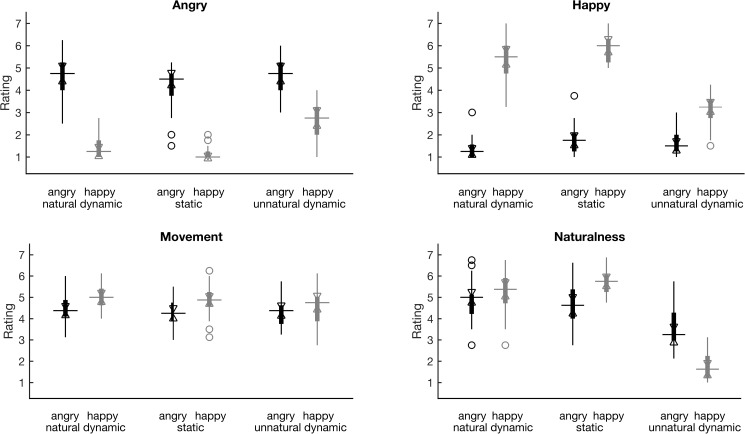
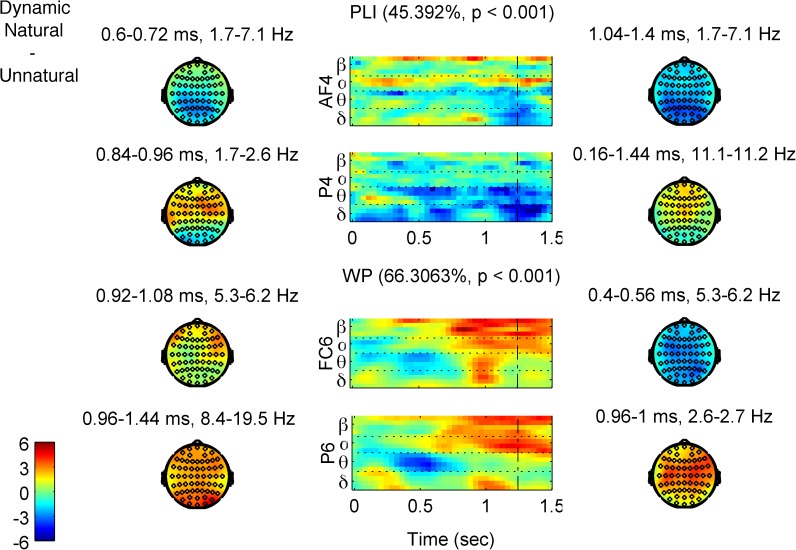
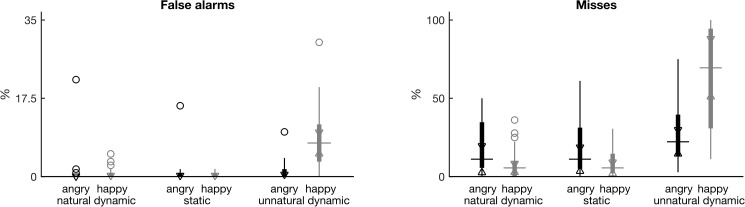
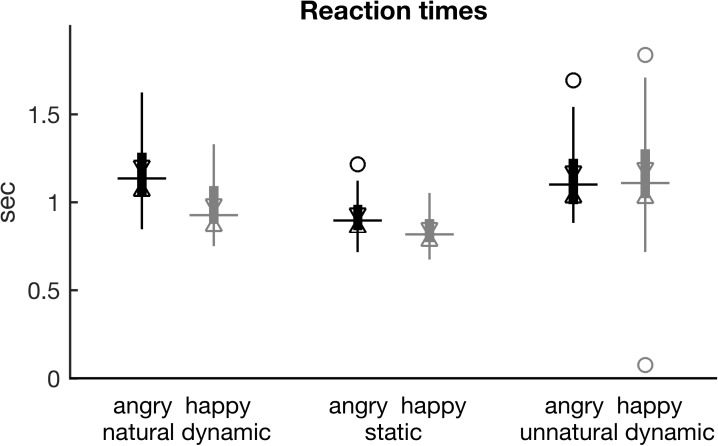
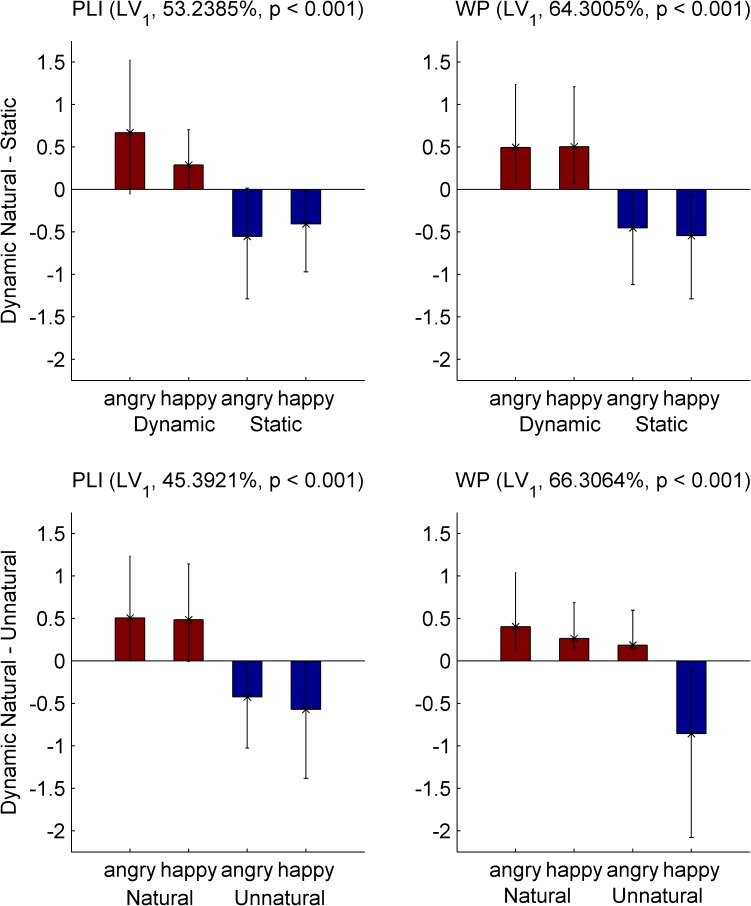
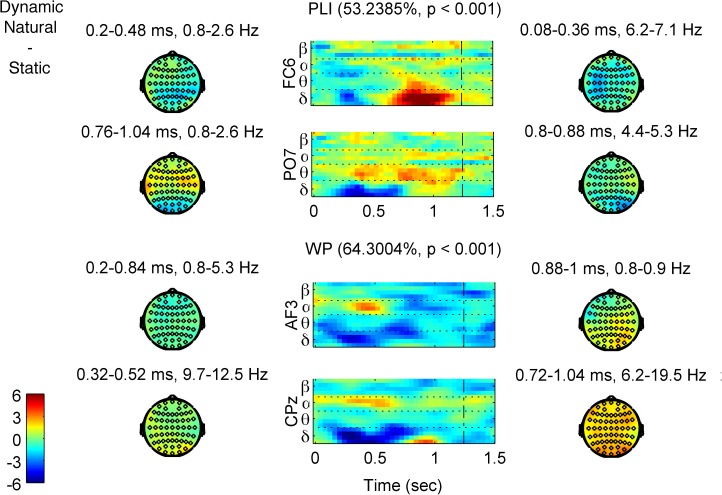
Research on the perception of facial emotional expressions (FEEs) often uses static images that do not capture the dynamic character of social coordination in natural settings. Recent behavioral and neuroimaging studies suggest that dynamic FEEs (videos or morphs) enhance emotion perception. To identify mechanisms associated with the perception of FEEs with natural dynamics, the present EEG (Electroencephalography)study compared (i) ecologically valid stimuli of angry and happy FEEs with natural dynamics to (ii) FEEs with unnatural dynamics, and to (iii) static FEEs. FEEs with unnatural dynamics showed faces moving in a biologically possible but unpredictable and atypical manner, generally resulting in ambivalent emotional content. Participants were asked to explicitly recognize FEEs. Using whole power (WP) and phase synchrony (Phase Locking Index, PLI), we found that brain responses discriminated between natural and unnatural FEEs (both static and dynamic). Differences were primarily observed in the timing and brain topographies of delta and theta PLI and WP, and in alpha and beta WP. Our results support the view that biologically plausible, albeit atypical, FEEs are processed by the brain by different mechanisms than natural FEEs. We conclude that natural movement dynamics are essential for the perception of FEEs and the associated brain processes.
对面部情绪表情(FEEs)感知的研究通常使用静态图像,而这些图像无法捕捉自然场景中社会协调的动态特征。最近的行为和神经影像学研究表明,动态面部情绪表情(视频或变形图像)能增强情绪感知。为了确定与具有自然动态的面部情绪表情感知相关的机制,本脑电图(EEG)研究比较了:(i)具有自然动态的愤怒和快乐面部情绪表情的生态有效刺激,(ii)具有非自然动态的面部情绪表情,以及(iii)静态面部情绪表情。具有非自然动态的面部情绪表情显示面部以生物学上可能但不可预测且非典型的方式移动,通常会产生矛盾的情感内容。要求参与者明确识别面部情绪表情。使用全功率(WP)和相位同步(锁相指数,PLI),我们发现大脑反应能够区分自然和非自然的面部情绪表情(包括静态和动态)。差异主要体现在δ波和θ波PLI及WP的时间和大脑地形图,以及α波和β波WP方面。我们的结果支持这样一种观点,即生物学上看似合理但非典型的面部情绪表情,大脑处理它们的机制与自然面部情绪表情不同。我们得出结论,自然的运动动态对于面部情绪表情的感知及相关大脑过程至关重要。