State Key Laboratory of Tea Plant Biology and Utilization, Anhui Agricultural University, Hefei, Anhui, 230036, China.
School of Life Science, Anhui Agricultural University, Hefei, Anhui, 230036, China.
Sci Rep. 2017 Jul 19;7(1):5926. doi: 10.1038/s41598-017-06453-z.
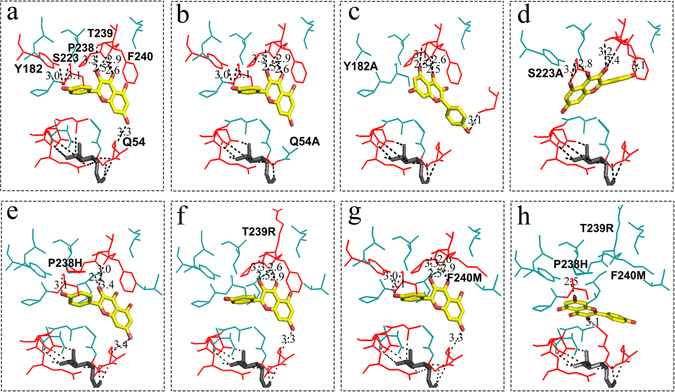
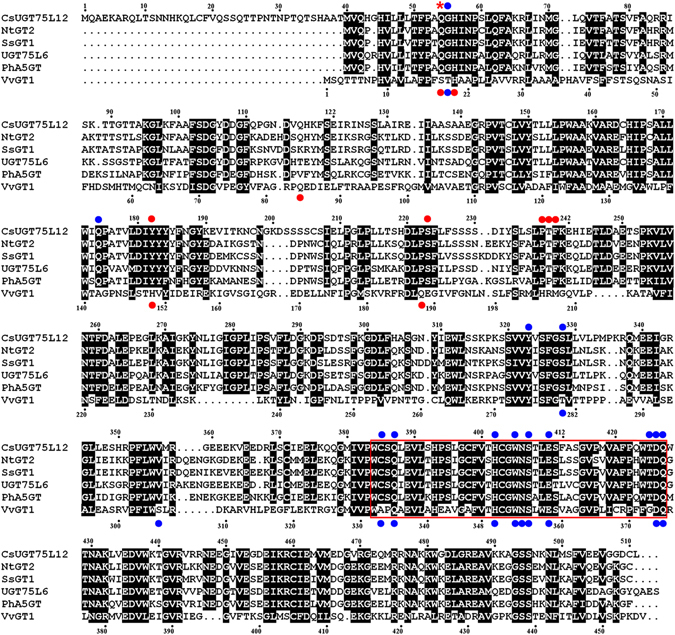
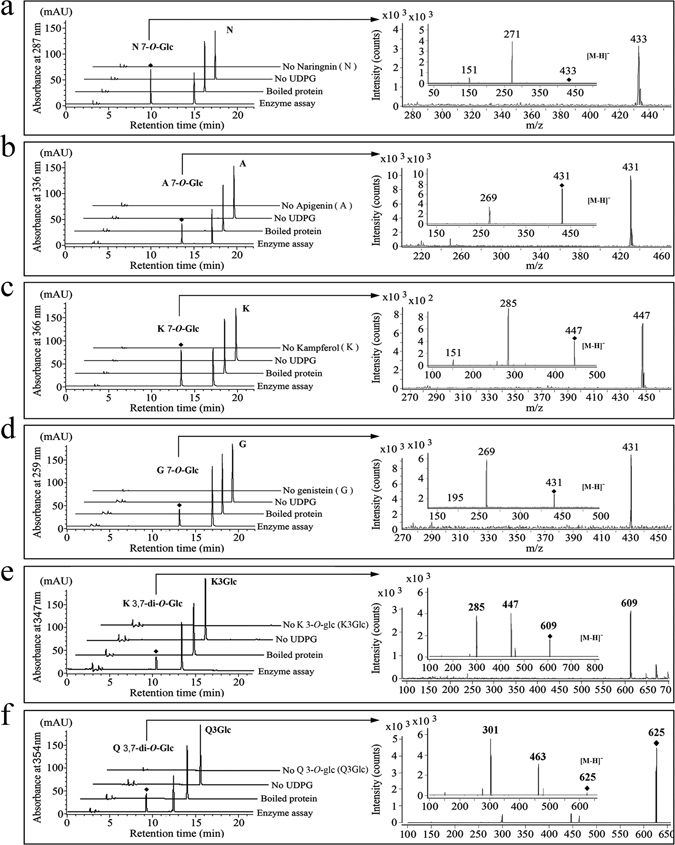
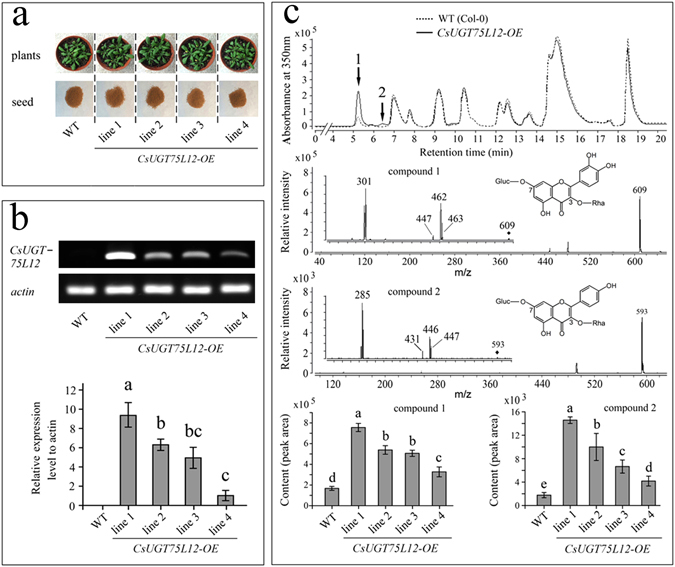
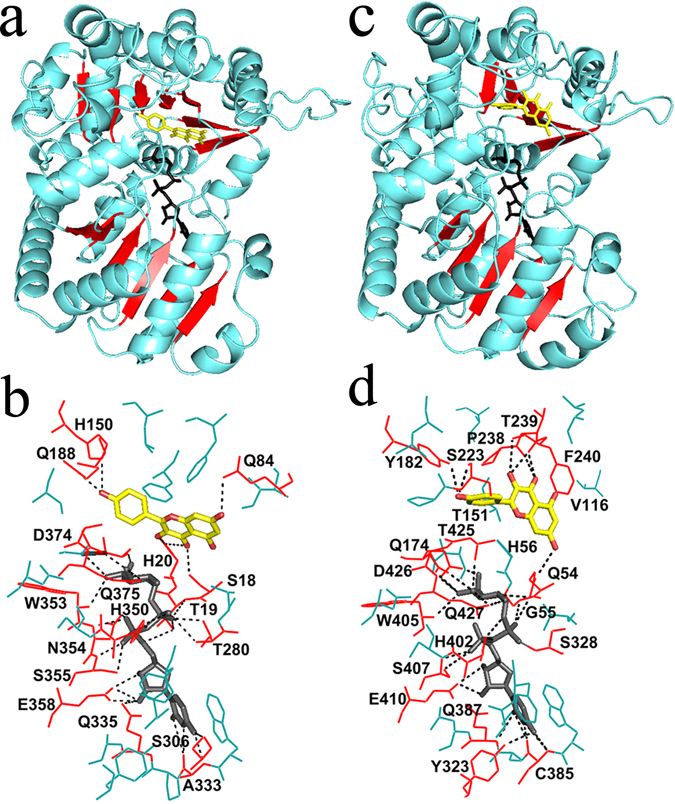
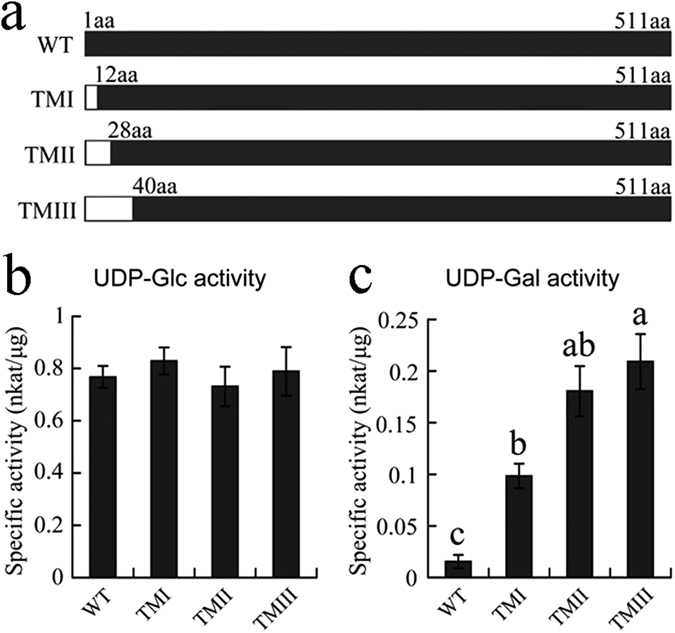
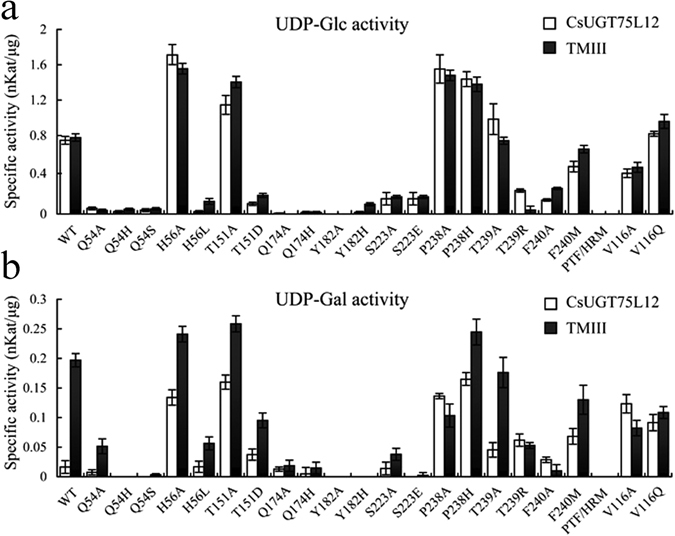
Flavonol glycosides, which are often converted from aglycones in a process catalyzed by UDP-glycosyltransferases (UGTs), play an important role for the health of plants and animals. In the present study, a gene encoding a flavonoid 7-O-glycosyltransferase (CsUGT75L12) was identified in tea plants. Recombinant CsUGT75L12 protein displayed glycosyltransferase activity on the 7-OH position of multiple phenolic compounds. In relative comparison to wild-type seeds, the levels of flavonol-glucosides increased in Arabidopsis seeds overexpressing CsUGT75L12. In order to determine the key amino acid residues responsible for the catalytic activity of the protein, a series of site-directed mutagenesis and enzymatic assays were performed based on the 3D structural modeling and docking analyses. These results suggested that residue Q54 is a double binding site that functions as both a sugar receptor and donor. Residues H56 and T151, corresponding to the basic active residues H20 and D119 of VvGT1, were not irreplaceable for CsUGT75L12. In addition, residues Y182, S223, P238, T239, and F240 were demonstrated to be responsible for a 'reversed' sugar receptor binding model. The results of single and triple substitutions confirmed that the function of residues P238, T239, and F240 may substitute or compensate with each other for the flavonoid 7-O-glycosyltransferase activity.
类黄酮糖苷通常在 UDP-糖基转移酶(UGTs)催化的过程中从苷元转化而来,对植物和动物的健康起着重要作用。本研究在茶树中鉴定出一个编码类黄酮 7-O-糖基转移酶(CsUGT75L12)的基因。重组 CsUGT75L12 蛋白对多种酚类化合物的 7-OH 位具有糖基转移酶活性。与野生型种子相比,在过表达 CsUGT75L12 的拟南芥种子中,类黄酮-葡萄糖苷的水平增加。为了确定负责蛋白质催化活性的关键氨基酸残基,基于 3D 结构建模和对接分析,进行了一系列定点突变和酶促分析。这些结果表明,残基 Q54 是一个双重结合位点,既是糖受体又是供体。与 VvGT1 的碱性活性残基 H20 和 D119 相对应的残基 H56 和 T151 对于 CsUGT75L12 不是不可替代的。此外,残基 Y182、S223、P238、T239 和 F240 被证明负责“反向”糖受体结合模型。单取代和三取代的结果证实,残基 P238、T239 和 F240 的功能可能相互替代或补偿,以发挥类黄酮 7-O-糖基转移酶的活性。