Jaskiewicz K, Rossouw J E, Kritchevsky D, van Rensburg S J, Fincham J E, Woodroof C W
Br J Exp Pathol. 1986 Jun;67(3):361-9.
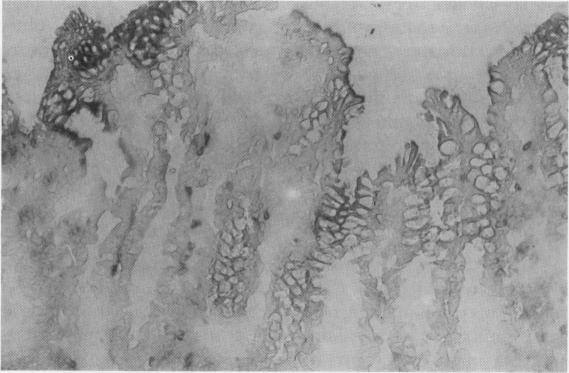
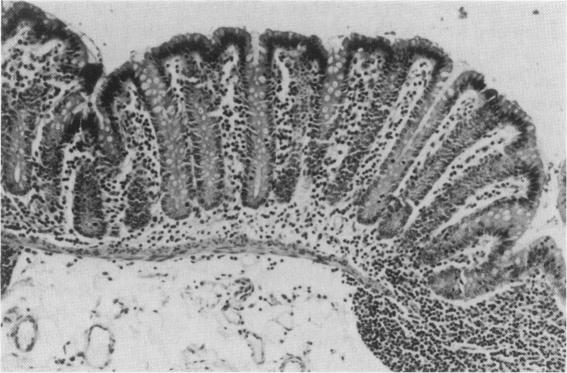
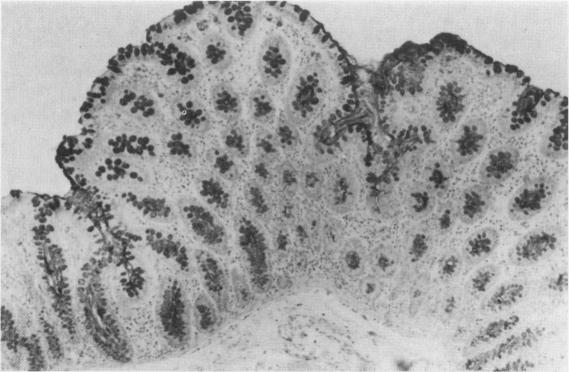
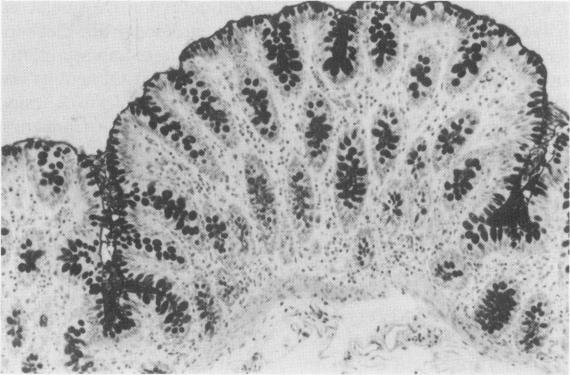
The morphological features of the intestine in monkeys on various diets with and without carcinogen were studied. Seventy adult female vervet monkeys were divided into seven treatment groups. Four groups received a Western high-fat low fibre diet (WD); two a Prudent low-fat higher fibre diet (PD) and one a control low-fat high fibre diet (CD). Three groups (2 WD, I PD) received dimethylhydrazine 10 mg/kg intramuscularly at 14 days intervals. After 18 months, monkeys of two groups on the WD were transferred to the PD and 30 months later all were terminated. Small and large intestine were examined macroscopically, histologically with morphometry, histochemically for acid and neutral, sialo- and sulphomucins and enzyme-histochemically for mucosal gamma-glutamyltranspeptidase (GGT) activity. Large intestines in all other than CD, particularly in WD-treated animals were dilated, thin walled, less corrugated and contained more residual contents. Diverticulosis was found to be mostly associated with WD. Apparently histologically normal colonic mucosa showed changed mucin secretion, predominantly in WD groups, and also GGT activity in all but CD groups. Changes which could be associated with pre-malignancy occurred predominantly but not exclusively in carcinogen treated animals. Within 4 years of feeding to monkeys, diets used by affluent western man caused distinct changes suggestive of the development of intestinal diseases such as megacolon, diverticulosis and cancer. Feeding a prudent diet resulted in only a mild reduction of these signs, whereas they were absent in a usual monkey diet that was much lower in animal products and refined carbohydrates.
研究了食用不同饮食(含或不含致癌物)的猴子肠道的形态学特征。70只成年雌性绿猴被分为7个治疗组。4组接受西方高脂肪低纤维饮食(WD);2组接受谨慎的低脂肪高纤维饮食(PD),1组接受对照低脂肪高纤维饮食(CD)。3组(2组WD,1组PD)每隔14天肌肉注射10mg/kg二甲基肼。18个月后,两组WD饮食的猴子被转移到PD饮食组,30个月后全部处死。对小肠和大肠进行了宏观、组织学(形态计量学)、组织化学(检测酸性和中性、唾液酸和硫酸粘蛋白)以及酶组织化学(检测粘膜γ-谷氨酰转肽酶(GGT)活性)检查。除CD组外,所有组的大肠,尤其是WD处理的动物,均出现扩张、壁薄、皱襞减少且残留内容物更多的情况。发现憩室病大多与WD有关。组织学上看似正常的结肠粘膜显示粘蛋白分泌发生变化,主要发生在WD组,除CD组外所有组的GGT活性也有变化。可能与癌前病变相关的变化主要但并非仅发生在接受致癌物处理的动物中。在给猴子喂食4年内,富裕西方人的饮食导致明显变化,提示肠道疾病如巨结肠、憩室病和癌症的发展。喂食谨慎的饮食只会使这些症状略有减轻,而在动物产品和精制碳水化合物含量低得多的普通猴子饮食中则没有这些症状。