McGinnis Graham R, Tang Yawen, Brewer Rachel A, Brahma Manoja K, Stanley Haley L, Shanmugam Gobinath, Rajasekaran Namakkal Soorappan, Rowe Glenn C, Frank Stuart J, Wende Adam R, Abel E Dale, Taegtmeyer Heinrich, Litovsky Silvio, Darley-Usmar Victor, Zhang Jianhua, Chatham John C, Young Martin E
Division of Cardiovascular Disease, Department of Medicine, University of Alabama at Birmingham, Birmingham, AL, USA.
Division of Molecular Cellular Pathology, Department of Pathology, University of Alabama at Birmingham, Birmingham, AL, USA.
J Mol Cell Cardiol. 2017 Sep;110:80-95. doi: 10.1016/j.yjmcc.2017.07.005. Epub 2017 Jul 20.
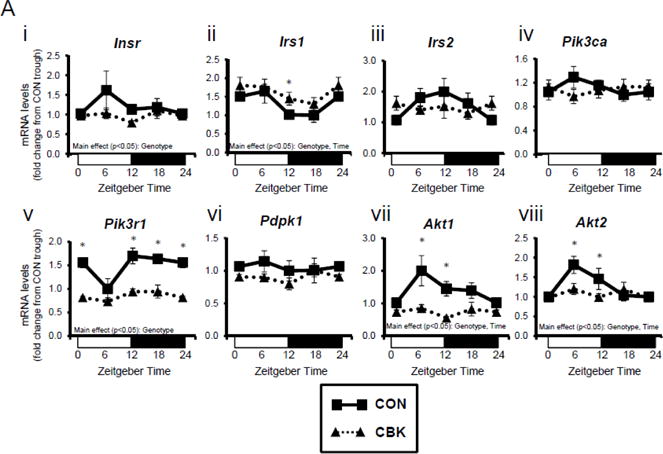
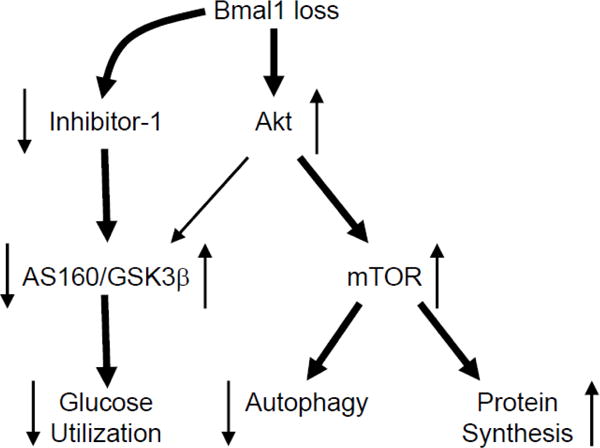
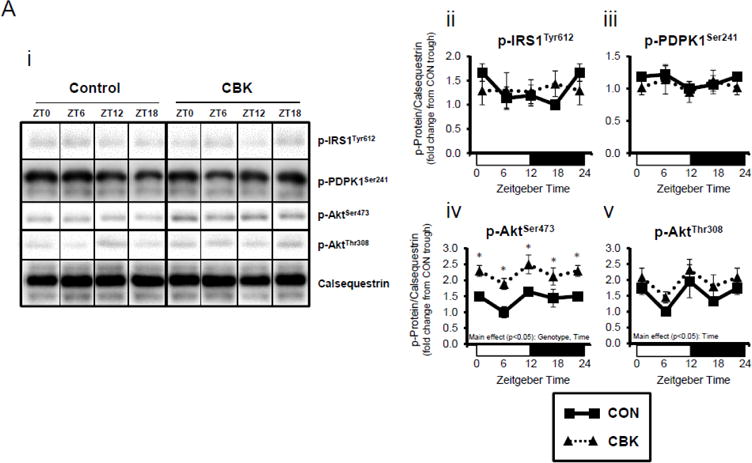
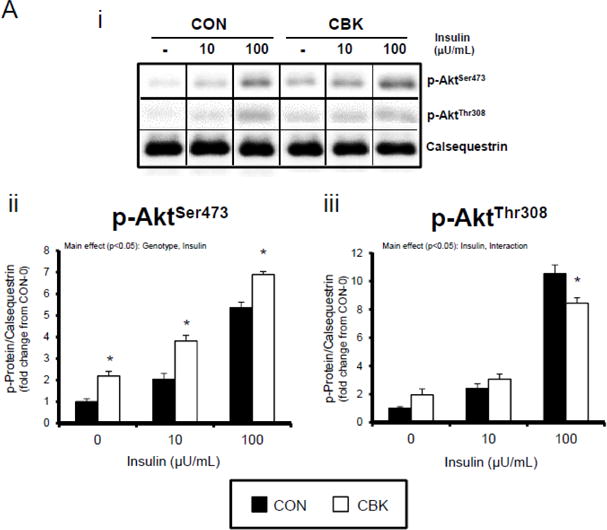
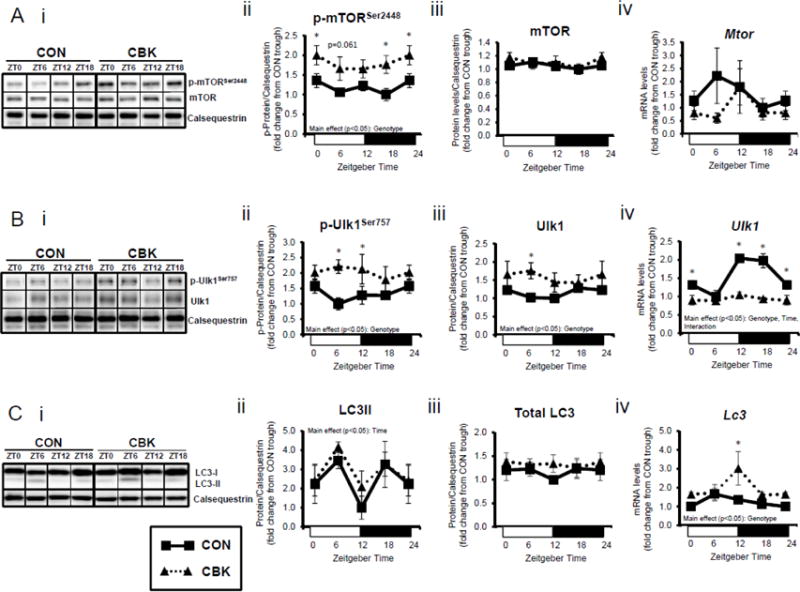
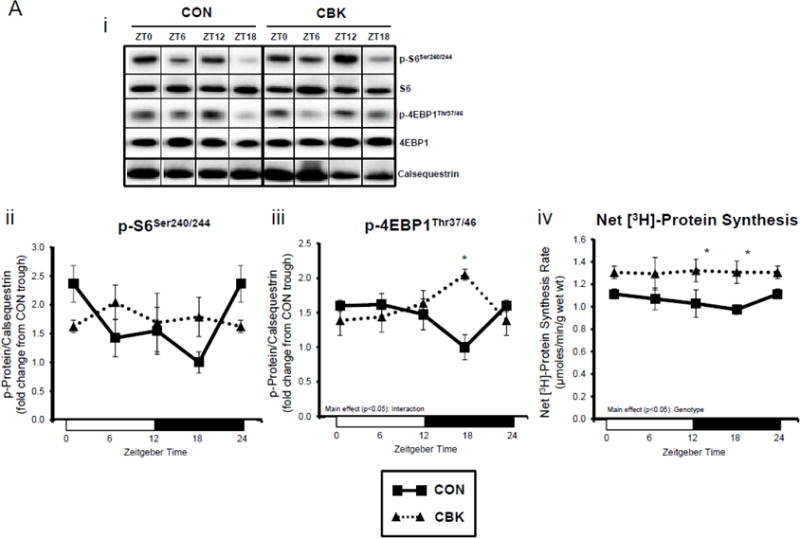
Cardiovascular physiology exhibits time-of-day-dependent oscillations, which are mediated by both extrinsic (e.g., environment/behavior) and intrinsic (e.g., circadian clock) factors. Disruption of circadian rhythms negatively affects multiple cardiometabolic parameters. Recent studies suggest that the cardiomyocyte circadian clock directly modulates responsiveness of the heart to metabolic stimuli (e.g., fatty acids) and stresses (e.g., ischemia/reperfusion). The aim of this study was to determine whether genetic disruption of the cardiomyocyte circadian clock impacts insulin-regulated pathways in the heart. Genetic disruption of the circadian clock in cardiomyocyte-specific Bmal1 knockout (CBK) and cardiomyocyte-specific Clock mutant (CCM) mice altered expression (gene and protein) of multiple insulin signaling components in the heart, including p85α and Akt. Both baseline and insulin-mediated Akt activation was augmented in CBK and CCM hearts (relative to littermate controls). However, insulin-mediated glucose utilization (both oxidative and non-oxidative) and AS160 phosphorylation were attenuated in CBK hearts, potentially secondary to decreased Inhibitor-1. Consistent with increased Akt activation in CBK hearts, mTOR signaling was persistently increased, which was associated with attenuation of autophagy, augmented rates of protein synthesis, and hypertrophy. Importantly, pharmacological inhibition of mTOR (rapamycin; 10days) normalized cardiac size in CBK mice. These data suggest that disruption of cardiomyocyte circadian clock differentially influences insulin-regulated processes, and provide new insights into potential pathologic mediators following circadian disruption.
心血管生理学表现出昼夜节律依赖性振荡,这是由外在因素(如环境/行为)和内在因素(如生物钟)共同介导的。昼夜节律的破坏会对多种心脏代谢参数产生负面影响。最近的研究表明,心肌细胞生物钟直接调节心脏对代谢刺激(如脂肪酸)和应激(如缺血/再灌注)的反应性。本研究的目的是确定心肌细胞生物钟的基因破坏是否会影响心脏中胰岛素调节的通路。在心肌细胞特异性Bmal1基因敲除(CBK)小鼠和心肌细胞特异性Clock突变(CCM)小鼠中,生物钟的基因破坏改变了心脏中多种胰岛素信号成分的表达(基因和蛋白质),包括p85α和Akt。在CBK和CCM心脏中,基线和胰岛素介导的Akt激活均增强(相对于同窝对照)。然而,在CBK心脏中,胰岛素介导的葡萄糖利用(氧化和非氧化)以及AS160磷酸化减弱,这可能继发于Inhibitor-1的减少。与CBK心脏中Akt激活增加一致,mTOR信号持续增加,这与自噬减弱、蛋白质合成速率增加和肥大有关。重要的是,mTOR的药理学抑制(雷帕霉素;10天)使CBK小鼠的心脏大小恢复正常。这些数据表明,心肌细胞生物钟的破坏对胰岛素调节过程有不同的影响,并为昼夜节律破坏后的潜在病理介质提供了新的见解。