Endocrine Research Unit, Mayo Clinic, 200 First Street Southwest, Room 5-194, Rochester, MN 55905, USA.
Int J Obes (Lond). 2017 Nov;41(11):1621-1626. doi: 10.1038/ijo.2017.171. Epub 2017 Jul 24.
BACKGROUND/OBJECTIVES: A major risk factor of type 2 diabetes mellitus (T2DM) is a positive family history of diabetes. First degree relatives (FDR) of patients with T2DM are more insulin resistant and are reported to have larger abdominal subcutaneous adipocytes than adults without a family history. Our objectives were to assess whether FDR of T2DM are associated with larger abdominal adipocytes independent of age, sex and abdominal subcutaneous fat and to assess whether a family history of T2DM is also independently related to femoral adipocyte size, as well as visceral fat and fasting plasma triglyceride (TG) concentrations.
We extracted adipocyte size, body composition, plasma TG and demographic data of non-diabetic research participants of previous studies conducted in our laboratory. We ascertained the family history of T2DM from the electronic medical records. Multivariate regression analysis was used to assess whether FDR of T2DM are more likely to have other risk factors after adjusting for known covariates.
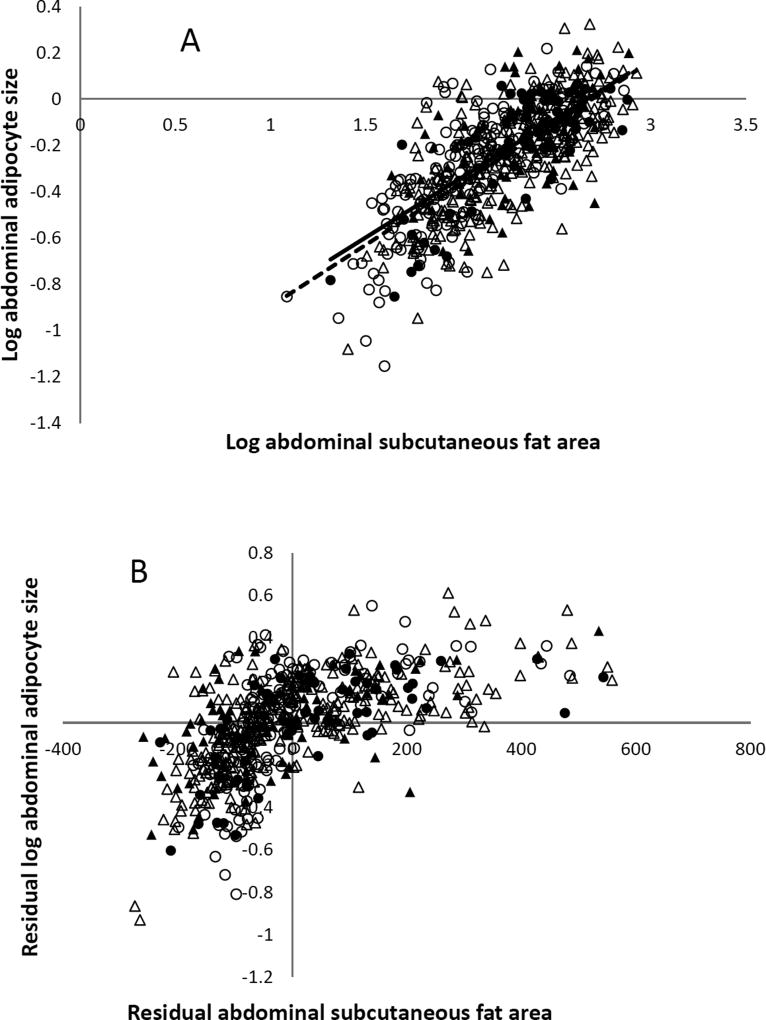
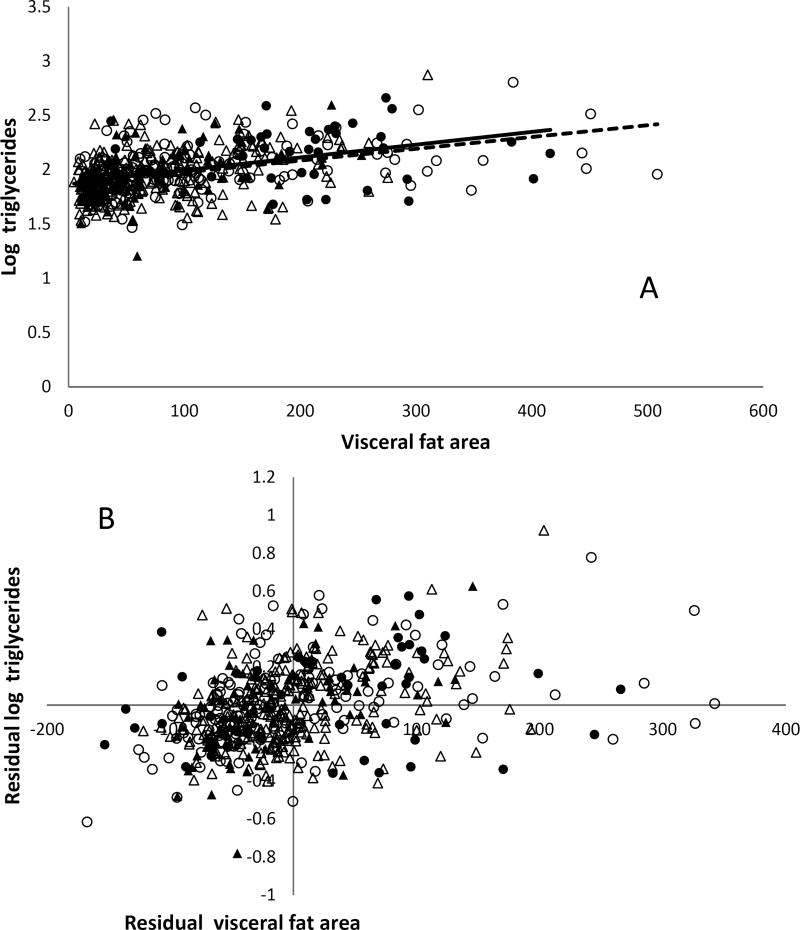
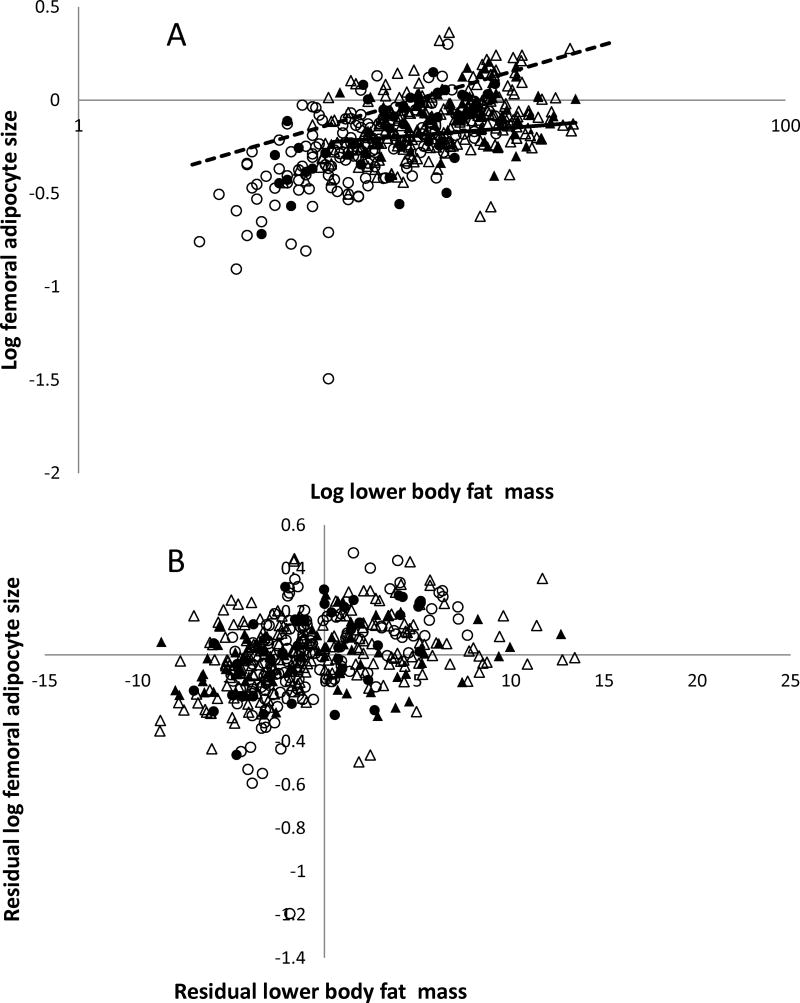
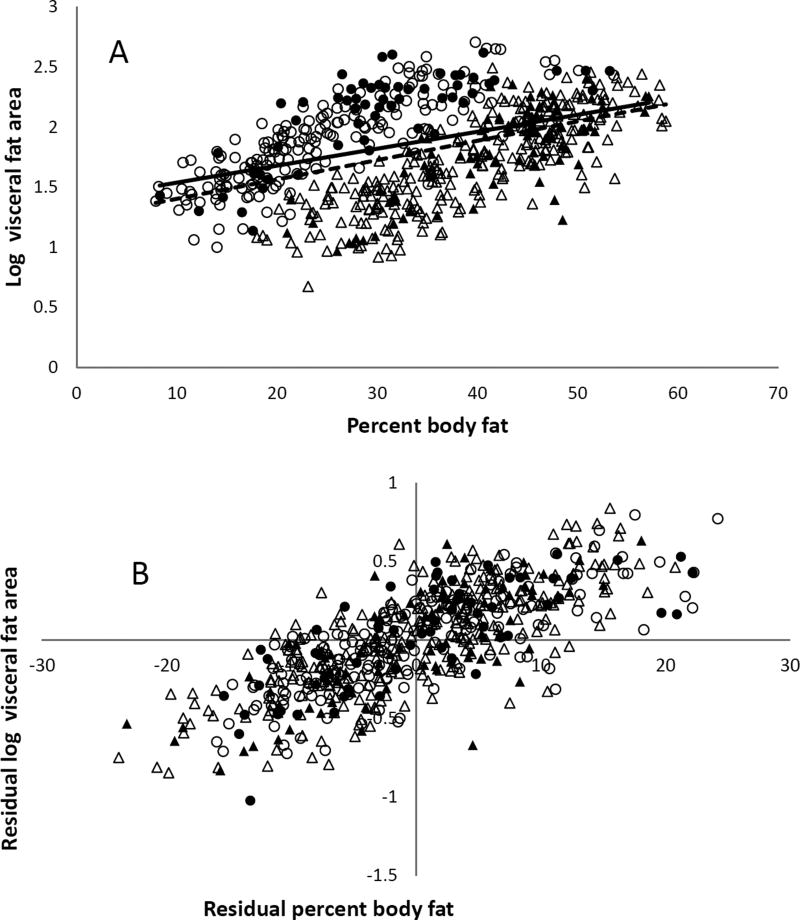
Of 604 participants, 148 were FDR of T2DM. Although abdominal and femoral adipocyte size was greater in FDR of T2DM than those without a family history (0.74±0.33 vs 0.63±0.33 μg lipid per cell, P<0.001; 0.81±0.29 vs 0.72±0.33 μg lipid per cell, P=0.01, respectively), this was confounded by FDR of T2DM being older, having greater body mass index and percent body fat. A family history of T2DM was a significant predictor of abdominal adipocyte size after adjustment for age and body fat distribution parameters in females (total R=0.5, P<0.0001), but not in males. A family history of T2DM was not independently predictive of femoral adipocyte size, visceral fat area or TG.
Female FDR of T2DM have larger abdominal, but not femoral, adipocytes, even after accounting for age and body fat distribution.
背景/目的:2 型糖尿病(T2DM)的一个主要危险因素是糖尿病的阳性家族史。T2DM 患者的一级亲属(FDR)的胰岛素抵抗更为严重,据报道其腹部皮下脂肪细胞比没有家族史的成年人更大。我们的目标是评估 FDR 是否独立于年龄、性别、腹部皮下脂肪而与更大的腹部脂肪细胞相关,以及评估 T2DM 的家族史是否也与股部脂肪细胞大小、内脏脂肪和空腹血浆甘油三酯(TG)浓度独立相关。
我们提取了之前在我们实验室进行的研究中,非糖尿病研究参与者的脂肪细胞大小、身体成分、血浆 TG 和人口统计学数据。我们从电子病历中确定了 T2DM 的家族史。多变量回归分析用于评估 FDR 是否在调整已知协变量后更有可能具有其他危险因素。
在 604 名参与者中,有 148 名是 T2DM 的 FDR。尽管 FDR 的腹部和股部脂肪细胞大小大于无家族史者(0.74±0.33 与 0.63±0.33μg 脂质/细胞,P<0.001;0.81±0.29 与 0.72±0.33μg 脂质/细胞,P=0.01),但这与 FDR 年龄更大、体重指数和体脂百分比更大有关。在调整女性年龄和体脂分布参数后,T2DM 的家族史是腹部脂肪细胞大小的一个重要预测因素(总 R=0.5,P<0.0001),但在男性中则不然。T2DM 的家族史与股部脂肪细胞大小、内脏脂肪面积或 TG 均无独立相关性。
T2DM 的女性 FDR 即使考虑到年龄和体脂分布,其腹部脂肪细胞也更大,而股部脂肪细胞则不然。