Fodi Tamas, Didaskalou Christos, Kupai Jozsef, Balogh Gyorgy T, Huszthy Peter, Szekely Gyorgy
School of Chemical Engineering, The University of Manchester, The Mill, Sackville Street, Manchester, M13 9PL, United Kingdom.
Department of Organic Chemistry and Technology, Budapest University of Technology and Economics, Szent Gellert ter 4, Budapest, 1117, Hungary.
ChemSusChem. 2017 Sep 11;10(17):3435-3444. doi: 10.1002/cssc.201701120. Epub 2017 Aug 16.
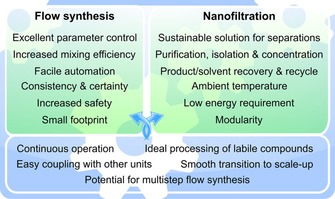
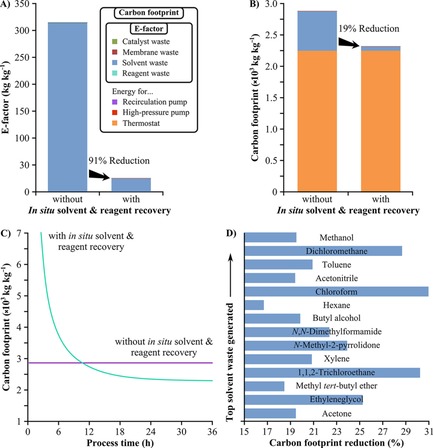
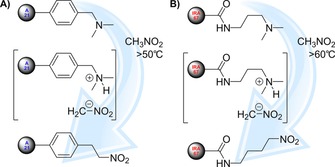
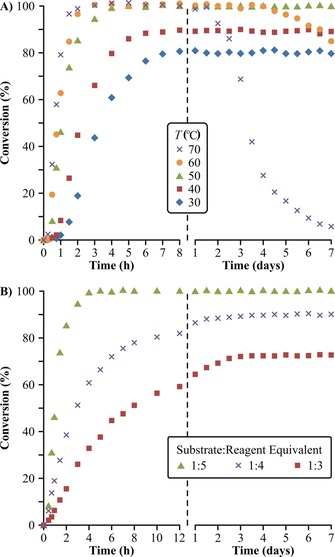
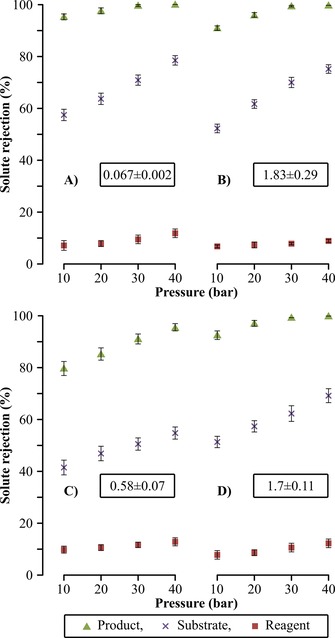
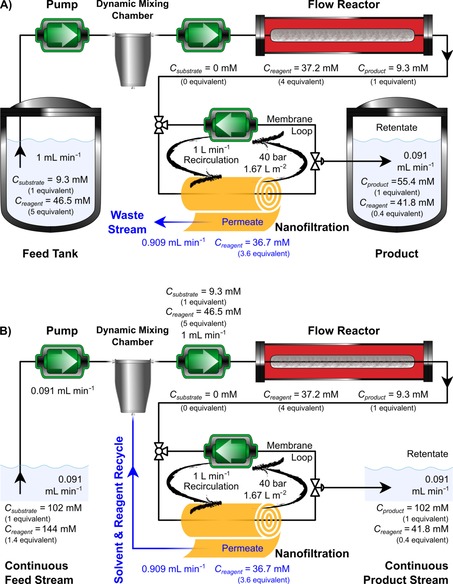
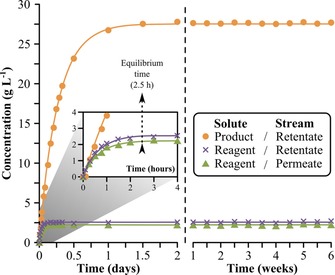
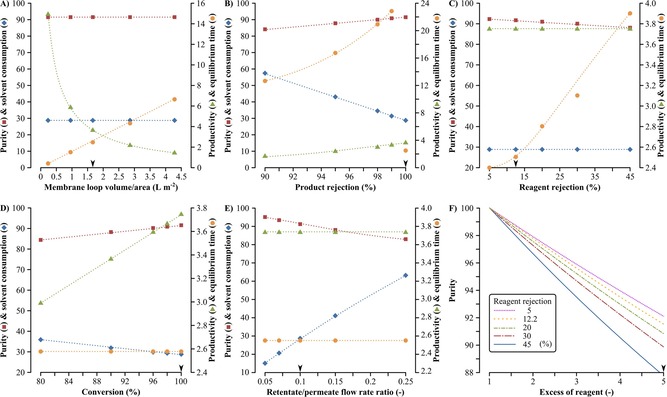
Solvent usage in the pharmaceutical sector accounts for as much as 90 % of the overall mass during manufacturing processes. Consequently, solvent consumption poses significant costs and environmental burdens. Continuous processing, in particular continuous-flow reactors, have great potential for the sustainable production of pharmaceuticals but subsequent downstream processing remains challenging. Separation processes for concentrating and purifying chemicals can account for as much as 80 % of the total manufacturing costs. In this work, a nanofiltration unit was coupled to a continuous-flow rector for in situ solvent and reagent recycling. The nanofiltration unit is straightforward to implement and simple to control during continuous operation. The hybrid process operated continuously over six weeks, recycling about 90 % of the solvent and reagent. Consequently, the E-factor and the carbon footprint were reduced by 91 % and 19 %, respectively. Moreover, the nanofiltration unit led to a solution of the product eleven times more concentrated than the reaction mixture and increased the purity from 52.4 % to 91.5 %. The boundaries for process conditions were investigated to facilitate implementation of the methodology by the pharmaceutical sector.
制药行业中的溶剂使用量在制造过程中占总质量的90%之多。因此,溶剂消耗带来了巨大的成本和环境负担。连续加工,特别是连续流动反应器,在药品可持续生产方面具有巨大潜力,但后续的下游加工仍然具有挑战性。用于浓缩和纯化化学品的分离过程可能占总制造成本的80%。在这项工作中,一个纳滤单元与一个连续流动反应器相连,用于原位溶剂和试剂回收。纳滤单元易于实施,在连续运行过程中易于控制。该混合工艺连续运行了六周,回收了约90%的溶剂和试剂。因此,E因子和碳足迹分别降低了91%和19%。此外,纳滤单元使产物溶液的浓度比反应混合物高11倍,并将纯度从52.4%提高到91.5%。研究了工艺条件的边界,以促进制药行业实施该方法。