Harvie Ruth M, Chisholm Alexandra W, Bisanz Jordan E, Burton Jeremy P, Herbison Peter, Schultz Kim, Schultz Michael
Ruth M Harvie, Kim Schultz, Michael Schultz, Department of Medicine, Dunedin School of Medicine, University of Otago, Dunedin 9016, New Zealand.
World J Gastroenterol. 2017 Jul 7;23(25):4632-4643. doi: 10.3748/wjg.v23.i25.4632.
To investigate the long-term effect of dietary education on a low fermentable oligosaccharide, disaccharide and polyol (FODMAP) diet on irritable bowel syndrome (IBS) symptoms and quality of life (QoL).
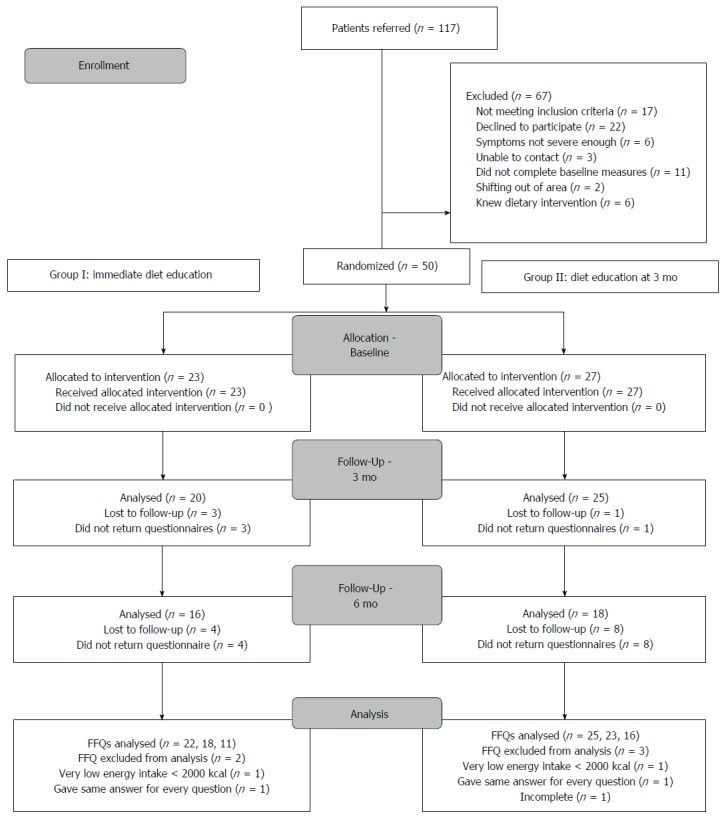
Participants with IBS (Rome III) were randomized to two groups. Group I commenced a low FODMAP diet at baseline. At three months, group II, so far a comparator group, crossed over to a low FODMAP diet while group I started re-challenging foods. All patients completed the IBS SSS (IBS symptom severity scoring system, 0-500 points increasing with severity), IBS QoL questionnaire (0-100 increasing with QoL), a FODMAP specific food frequency questionnaire and provided a stool sample at baseline, three and six months for microbiome analysis.
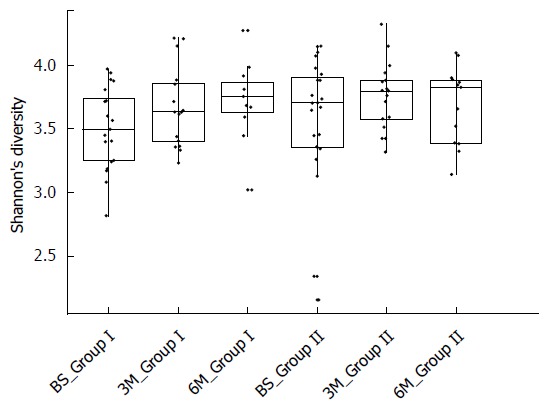
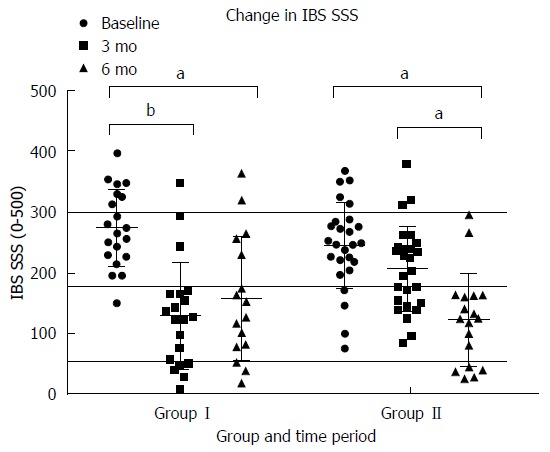
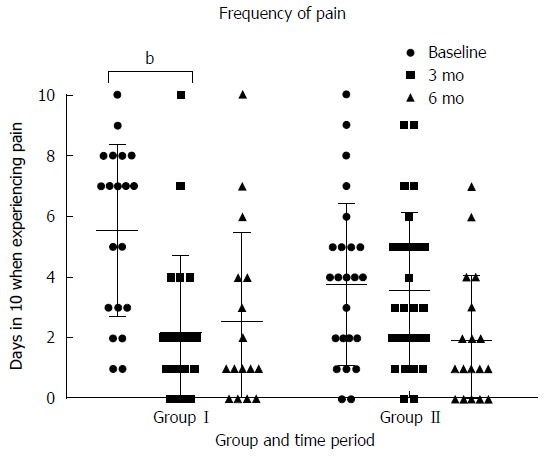
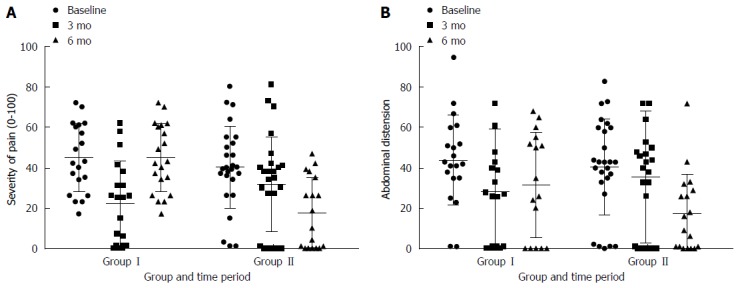
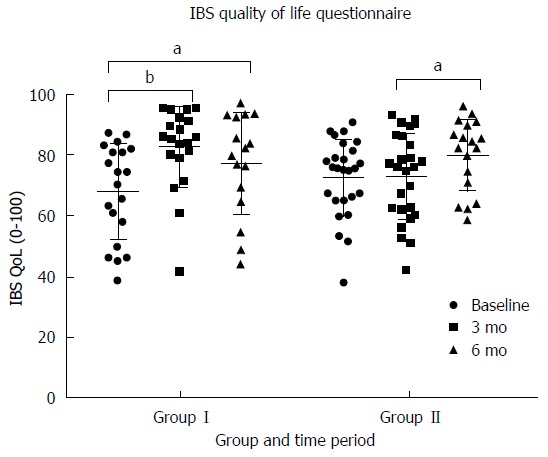
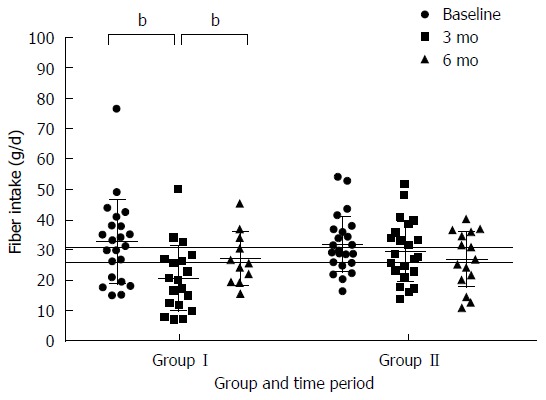
Fifty participants were enrolled into group I ( = 23) or group II ( = 27). Participants in both groups were similar in baseline values but with more men in group I. There was a significantly lower IBS SSS (275.6 ± 63.6 to 128.8 ± 82.5 246.8 ± 71.1 to 203.6 ± 70.1) ( < 0.0002) and increased QoL (68.5 ± 18.0 to 83 ± 13.4 72.9 ± 12.8 to 73.3 ± 14.4) ( < 0.0001) in group I vs group II at 3 mo. The reduced IBS SSS was sustained at 6 mo in group I (160 ± 102) and replicated in group II (124 ± 76). Fiber intake decreased on the low FODMAP diet (33 ± 17 g/d to 21 ± 8 g/d) ( < 0.01) and after re-introducing FODMAP containing foods increased again to 27 ± 9 g/d. There was no change seen in the intestinal microbiome when participants adopted a low FODMAP diet.
This study demonstrated that a reduction in FODMAPs improves symptoms in IBS and this improvement can be maintained while reintroducing FODMAPs.
研究饮食教育对低可发酵寡糖、双糖及多元醇(FODMAP)饮食改善肠易激综合征(IBS)症状及生活质量(QoL)的长期影响。
符合罗马III标准的IBS患者被随机分为两组。第一组在基线时开始低FODMAP饮食。三个月时,作为对照的第二组开始低FODMAP饮食,而第一组开始重新引入食物。所有患者均完成IBS症状严重程度评分系统(IBS - SSS,0 - 500分,分数越高症状越严重)、IBS生活质量问卷(0 - 100分,分数越高生活质量越高)、FODMAP特定食物频率问卷,并在基线、三个月和六个月时提供粪便样本用于微生物组分析。
50名参与者被纳入第一组(n = 23)或第二组(n = 27)。两组参与者的基线值相似,但第一组男性更多。三个月时,第一组的IBS - SSS显著降低(从275.6±63.6降至128.8±82.5,第二组从246.8±71.1降至203.6±70.1)(P < 0.0002),生活质量提高(从68.5±18.0提高到83±13.4,第二组从72.9±12.8提高到73.3±14.4)(P < 0.0001)。第一组在六个月时IBS - SSS的降低得以维持(160±102),第二组也有类似结果(124±76)。低FODMAP饮食时纤维摄入量减少(从33±17克/天降至21±8克/天)(P < 0.01),重新引入含FODMAP食物后再次增加至27±9克/天。参与者采用低FODMAP饮食时肠道微生物组未见变化。
本研究表明,减少FODMAP可改善IBS症状,且在重新引入FODMAP时这种改善仍可维持。