Shin Mi-Rae, An Hyo-Jin, Seo Bu-Il, Roh Seong-Soo
Mi-Rae Shin, Hyo-Jin An, Department of Pharmacology, College of Korean Medicine, Sangji University, Wonju-si, Gangwondo 26339, South Korea.
World J Gastroenterol. 2017 Jul 7;23(25):4644-4653. doi: 10.3748/wjg.v23.i25.4644.
To evaluate the anti-apoptotic effect of banhasasim-tang (BHSST) on chronic acid reflux esophagitis (CARE) using a rat model.
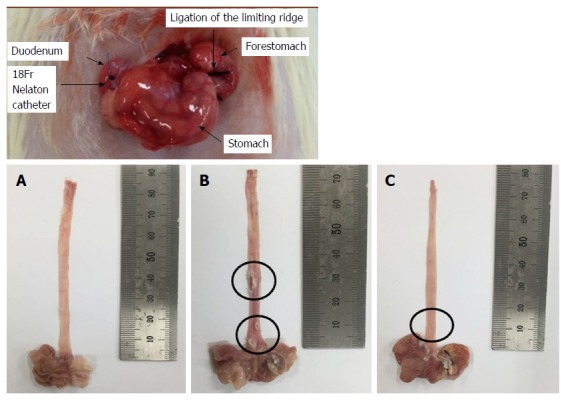
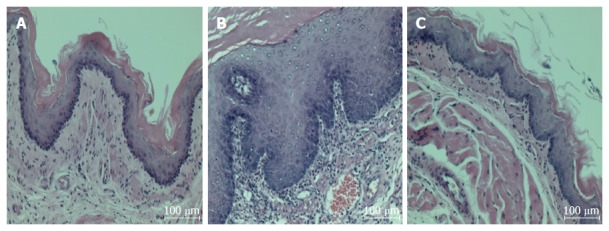
A surgically-induced CARE model was established in Sprague-Dawley rats. The modeled rats were divided into a treatment group or untreated group, and given BHSST (1 g/kg body weight per day) or water, respectively, for 15 consecutive days ( = 7 each group). Changes in expression of proteins related to nicotinamide adenine dinucleotide phosphate (NADPH) oxidase and apoptosis were assessed by western blotting. Changes in esophageal pathology were analyzed by gross and histological examinations.
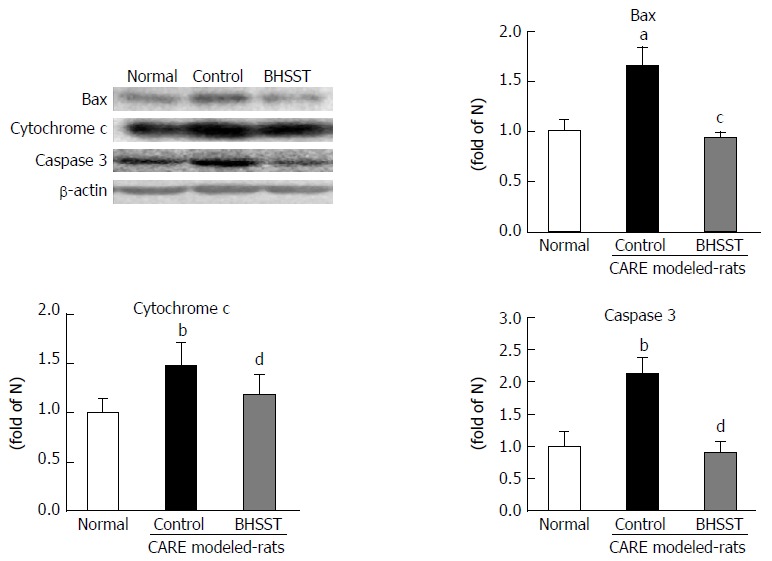
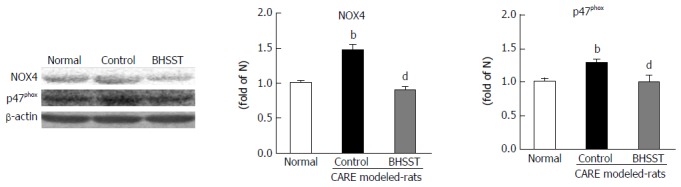
The CARE exposure modeled rats showed increased levels of the NADPH oxidase subunit, NOX4 and p47 in the esophagus. The BHSST treatment completely resolved these CARE-related increases. The CARE rats also showed markers of cytokine stress, including elevated levels of TNF-α and reactive oxygen species as well as of the consequent increase in JNK activation, and subsequent decrease in pro-survival gene expression, such as of . BHSST treatment resolved the CARE-related changes. BHSST also exerted an anti-apoptotic effect, as evidenced by altered expression of the apoptosis-related genes for bax, cytochrome c, and caspase 3. Finally, the BHSST treatment markedly ameliorated the CARE-related esophageal mucosal ulcerations.
In the rat model of CARE, BHSST can suppress development of esophageal mucosal ulceration regulation of reactive oxygen species-dependent apoptosis.
使用大鼠模型评估半夏泻心汤(BHSST)对慢性酸反流性食管炎(CARE)的抗凋亡作用。
在Sprague-Dawley大鼠中建立手术诱导的CARE模型。将建模大鼠分为治疗组或未治疗组,分别连续15天给予BHSST(每天1 g/kg体重)或水(每组n = 7)。通过蛋白质印迹法评估与烟酰胺腺嘌呤二核苷酸磷酸(NADPH)氧化酶和凋亡相关的蛋白质表达变化。通过大体和组织学检查分析食管病理学变化。
CARE暴露建模大鼠食管中NADPH氧化酶亚基NOX4和p47水平升高。BHSST治疗完全消除了这些与CARE相关的升高。CARE大鼠还表现出细胞因子应激标志物,包括TNF-α和活性氧水平升高以及随之而来的JNK激活增加,以及随后促生存基因表达降低,如 。BHSST治疗解决了与CARE相关的变化。BHSST还发挥了抗凋亡作用,bax、细胞色素c和半胱天冬酶3等凋亡相关基因的表达改变证明了这一点。最后,BHSST治疗显著改善了与CARE相关的食管黏膜溃疡。
在CARE大鼠模型中,BHSST可通过调节活性氧依赖性凋亡来抑制食管黏膜溃疡的发展。