Abatángelo Virginia, Peressutti Bacci Natalia, Boncompain Carina A, Amadio Ariel F, Carrasco Soledad, Suárez Cristian A, Morbidoni Héctor R
Laboratorio de Microbiología Molecular, Facultad de Ciencias Médicas, Universidad Nacional de Rosario, Rosario, Santa Fe, Argentina.
EEA Rafaela, Instituto Nacional de Tecnología Agropecuaria (INTA), Rafaela, Santa Fe, Argentina.
PLoS One. 2017 Jul 25;12(7):e0181671. doi: 10.1371/journal.pone.0181671. eCollection 2017.
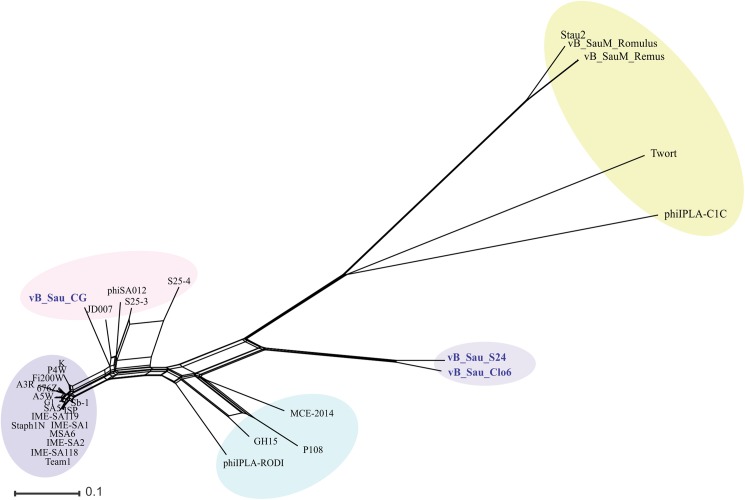
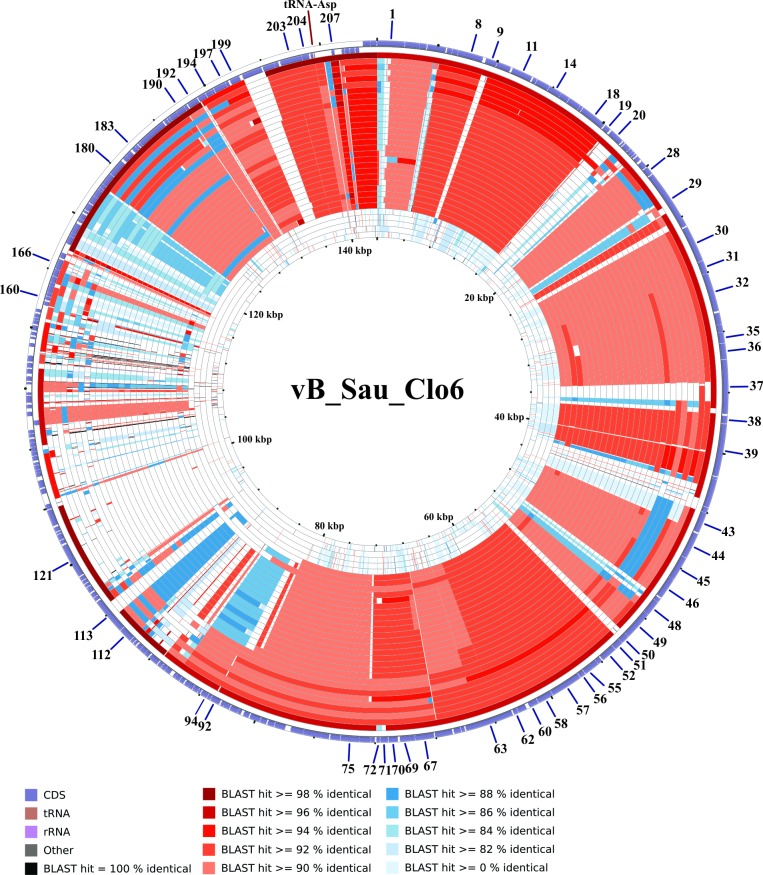
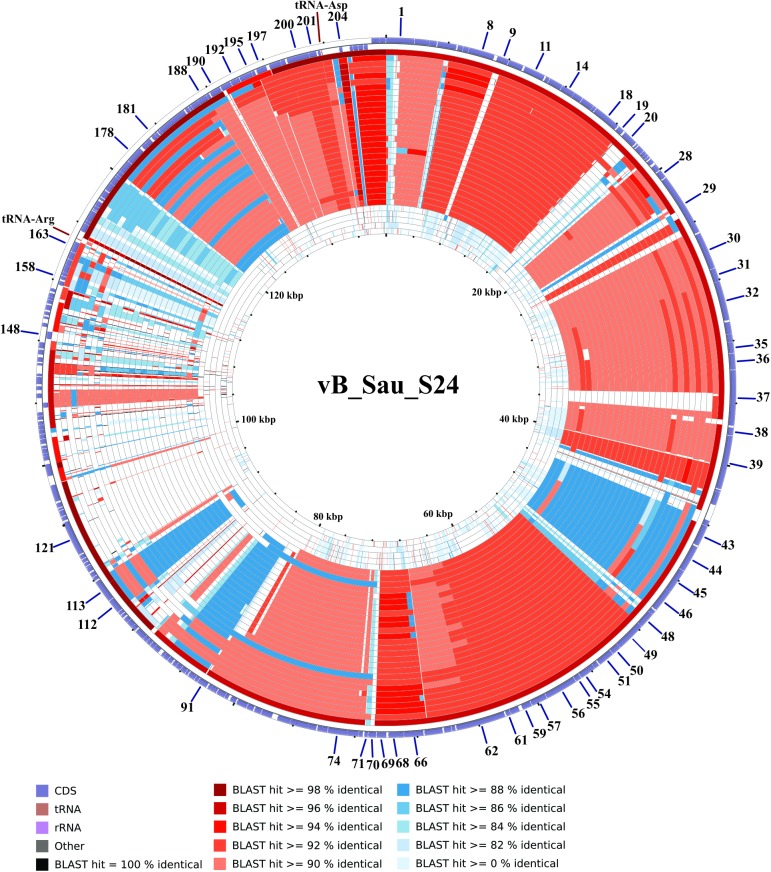
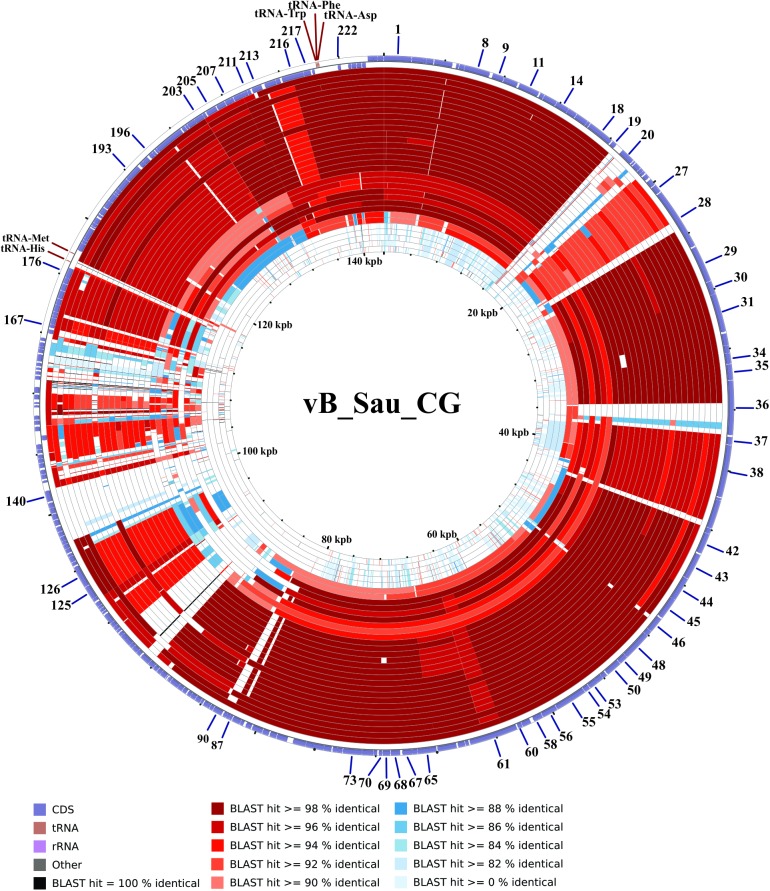
Staphylococcus aureus is a very successful opportunistic pathogen capable of causing a variety of diseases ranging from mild skin infections to life-threatening sepsis, meningitis and pneumonia. Its ability to display numerous virulence mechanisms matches its skill to display resistance to several antibiotics, including β-lactams, underscoring the fact that new anti-S. aureus drugs are urgently required. In this scenario, the utilization of lytic bacteriophages that kill bacteria in a genus -or even species- specific way, has become an attractive field of study. In this report, we describe the isolation, characterization and sequencing of phages capable of killing S. aureus including methicillin resistant (MRSA) and multi-drug resistant S. aureus local strains from environmental, animal and human origin. Genome sequencing and bio-informatics analysis showed the absence of genes encoding virulence factors, toxins or antibiotic resistance determinants. Of note, there was a high similarity between our set of phages to others described in the literature such as phage K. Considering that reported phages were obtained in different continents, it seems plausible that there is a commonality of genetic features that are needed for optimum, broad host range anti-staphylococcal activity of these related phages. Importantly, the high activity and broad host range of one of our phages underscores its promising value to control the presence of S. aureus in fomites, industry and hospital environments and eventually on animal and human skin. The development of a cocktail of the reported lytic phages active against S. aureus-currently under way- is thus, a sensible strategy against this pathogen.
金黄色葡萄球菌是一种非常成功的机会致病菌,能够引发多种疾病,从轻度皮肤感染到危及生命的败血症、脑膜炎和肺炎。它展现出多种毒力机制的能力与其对包括β-内酰胺类在内的多种抗生素表现出耐药性的能力相当,这突出表明迫切需要新的抗金黄色葡萄球菌药物。在这种情况下,利用能以属甚至种特异性方式杀死细菌的裂解性噬菌体,已成为一个有吸引力的研究领域。在本报告中,我们描述了能够杀死金黄色葡萄球菌的噬菌体的分离、表征和测序,这些噬菌体包括来自环境、动物和人类来源的耐甲氧西林(MRSA)和多重耐药金黄色葡萄球菌本地菌株。基因组测序和生物信息学分析表明,这些噬菌体不存在编码毒力因子、毒素或抗生素耐药决定因素的基因。值得注意的是,我们的一组噬菌体与文献中描述的其他噬菌体(如噬菌体K)高度相似。鉴于报道的噬菌体是在不同大陆获得的,这些相关噬菌体要实现最佳的、广泛宿主范围的抗葡萄球菌活性,似乎存在共同的遗传特征。重要的是,我们其中一种噬菌体的高活性和广泛宿主范围突出了其在控制金黄色葡萄球菌在污染物、工业和医院环境中以及最终在动物和人类皮肤上存在方面的潜在价值。因此,开发一种针对金黄色葡萄球菌的活性裂解性噬菌体鸡尾酒制剂(目前正在进行中)是对抗这种病原体的明智策略。