Inui-Yamamoto Chizuko, Yamamoto Takashi, Ueda Katsura, Nakatsuka Michiko, Kumabe Shunji, Inui Tadashi, Iwai Yasutomo
Department of Oral Anatomy, Osaka Dental University, Hirakata, Osaka, Japan.
Department of Health and Nutrition, Faculty of Health Science, Kio University, Kitakatsuragi-gun, Nara, Japan.
PLoS One. 2017 Jul 25;12(7):e0181650. doi: 10.1371/journal.pone.0181650. eCollection 2017.
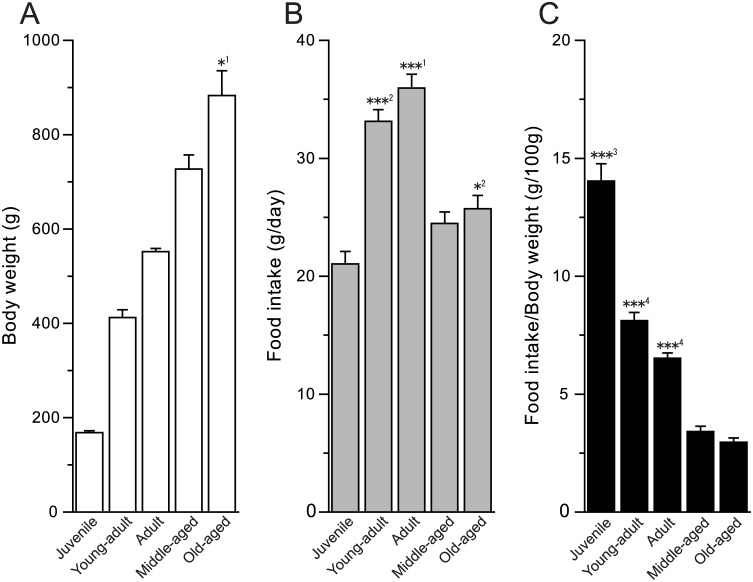
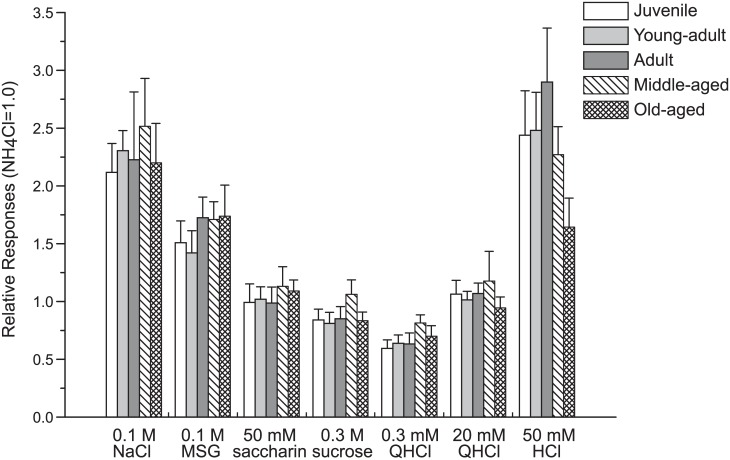
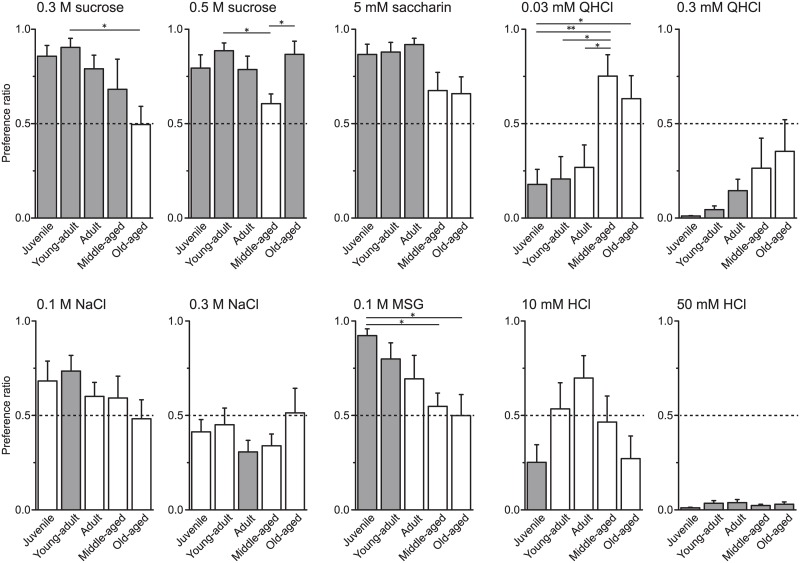
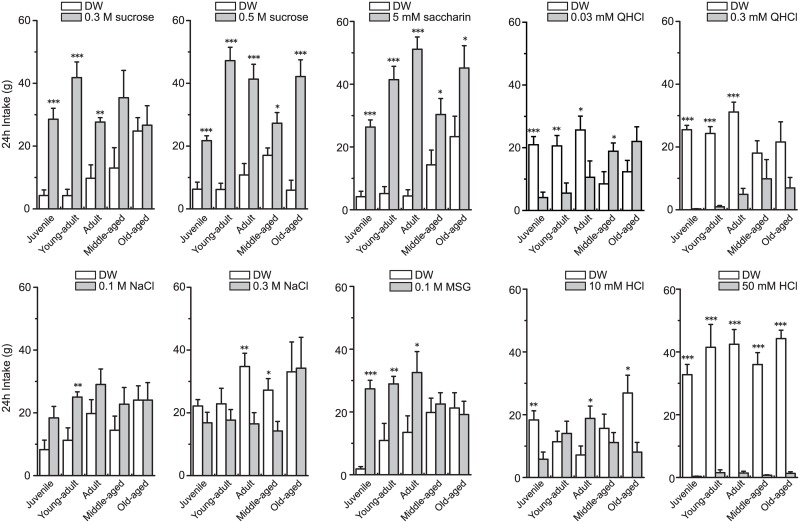
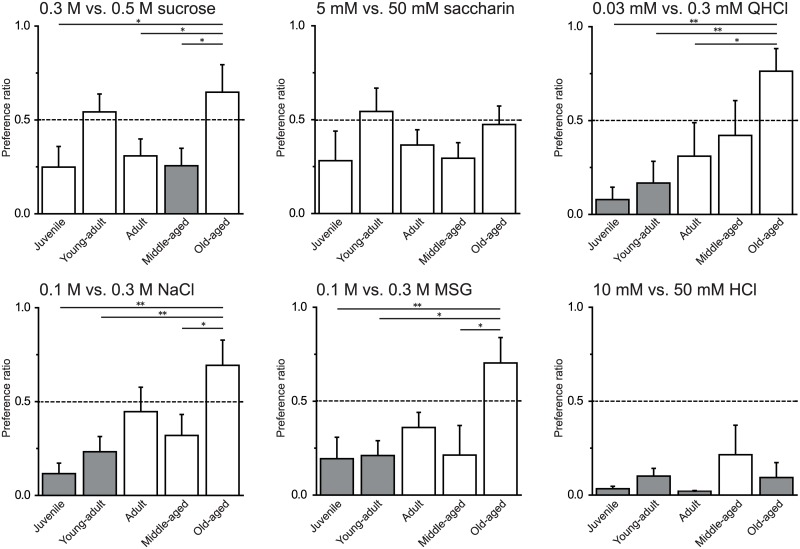
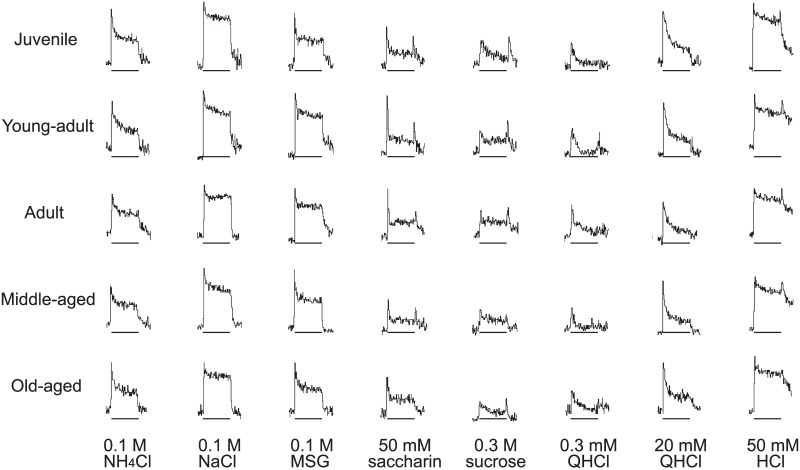
Taste preference, a key component of food choice, changes with aging. However, it remains unclear how this occurs. To determine differences in taste preference between rats in different life stages, we examined the consumption of taste solutions and water using a two-bottle test. Male Sprague-Dawley rats of different ages were used: juvenile (3-6 weeks), young adult (8-11 weeks), adult (17-20 weeks), middle-aged (34-37 weeks), and old-aged (69-72 weeks). The intakes of the high and low concentration solutions presented simultaneously were measured. We observed that the old-aged group had lower preference ratios for 0.3 M sucrose and 0.1 M MSG in comparison with other groups. The preference ratio for 0.03 mM QHCl was higher in the middle-aged group than in the three younger groups and higher in the old-aged group than the juvenile group. The taste preferences for HCl and NaCl did not significantly differ among the age groups. The old-aged group tended to prefer high concentrations of sucrose, QHCl, NaCl, and MSG to low concentrations, indicating age-related decline in taste sensitivity. We also aimed to investigate differences between life stages in the electrophysiological responses of the chorda tympani nerve, one of the peripheral gustatory nerves, to taste stimuli. The electrophysiological recordings showed that aging did not alter the function of the chorda tympani nerve. This study showed that aging induced alterations in taste preference. It is likely that these alterations are a result of functional changes in other peripheral taste nerves, the gastrointestinal system, or the central nervous system.
味觉偏好是食物选择的一个关键组成部分,会随着年龄增长而变化。然而,其发生机制仍不清楚。为了确定不同生命阶段大鼠的味觉偏好差异,我们使用双瓶测试法检测了味觉溶液和水的消耗量。选用了不同年龄的雄性斯普拉格-道利大鼠:幼年(3 - 6周)、青年成年(8 - 11周)、成年(17 - 20周)、中年(34 - 37周)和老年(69 - 72周)。测量了同时呈现的高浓度和低浓度溶液的摄入量。我们观察到,与其他组相比,老年组对0.3 M蔗糖和0.1 M味精的偏好率较低。中年组对0.03 mM盐酸喹啉的偏好率高于三个较年轻的组,老年组对其的偏好率高于幼年组。各年龄组对盐酸和氯化钠的味觉偏好没有显著差异。老年组倾向于偏好高浓度的蔗糖、盐酸喹啉、氯化钠和味精而非低浓度的,这表明味觉敏感性随年龄增长而下降。我们还旨在研究外周味觉神经之一鼓索神经对味觉刺激的电生理反应在不同生命阶段的差异。电生理记录显示,衰老并未改变鼓索神经的功能。这项研究表明,衰老会引起味觉偏好的改变。这些改变很可能是其他外周味觉神经、胃肠道系统或中枢神经系统功能变化的结果。