Kastritis Panagiotis L, O'Reilly Francis J, Bock Thomas, Li Yuanyue, Rogon Matt Z, Buczak Katarzyna, Romanov Natalie, Betts Matthew J, Bui Khanh Huy, Hagen Wim J, Hennrich Marco L, Mackmull Marie-Therese, Rappsilber Juri, Russell Robert B, Bork Peer, Beck Martin, Gavin Anne-Claude
European Molecular Biology Laboratory, Structural and Computational Biology Unit, Heidelberg, Germany.
Chair of Bioanalytics, Institute of Biotechnology, Technische Universität Berlin, Berlin, Germany.
Mol Syst Biol. 2017 Jul 25;13(7):936. doi: 10.15252/msb.20167412.
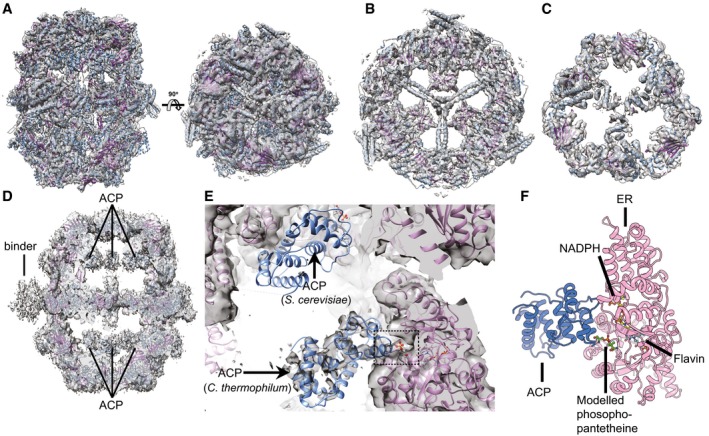
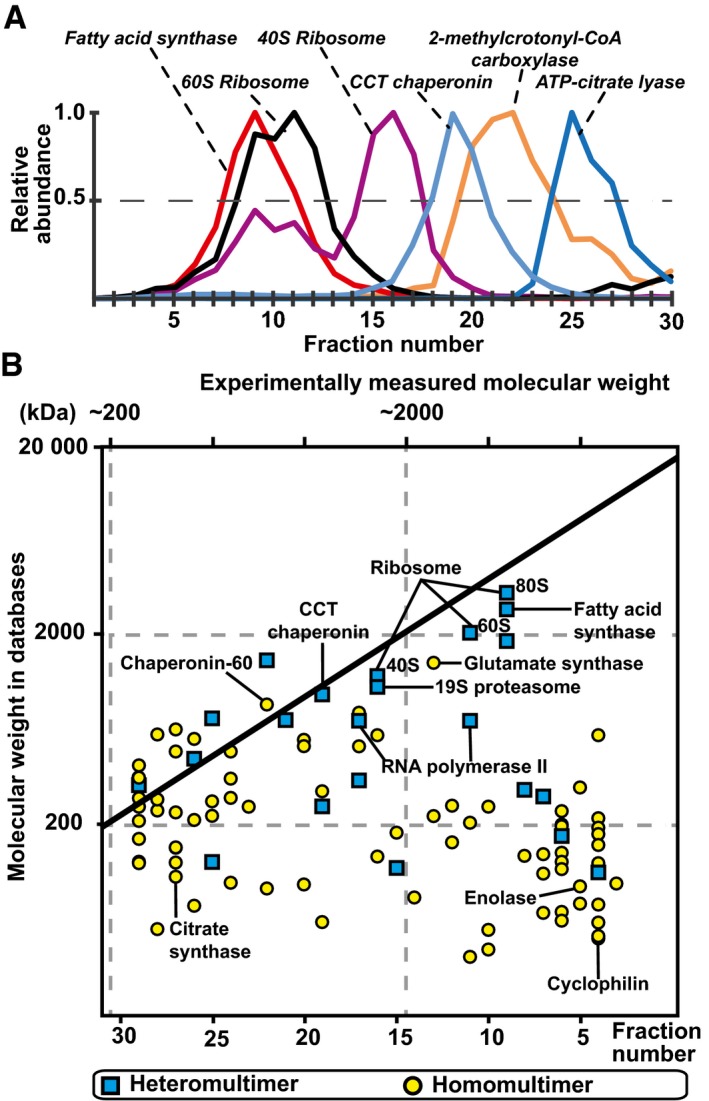
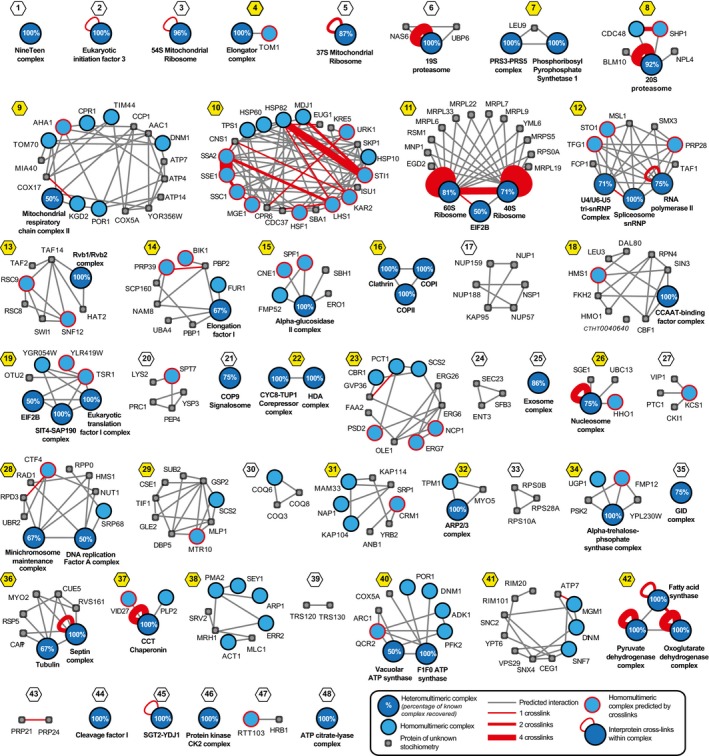
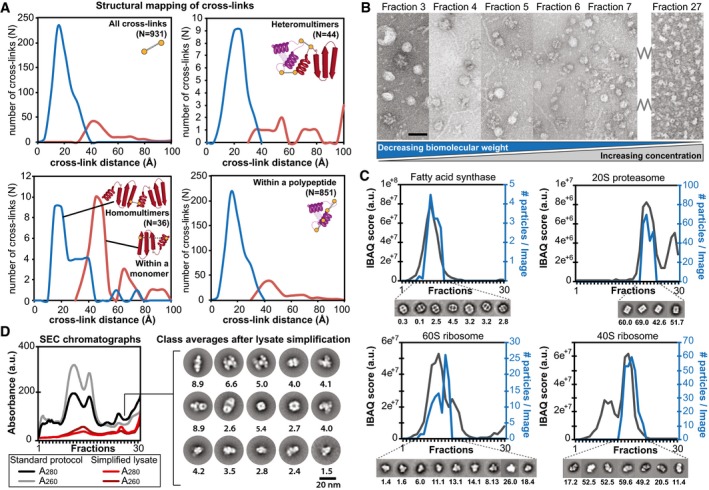
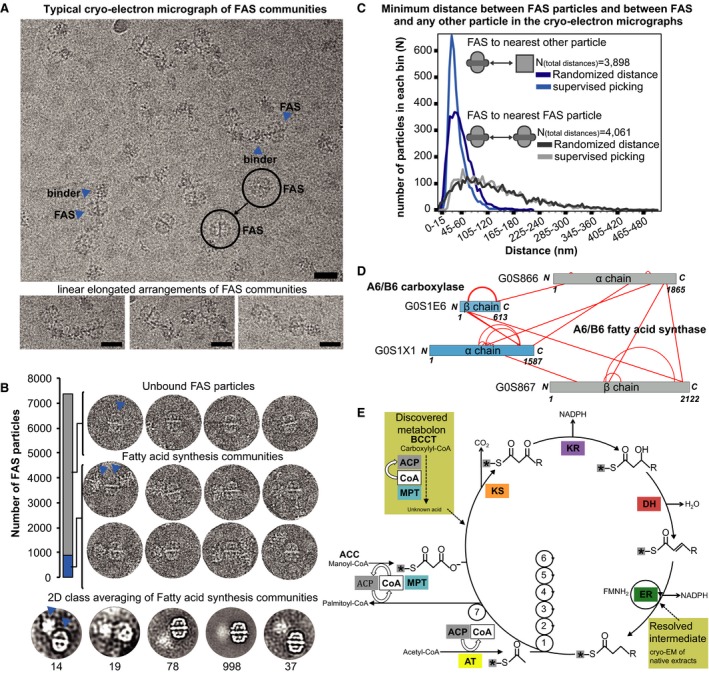
The arrangement of proteins into complexes is a key organizational principle for many cellular functions. Although the topology of many complexes has been systematically analyzed in isolation, their molecular sociology remains elusive. Here, we show that crude cellular extracts of a eukaryotic thermophile, , retain basic principles of cellular organization. Using a structural proteomics approach, we simultaneously characterized the abundance, interactions, and structure of a third of the proteome within these extracts. We identified 27 distinct protein communities that include 108 interconnected complexes, which dynamically associate with each other and functionally benefit from being in close proximity in the cell. Furthermore, we investigated the structure of fatty acid synthase within these extracts by cryoEM and this revealed multiple, flexible states of the enzyme in adaptation to its association with other complexes, thus exemplifying the need for studies. As the components of the captured protein communities are known-at both the protein and complex levels-this study constitutes another step forward toward a molecular understanding of subcellular organization.
蛋白质组装成复合物是许多细胞功能的关键组织原则。尽管许多复合物的拓扑结构已被单独系统地分析,但其分子社会学仍然难以捉摸。在这里,我们表明一种真核嗜热菌的粗细胞提取物保留了细胞组织的基本原理。使用结构蛋白质组学方法,我们同时表征了这些提取物中三分之一蛋白质组的丰度、相互作用和结构。我们鉴定出27个不同的蛋白质群落,其中包括108个相互连接的复合物,它们在细胞内彼此动态关联,并因紧密相邻而在功能上受益。此外,我们通过冷冻电镜研究了这些提取物中脂肪酸合酶的结构,这揭示了该酶在适应与其他复合物结合时的多种灵活状态,从而例证了进行此类研究的必要性。由于所捕获的蛋白质群落的组成成分在蛋白质和复合物水平上都是已知的,这项研究朝着对亚细胞组织的分子理解又迈进了一步。