Gurau Oana, Bosl William J, Newton Charles R
Department of Psychiatry, University of Oxford, Oxford, United Kingdom.
School of Nursing and Health Professions, University of San Francisco, San Francisco, CA, United States.
Front Psychiatry. 2017 Jul 12;8:121. doi: 10.3389/fpsyt.2017.00121. eCollection 2017.
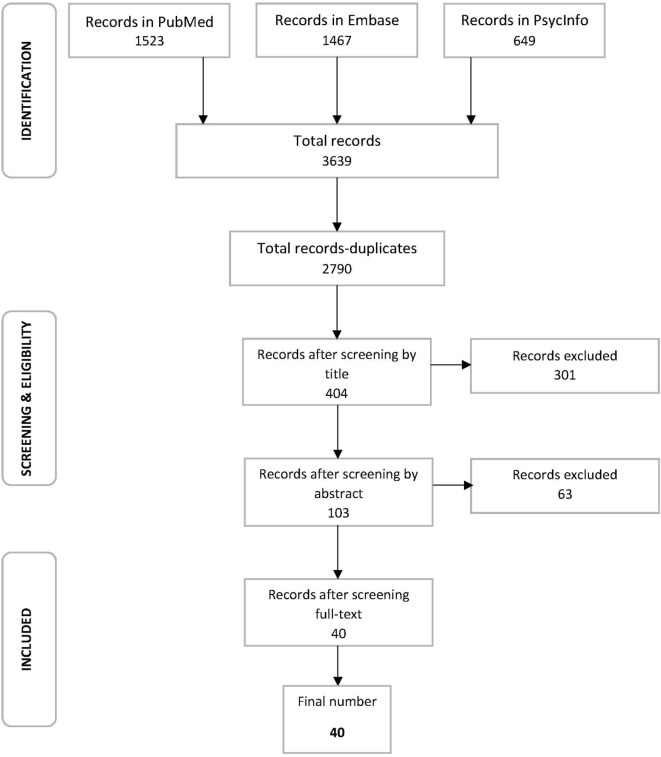
Autism spectrum disorders (ASD) are thought to be associated with abnormal neural connectivity. Presently, neural connectivity is a theoretical construct that cannot be easily measured. Research in network science and time series analysis suggests that neural network structure, a marker of neural activity, can be measured with electroencephalography (EEG). EEG can be quantified by different methods of analysis to potentially detect brain abnormalities. The aim of this review is to examine evidence for the utility of three methods of EEG signal analysis in the ASD diagnosis and subtype delineation. We conducted a review of literature in which 40 studies were identified and classified according to the principal method of EEG analysis in three categories: functional connectivity analysis, spectral power analysis, and information dynamics. All studies identified significant differences between ASD patients and non-ASD subjects. However, due to high heterogeneity in the results, generalizations could not be inferred and none of the methods alone are currently useful as a new diagnostic tool. The lack of studies prevented the analysis of these methods as tools for ASD subtypes delineation. These results confirm EEG abnormalities in ASD, but as yet not sufficient to help in the diagnosis. Future research with larger samples and more robust study designs could allow for higher sensitivity and consistency in characterizing ASD, paving the way for developing new means of diagnosis.
自闭症谱系障碍(ASD)被认为与异常的神经连接有关。目前,神经连接是一个难以轻易测量的理论概念。网络科学和时间序列分析的研究表明,神经网络结构作为神经活动的一个标志,可以通过脑电图(EEG)来测量。EEG可以通过不同的分析方法进行量化,以潜在地检测大脑异常。本综述的目的是研究三种EEG信号分析方法在ASD诊断和亚型划分中的效用证据。我们对文献进行了综述,其中40项研究被识别并根据EEG分析的主要方法分为三类:功能连接分析、频谱功率分析和信息动力学。所有研究都发现ASD患者和非ASD受试者之间存在显著差异。然而,由于结果的高度异质性,无法进行归纳总结,目前没有一种方法单独作为一种新的诊断工具是有用的。缺乏相关研究使得无法将这些方法作为ASD亚型划分的工具进行分析。这些结果证实了ASD患者存在EEG异常,但目前仍不足以辅助诊断。未来采用更大样本和更稳健研究设计的研究可能会在ASD特征描述方面具有更高的敏感性和一致性,为开发新的诊断方法铺平道路。