Byrne Áine, Brookes Matthew J, Coombes Stephen
Centre for Mathematical Medicine and Biology, School of Mathematical Sciences, University of Nottingham, University Park, Nottingham, NG7 2RD, UK.
Sir Peter Mansfield Imaging Centre, School of Physics and Astronomy, University of Nottingham, University Park, Nottingham, NG7 2RD, UK.
J Comput Neurosci. 2017 Oct;43(2):143-158. doi: 10.1007/s10827-017-0655-7. Epub 2017 Jul 26.
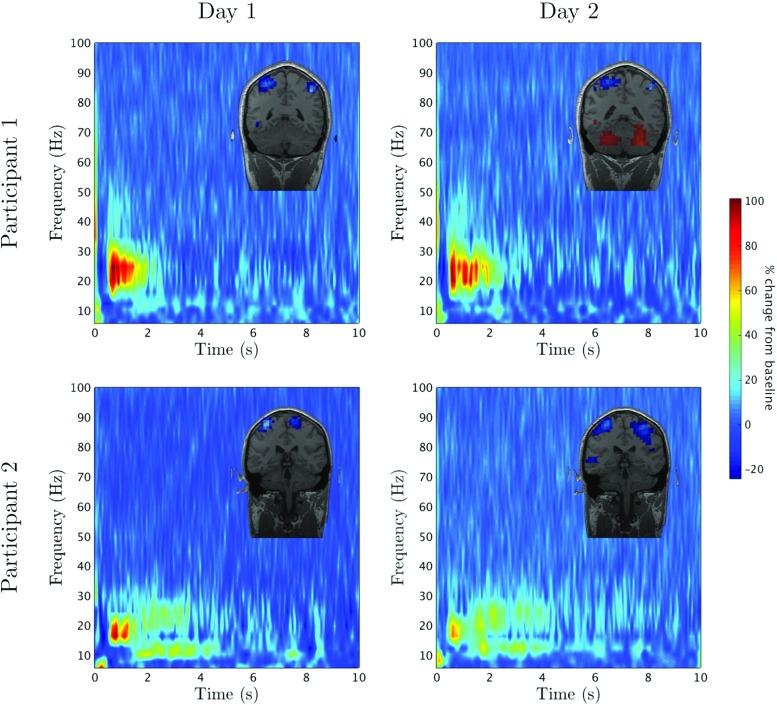
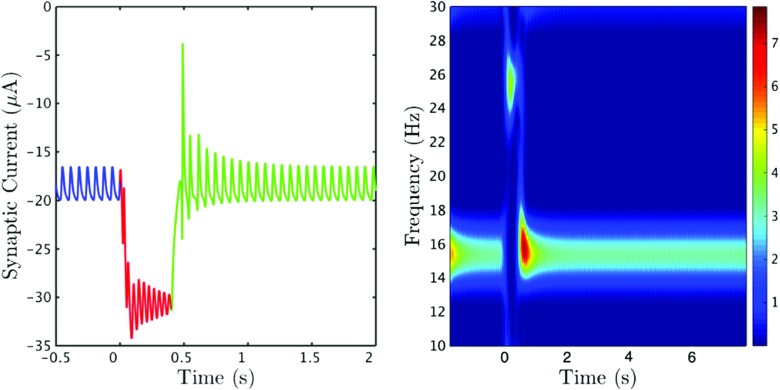
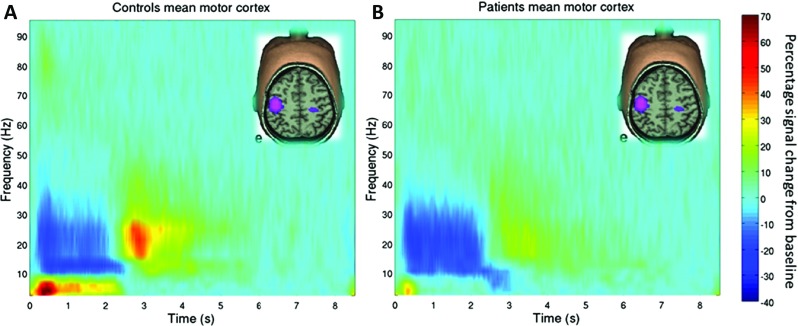
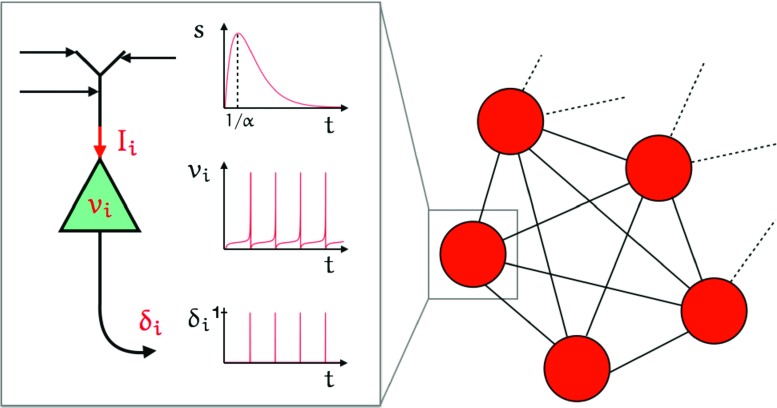
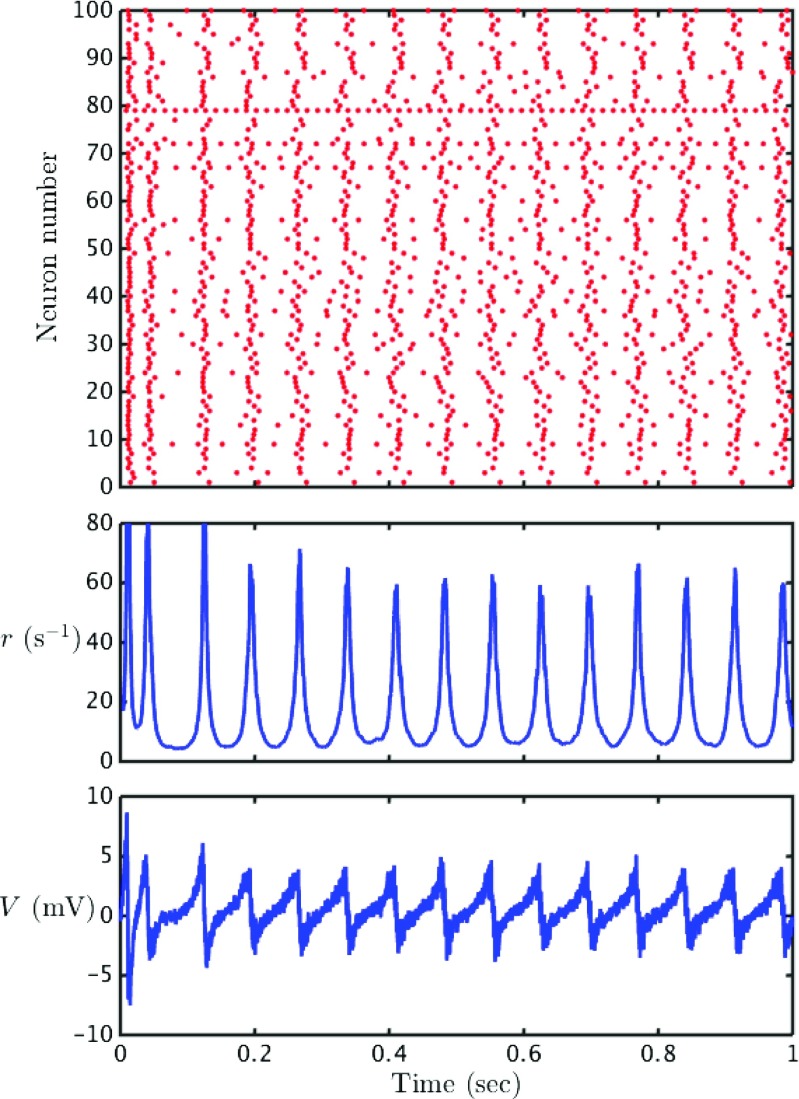
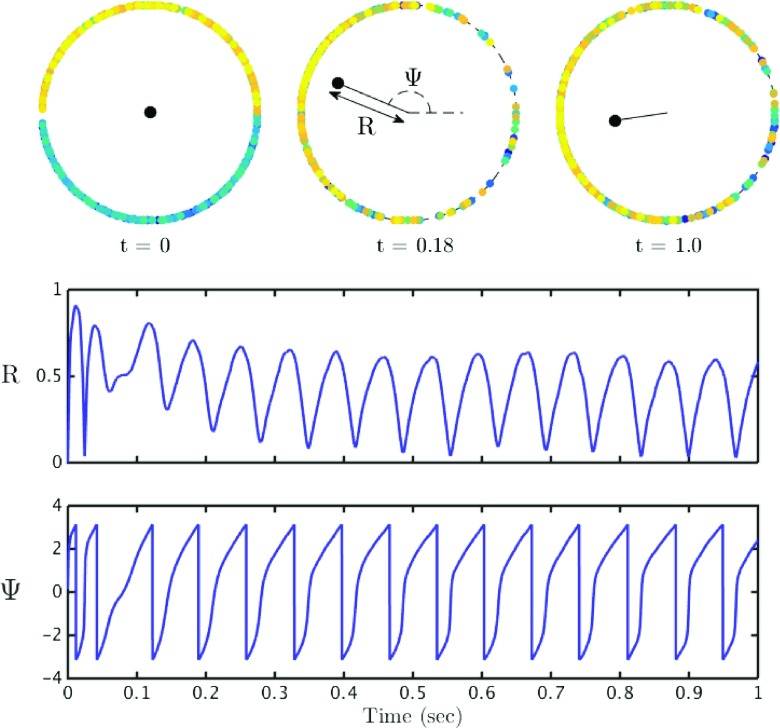
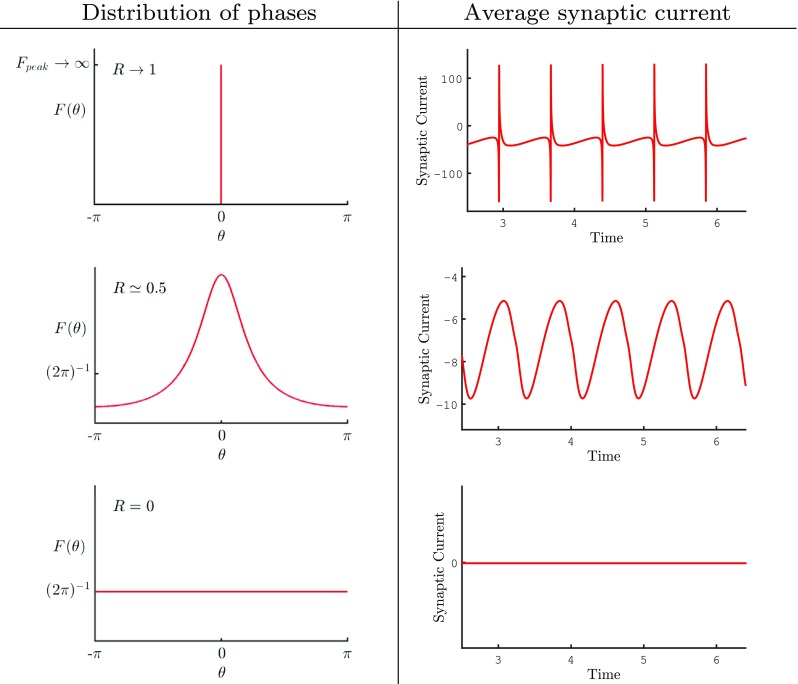
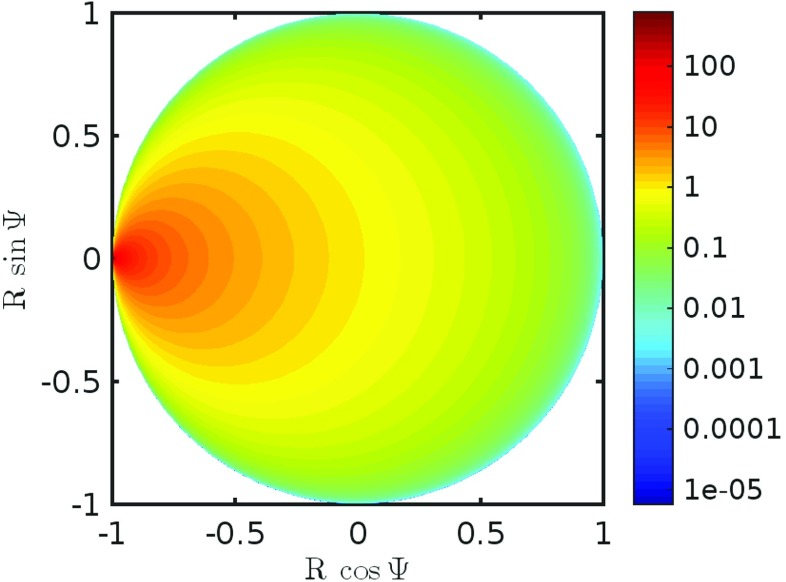
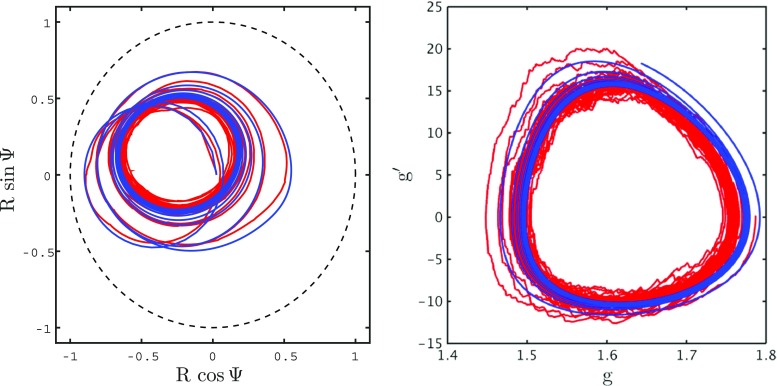
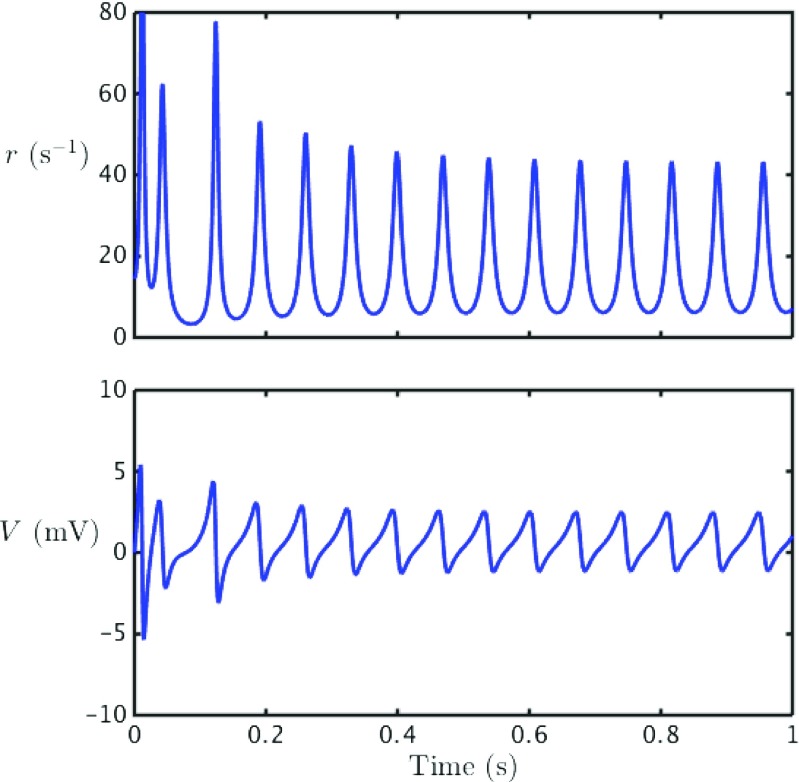
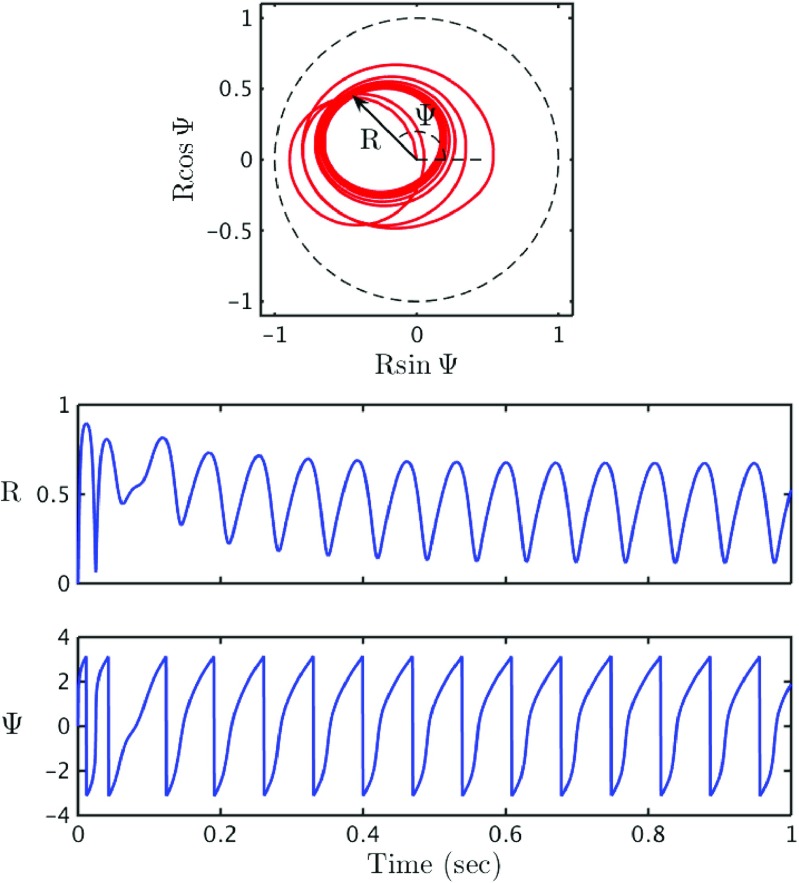
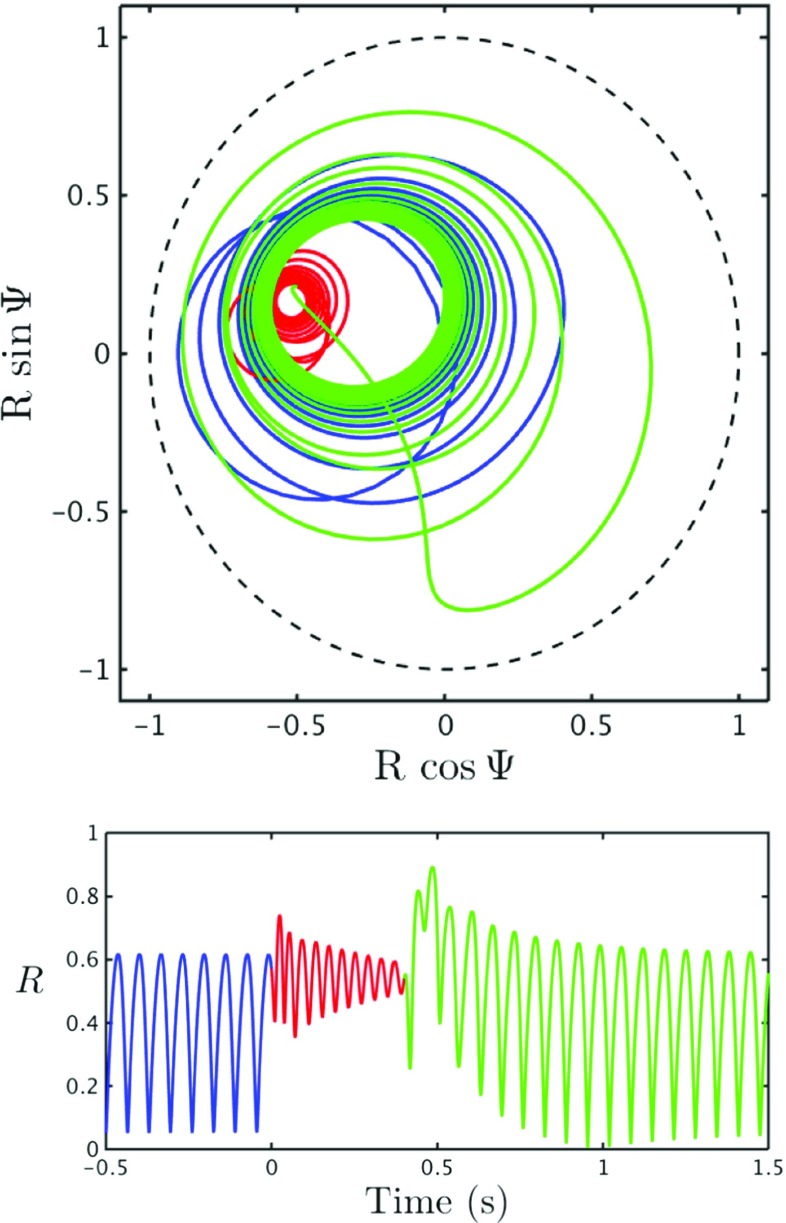
In electrophysiological recordings of the brain, the transition from high amplitude to low amplitude signals are most likely caused by a change in the synchrony of underlying neuronal population firing patterns. Classic examples of such modulations are the strong stimulus-related oscillatory phenomena known as the movement related beta decrease (MRBD) and post-movement beta rebound (PMBR). A sharp decrease in neural oscillatory power is observed during movement (MRBD) followed by an increase above baseline on movement cessation (PMBR). MRBD and PMBR represent important neuroscientific phenomena which have been shown to have clinical relevance. Here, we present a parsimonious model for the dynamics of synchrony within a synaptically coupled spiking network that is able to replicate a human MEG power spectrogram showing the evolution from MRBD to PMBR. Importantly, the high-dimensional spiking model has an exact mean field description in terms of four ordinary differential equations that allows considerable insight to be obtained into the cause of the experimentally observed time-lag from movement termination to the onset of PMBR (∼ 0.5 s), as well as the subsequent long duration of PMBR (∼ 1 - 10 s). Our model represents the first to predict these commonly observed and robust phenomena and represents a key step in their understanding, in health and disease.
在大脑的电生理记录中,从高振幅信号到低振幅信号的转变很可能是由潜在神经元群体放电模式的同步性变化引起的。这种调制的经典例子是与强刺激相关的振荡现象,即运动相关β波减弱(MRBD)和运动后β波反弹(PMBR)。在运动期间观察到神经振荡功率急剧下降(MRBD),随后在运动停止时高于基线水平(PMBR)。MRBD和PMBR代表了重要的神经科学现象,已被证明具有临床相关性。在这里,我们提出了一个突触耦合脉冲网络中同步动力学的简约模型,该模型能够复制显示从MRBD到PMBR演变的人类脑磁图功率谱。重要的是,这个高维脉冲模型可以用四个常微分方程进行精确的平均场描述,这使得我们能够深入了解从运动终止到PMBR开始(约0.5秒)实验观察到的时间延迟的原因,以及随后PMBR的长时间持续(约1 - 10秒)。我们的模型是第一个预测这些常见且稳定现象的模型,是理解其在健康和疾病中的关键一步。