Matam B Rajeswari, Duncan Heather
Birmingham Children's Hospital, NHSFT, Steelhouse Lane, Birmingham, B4 6NH, UK.
Aston University, Aston Triangle, Birmingham, B4 7ET, UK.
J Clin Monit Comput. 2018 Jun;32(3):559-569. doi: 10.1007/s10877-017-0047-6. Epub 2017 Jul 27.
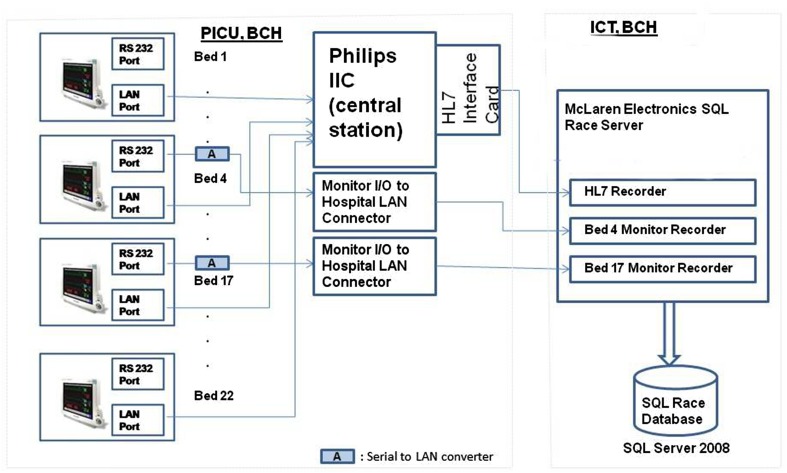
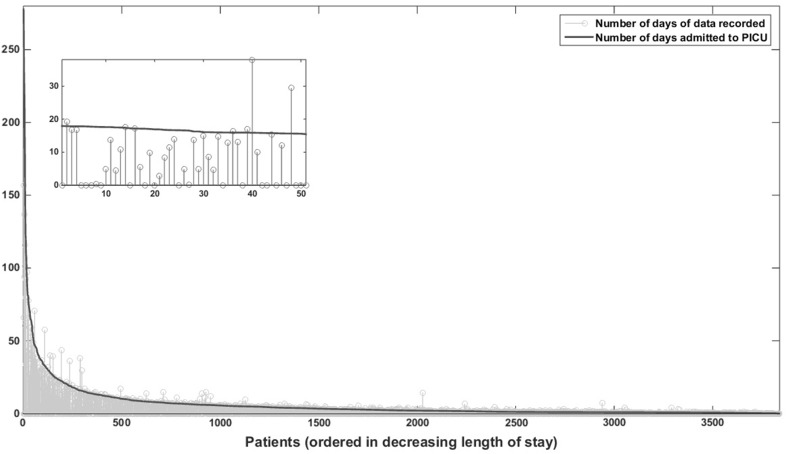
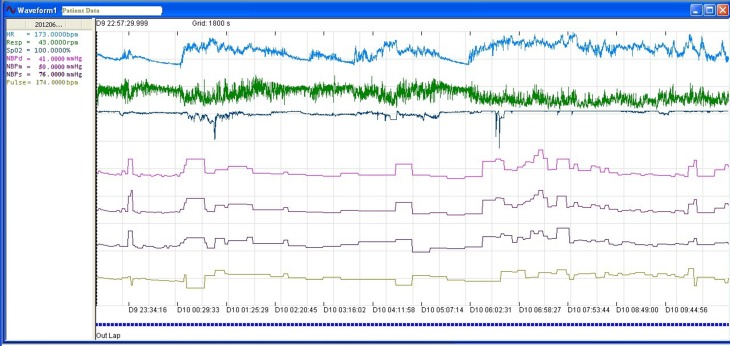
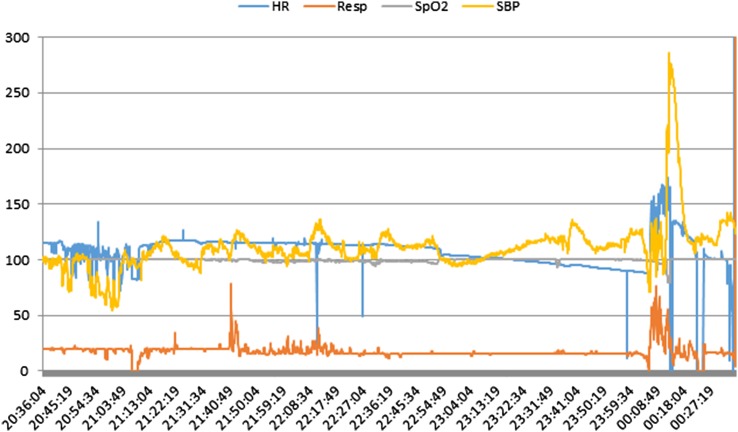
Most existing, expert monitoring systems do not provide the real time continuous analysis of the monitored physiological data that is necessary to detect transient or combined vital sign indicators nor do they provide long term storage of the data for retrospective analyses. In this paper we examine the feasibility of implementing a long term data storage system which has the ability to incorporate real-time data analytics, the system design, report the main technical issues encountered, the solutions implemented and the statistics of the data recorded. McLaren Electronic Systems expertise used to continually monitor and analyse the data from F1 racing cars in real time was utilised to implement a similar real-time data recording platform system adapted with real time analytics to suit the requirements of the intensive care environment. We encountered many technical (hardware and software) implementation challenges. However there were many advantages of the system once it was operational. They include: (1) The ability to store the data for long periods of time enabling access to historical physiological data. (2) The ability to alter the time axis to contract or expand periods of interest. (3) The ability to store and review ECG morphology retrospectively. (4) Detailed post event (cardiac/respiratory arrest or other clinically significant deteriorations in patients) data can be reviewed clinically as opposed to trend data providing valuable clinical insight. Informed mortality and morbidity reviews can be conducted. (5) Storage of waveform data capture to use for algorithm development for adaptive early warning systems. Recording data from bed-side monitors in intensive care/wards is feasible. It is possible to set up real time data recording and long term storage systems. These systems in future can be improved with additional patient specific metrics which predict the status of a patient thus paving the way for real time predictive monitoring.
大多数现有的专家监测系统无法对监测到的生理数据进行实时连续分析,而这对于检测短暂或综合生命体征指标是必要的,它们也不提供数据的长期存储以供回顾性分析。在本文中,我们研究了实施一个长期数据存储系统的可行性,该系统能够整合实时数据分析、系统设计,报告遇到的主要技术问题、实施的解决方案以及记录数据的统计信息。利用迈凯轮电子系统公司用于实时持续监测和分析一级方程式赛车数据的专业知识,实施了一个类似的实时数据记录平台系统,并结合实时分析以满足重症监护环境的要求。我们遇到了许多技术(硬件和软件)实施挑战。然而,该系统一旦投入运行就有许多优点。它们包括:(1)能够长时间存储数据,以便访问历史生理数据。(2)能够改变时间轴以收缩或扩展感兴趣的时间段。(3)能够回顾性存储和查看心电图形态。(4)与趋势数据相比,可以临床回顾详细的事件后(心脏/呼吸骤停或患者其他具有临床意义的病情恶化)数据,从而提供有价值的临床见解。可以进行明智的死亡率和发病率评估。(5)存储波形数据捕获,用于自适应早期预警系统的算法开发。在重症监护室/病房记录床边监测器的数据是可行的。建立实时数据记录和长期存储系统是可能的。未来这些系统可以通过额外的患者特定指标进行改进,这些指标可以预测患者的状态,从而为实时预测监测铺平道路。