Rachmawati Heni, Pradana Aditya Trias, Safitri Dewi, Adnyana I Ketut
School of Pharmacy, Bandung Institute of Technology, Ganesha 10, Bandung 40132, Indonesia.
Research Center for Nanosciences and Nanotechnology, Bandung Institute of Technology, Ganesha 10 Bandung 40132, Indonesia.
Pharmaceutics. 2017 Jul 21;9(3):24. doi: 10.3390/pharmaceutics9030024.
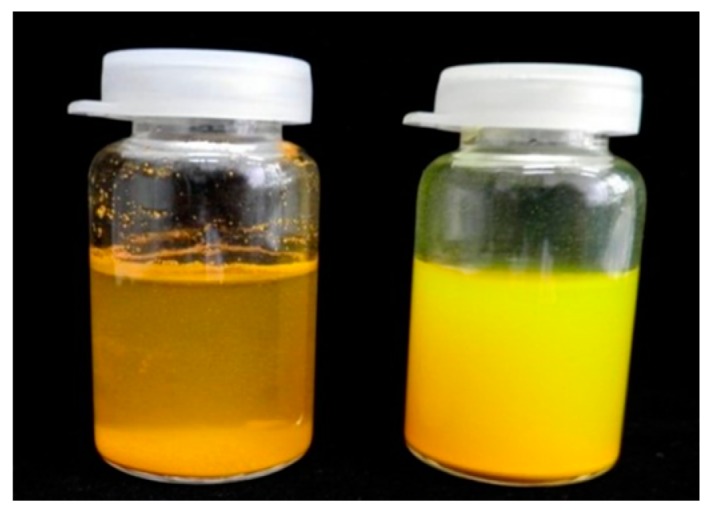
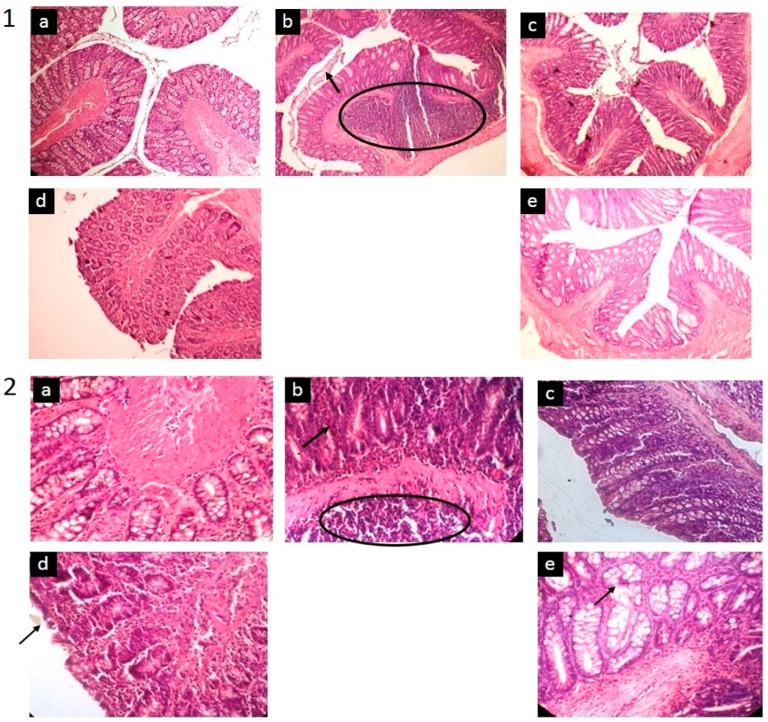
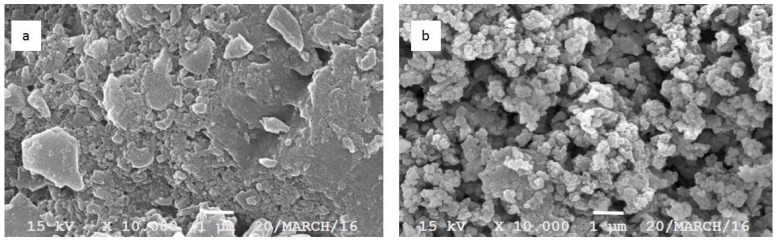
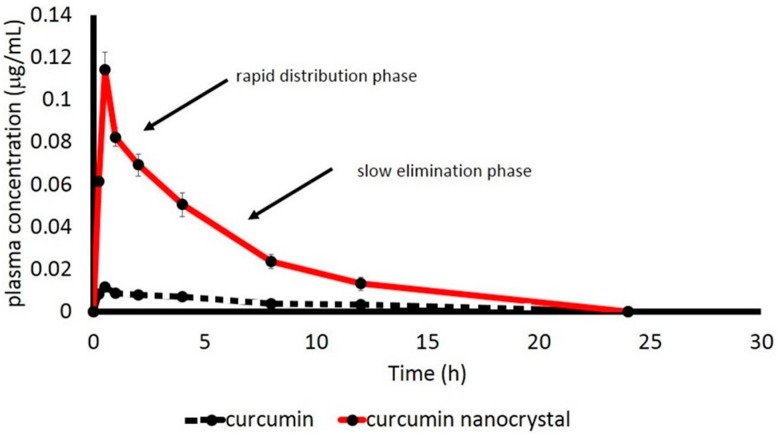
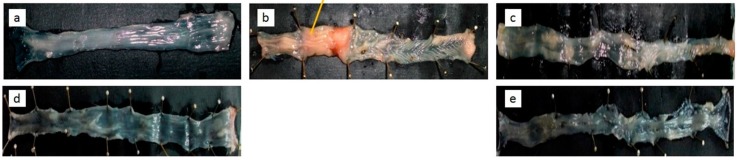
This study was conducted to evaluate the potential benefit of particle reduction down to nanoscale on curcumin, a unique natural active compound facing therapeutic problems due to low solubility and permeability. In addition, the presence of TPGS as a surfactant for multiple functions on curcumin nanoparticle was addressed. Observation was focused on bioavailability enhancement after oral administration and local anti-inflammatory improvement after rectal dosing. Nanonization of curcumin was performed using an up-scalable top down method. Specific animal models were used to study the in vivo kinetic profile and the biological activity of curcumin nanoparticle, compared with curcumin powder. d-α-tocopherol polyethylene glycol 1000 succinate (TPGS)-stabilized curcumin nanoparticle was prepared through homogenization with high pressure of the 1500 bar. An in vivo study was performed after oral administration of the preparations to male healthy Wistar rats, to monitor the plasma kinetic profile of curcumin. The biological activity study was conducted after rectal administration of the preparations in Wistar rats induced by 2,4,6-trinitrobenzene sulfonic acid to develop ulcerative colitis. The curcumin nanoparticle with a size of approximately 200 nm was successfully produced and revealed a better in vivo kinetic profile over the larger size of curcumin mixed with TPGS, with bioavailability (AUC) that was accounted for seven-fold. In addition, the TPGS-stabilized curcumin nanoparticle demonstrated a superior local anti-inflammatory effect in ulcerative colitis, indicated by the shifting of observed parameters close to the healthy status. The tremendously improved anti-inflammatory effect of the TPGS-stabilized curcumin nanoparticle was found with a very low dose. Reducing the particle size of curcumin down to ~200 nm with the presence of TPGS seems to be a promising approach to improving the therapeutic value of curcumin.
本研究旨在评估将姜黄素颗粒减小至纳米级的潜在益处。姜黄素是一种独特的天然活性化合物,因其低溶解性和低渗透性而面临治疗难题。此外,还探讨了使用具有多种功能的表面活性剂生育酚聚乙二醇1000琥珀酸酯(TPGS)制备姜黄素纳米颗粒的情况。研究重点在于口服给药后生物利用度的提高以及直肠给药后局部抗炎效果的改善。采用可放大的自上而下方法对姜黄素进行纳米化处理。使用特定的动物模型研究姜黄素纳米颗粒与姜黄素粉末相比的体内动力学特征和生物活性。通过1500巴的高压均质法制备了TPGS稳定的姜黄素纳米颗粒。对雄性健康Wistar大鼠口服制剂后进行体内研究,以监测姜黄素的血浆动力学特征。在2,4,6-三硝基苯磺酸诱导的Wistar大鼠溃疡性结肠炎模型中直肠给药后进行生物活性研究。成功制备了尺寸约为200 nm的姜黄素纳米颗粒,与较大尺寸的姜黄素与TPGS混合物相比,其体内动力学特征更佳,生物利用度(AUC)提高了7倍。此外,TPGS稳定的姜黄素纳米颗粒在溃疡性结肠炎中表现出卓越的局部抗炎效果,观察参数接近健康状态。在极低剂量下发现TPGS稳定的姜黄素纳米颗粒具有显著改善的抗炎效果。在TPGS存在的情况下将姜黄素粒径减小至约200 nm似乎是提高姜黄素治疗价值的一种有前景的方法。