Fachbereich Geowissenschaften, Forschungsbereich Paläobiologie, AG Biogeologie, Universität Tübingen, Hölderlinstr. 12, 72074, Tübingen, Germany.
Senckenberg Centre for Human Evolution and Palaeoenvironment (HEP), Universität Tübingen, Hölderlinstr. 12, 72074, Tübingen, Germany.
Sci Rep. 2017 Jul 28;7(1):6833. doi: 10.1038/s41598-017-07065-3.
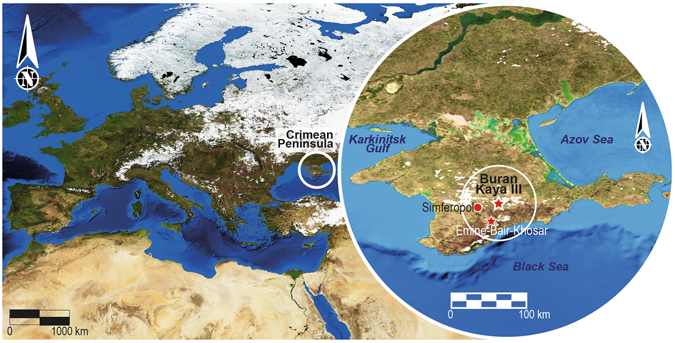
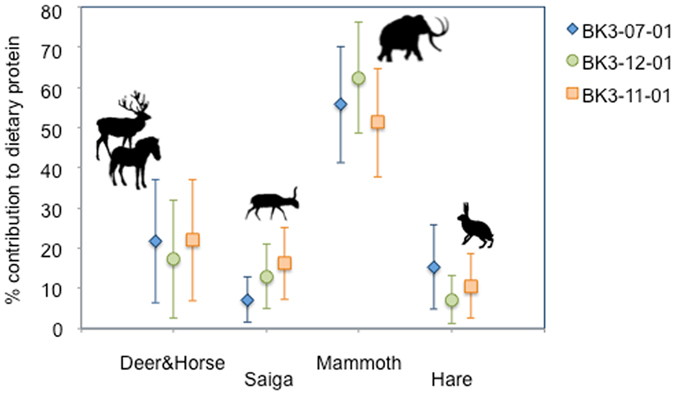
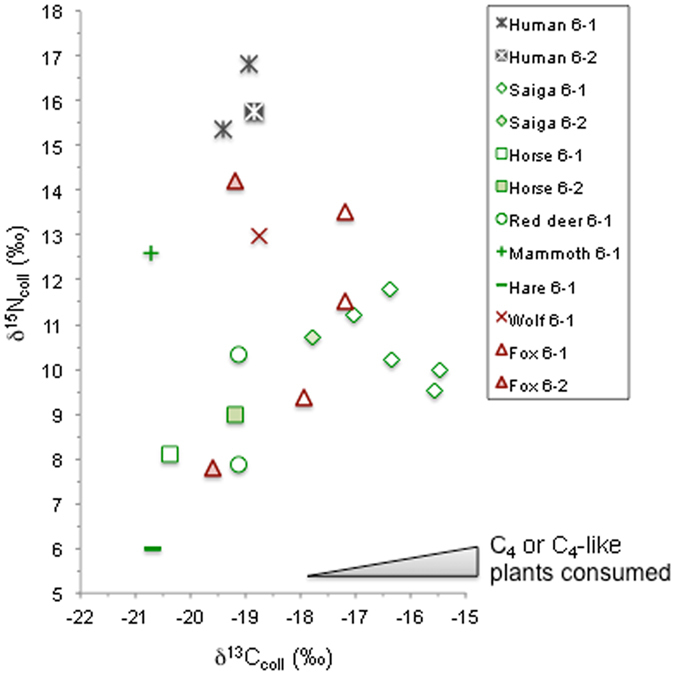
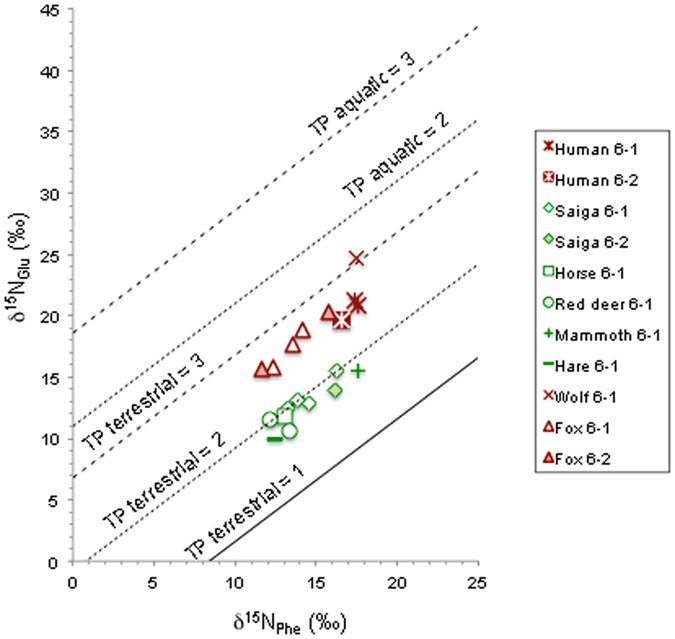
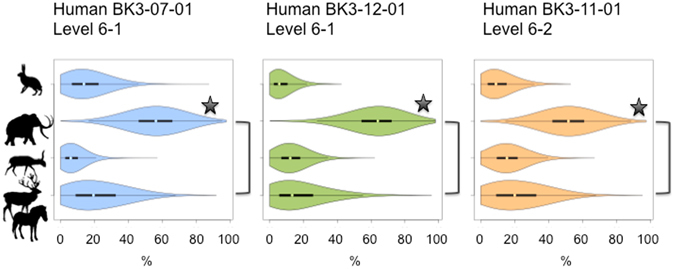
Relatively high N abundances in bone collagen of early anatomically modern humans in Europe have often been interpreted as a specific consumption of freshwater resources, even if mammoth is an alternative high N prey. At Buran-Kaya III, access to associated fauna in a secured archaeological context and application of recently developed isotopic analyses of individuals amino acids offer the opportunity to further examine this hypothesis. The site of Buran-Kaya III is located in south Crimea and has provided a rich archaeological sequence including two Upper Palaeolithic layers, from which human fossils were retrieved and directly dated as from 37.8 to 33.1 ka cal BP. Results from bulk collagen of three human remains suggests the consumption of a high N prey besides the contribution of saiga, red deer, horse and hare, whose butchered remains were present at the site. In contrast to bulk collagen, phenylalanine and glutamic acid N abundances reflect not only animal but also plant protein contributions to omnivorous diet, and allow disentangling aquatic from terrestrial resource consumption. The inferred human trophic position values point to terrestrial-based diet, meaning a significant contribution of mammoth meat, in addition to a clear intake of plant protein.
相对较高的氮含量在欧洲早期解剖学上的现代人的骨胶原中经常被解释为对淡水资源的特殊消耗,即使猛犸象是一种替代的高氮猎物。在布伦卡亚三世,在安全的考古背景下获得相关动物群,并应用最近开发的个体氨基酸同位素分析,为进一步检验这一假设提供了机会。布伦卡亚三世遗址位于克里米亚南部,提供了丰富的考古序列,包括两个旧石器时代晚期的地层,从中提取了人类化石,并直接追溯到 37.8 至 33.1 千年前的 cal BP。对三个人类遗骸的胶原的分析结果表明,除了有羚羊、马鹿、马和野兔的贡献外,还存在高氮猎物的消耗,这些动物的遗骸在该地点被发现。与胶原的整体分析结果不同,苯丙氨酸和谷氨酸的氮含量不仅反映了动物蛋白质的贡献,也反映了植物蛋白质的贡献,从而可以区分水生和陆生资源的消耗。推断出的人类营养位值指向基于陆地的饮食,这意味着除了大量摄入植物蛋白质外,猛犸象肉的摄入也很明显。