García Óscar, Prieto Javier, Alonso Ricardo S, Corchado Juan M
University of Salamanca, BISITE Research Group, Edificio I+D+I, 37007 Salamanca, Spain.
Sensors (Basel). 2017 Jul 31;17(8):1749. doi: 10.3390/s17081749.
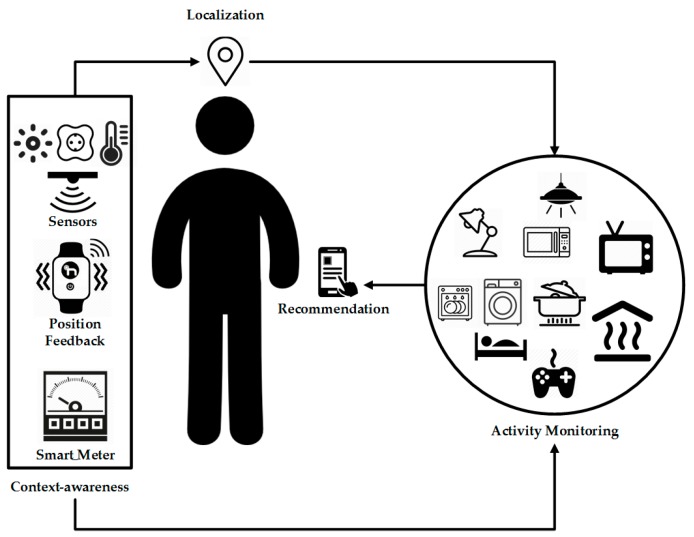
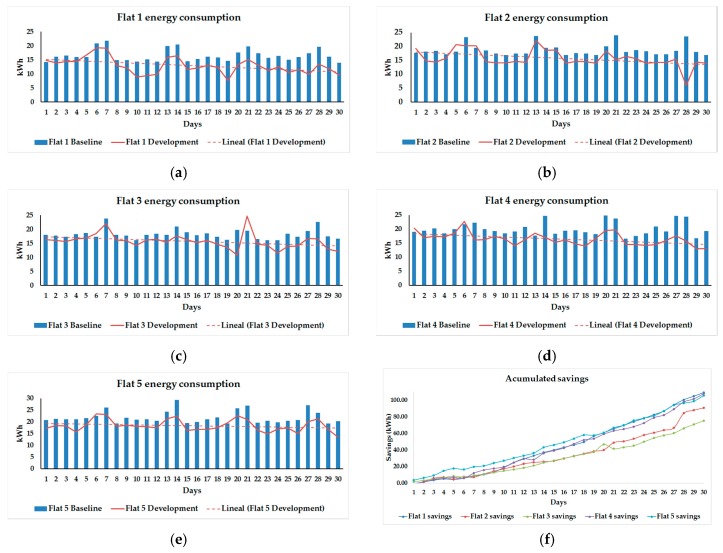
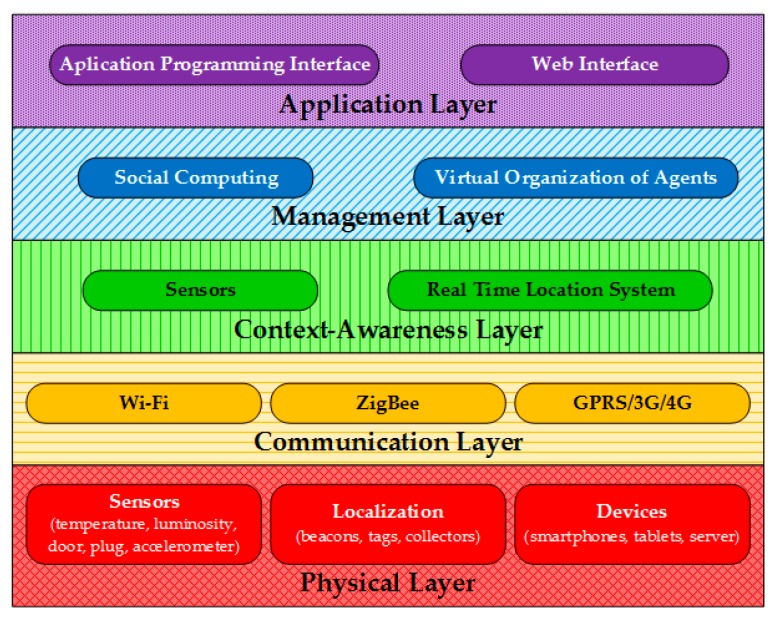
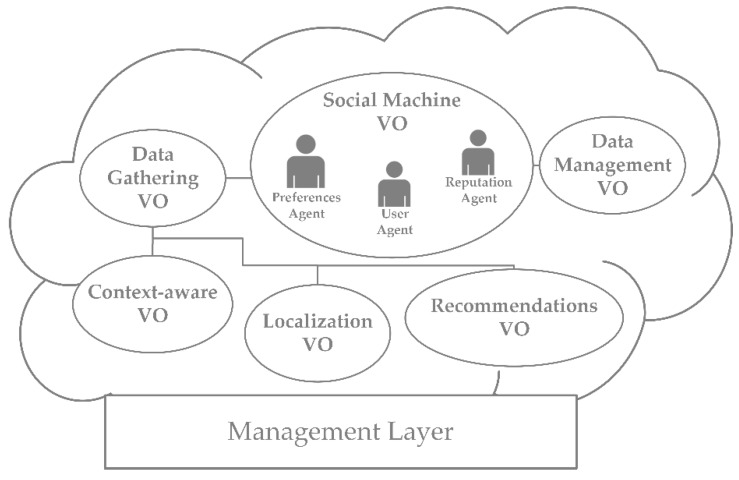
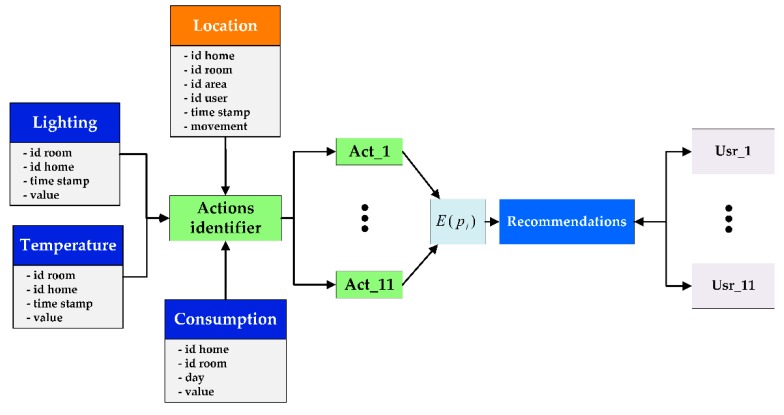
Real-time Localization Systems have been postulated as one of the most appropriated technologies for the development of applications that provide customized services. These systems provide us with the ability to locate and trace users and, among other features, they help identify behavioural patterns and habits. Moreover, the implementation of policies that will foster energy saving in homes is a complex task that involves the use of this type of systems. Although there are multiple proposals in this area, the implementation of frameworks that combine technologies and use Social Computing to influence user behaviour have not yet reached any significant savings in terms of energy. In this work, the CAFCLA framework (Context-Aware Framework for Collaborative Learning Applications) is used to develop a recommendation system for home users. The proposed system integrates a Real-Time Localization System and Wireless Sensor Networks, making it possible to develop applications that work under the umbrella of Social Computing. The implementation of an experimental use case aided efficient energy use, achieving savings of 17%. Moreover, the conducted case study pointed to the possibility of attaining good energy consumption habits in the long term. This can be done thanks to the system's real time and historical localization, tracking and contextual data, based on which customized recommendations are generated.
实时定位系统被认为是开发提供定制服务应用程序最合适的技术之一。这些系统使我们能够定位和追踪用户,并且除其他功能外,还能帮助识别行为模式和习惯。此外,实施有助于家庭节能的政策是一项复杂的任务,需要使用此类系统。尽管该领域有多种提议,但结合技术并利用社会计算来影响用户行为的框架在能源节约方面尚未取得显著成效。在这项工作中,CAFCLA框架(协作学习应用的情境感知框架)被用于为家庭用户开发一个推荐系统。所提出的系统集成了实时定位系统和无线传感器网络,使得在社会计算的框架下开发应用程序成为可能。一个实验用例的实施有助于高效能源利用,实现了17%的节能。此外,所进行的案例研究表明从长期来看有可能养成良好的能源消费习惯。这要归功于系统的实时和历史定位、跟踪及情境数据,基于这些数据生成定制化推荐。