Cortez Victor S, Ulland Tyler K, Cervantes-Barragan Luisa, Bando Jennifer K, Robinette Michelle L, Wang Qianli, White Andrew J, Gilfillan Susan, Cella Marina, Colonna Marco
Department of Pathology and Immunology, Washington University School of Medicine, St Louis, Missouri, USA.
Division of Pediatric Rheumatology and Department of Pediatrics, Washington University School of Medicine, St Louis, Missouri, USA.
Nat Immunol. 2017 Sep;18(9):995-1003. doi: 10.1038/ni.3809. Epub 2017 Jul 31.
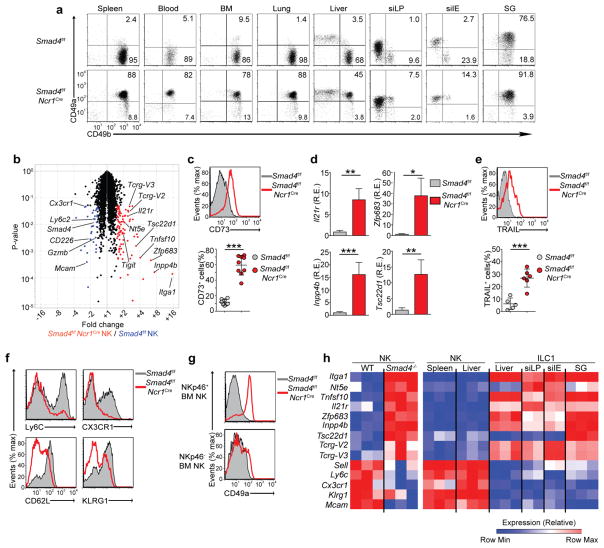
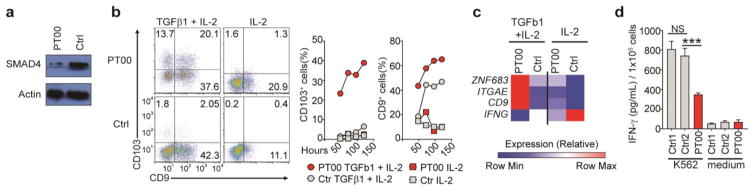
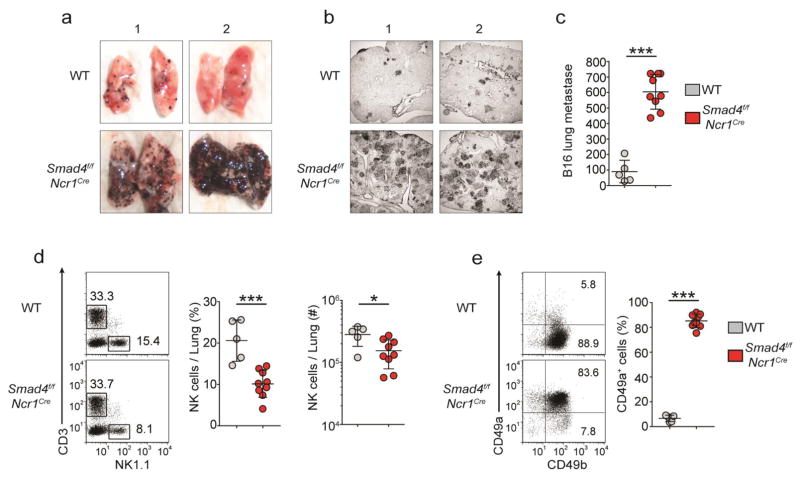
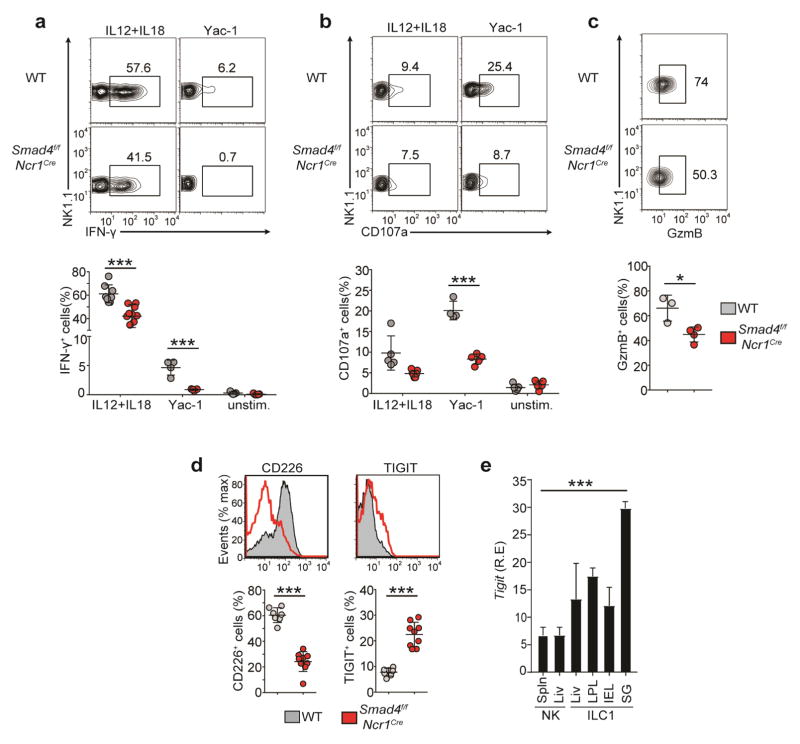
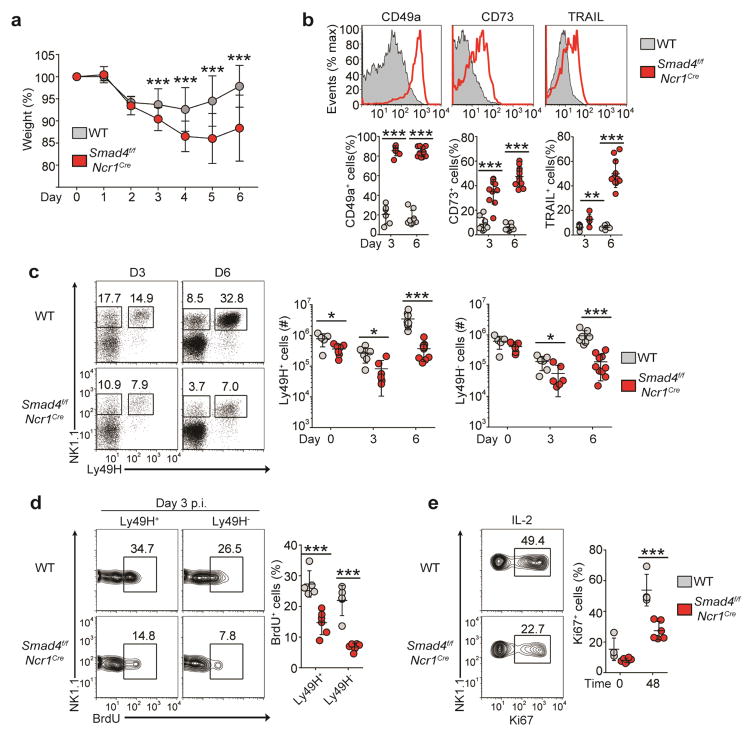
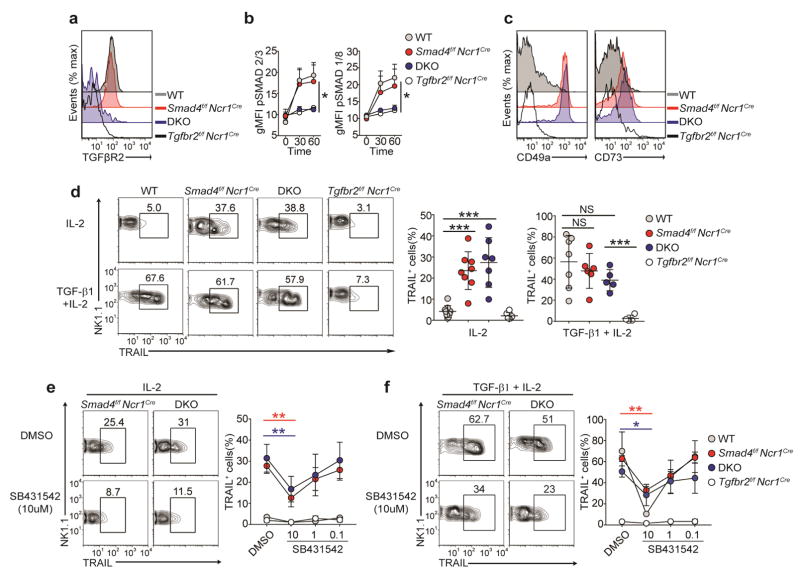
Among the features that distinguish type 1 innate lymphoid cells (ILC1s) from natural killer (NK) cells is a gene signature indicative of 'imprinting' by cytokines of the TGF-β family. We studied mice in which ILC1s and NK cells lacked SMAD4, a signal transducer that facilitates the canonical signaling pathway common to all cytokines of the TGF-β family. While SMAD4 deficiency did not affect ILC1 differentiation, NK cells unexpectedly acquired an ILC1-like gene signature and were unable to control tumor metastasis or viral infection. Mechanistically, SMAD4 restrained non-canonical TGF-β signaling mediated by the cytokine receptor TGFβR1 in NK cells. NK cells from a SMAD4-deficient person affected by polyposis were also hyper-responsive to TGF-β. These results identify SMAD4 as a previously unknown regulator that restricts non-canonical TGF-β signaling in NK cells.
1型天然淋巴细胞(ILC1s)与自然杀伤(NK)细胞的区别特征之一是一种基因特征,其表明受到转化生长因子-β(TGF-β)家族细胞因子的“印记”。我们研究了ILC1s和NK细胞缺乏SMAD4的小鼠,SMAD4是一种信号转导子,可促进TGF-β家族所有细胞因子共有的经典信号通路。虽然SMAD4缺陷不影响ILC1的分化,但NK细胞意外获得了类似ILC1的基因特征,并且无法控制肿瘤转移或病毒感染。从机制上讲,SMAD4抑制了NK细胞中由细胞因子受体TGFβR1介导的非经典TGF-β信号传导。一名受息肉病影响的SMAD4缺陷患者的NK细胞对TGF-β也有高反应性。这些结果确定SMAD4是一种以前未知的调节因子,可限制NK细胞中的非经典TGF-β信号传导。