Hooshyar Hossein, Ghafarinasab Shahrbanou, Arbabi Mohsen, Delavari Mahdi, Rasti Sima
Dept. of Parasitology, School of Medicine, Kashan University of Medical Sciences, Kashan, Iran.
Iran J Parasitol. 2017 Jan-Mar;12(1):83-89.
Based on genotyping study of human isolates of ; humans are mainly infected by two assemblages A and B. The present study was carried out to determine the sub-assemblages of isolated from food handlers referred to Kashan health centers, central Iran, 2015.
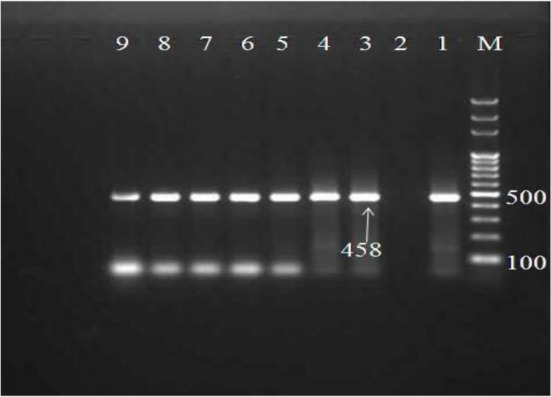
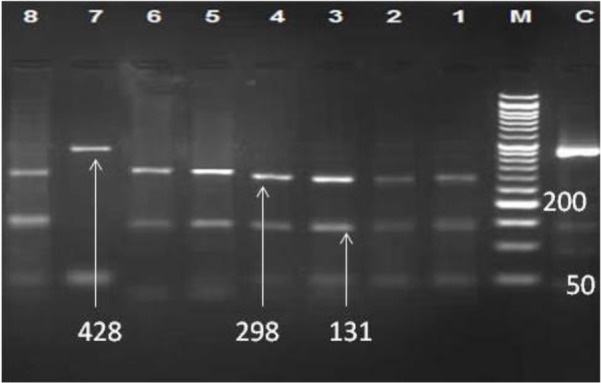
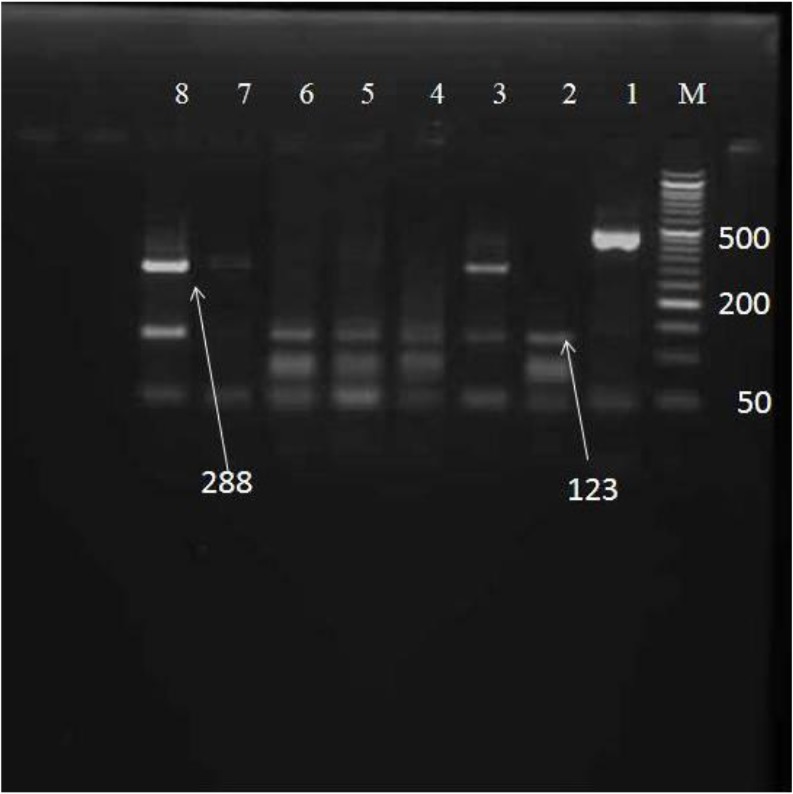
In this cross-sectional study, 3653 stool samples collected from food-handlers that annually refer to health center for getting a health certification and examined microscopically for cyst. Totally, 44 isolates were selected from 47 positive samples. Cysts were partially purified by the sucrose density gradient method. After freeze-thaw cycles, genomic DNA was extracted using QIAamp Stool Mini kit. A single step PCR-RFLP method was used to amplify a 458bp fragment at the glutamate dehydrogenase ) locus, restriction enzymes and were used for distinguish between genotypes A and B and their subgroups.
Of 44 isolates, 24(54.5%) were sub-assemblage AII, 9(20.5%) group B including 7(15.9%) BIII and 2(4.6%) BIV sub-assemblage and 11(25%) isolates showed a mixed pattern of AII and B. Sub-assemblage AI was not detected in this study.
The higher rate of sub-assemblage AII demonstrated an anthroponotic origin of the infection so infected food-handlers could directly transmit this protozoan to consumers via contaminated food and water. For finding of pattern of transmission and distribution of assemblages and sub-assemblage, more studies in human and animal population in different regions are necessary.
基于对人类分离株的基因分型研究;人类主要感染A和B两个组合。本研究旨在确定2015年从伊朗中部卡尚卫生中心送检的食品处理人员中分离出的[寄生虫名称未给出]的亚组合。
在这项横断面研究中,从每年前往卫生中心获取健康证明的食品处理人员中收集了3653份粪便样本,并对其进行显微镜检查以查找[寄生虫名称未给出]囊肿。总共从47份[寄生虫名称未给出]阳性样本中挑选出44个分离株。囊肿通过蔗糖密度梯度法进行部分纯化。经过冻融循环后,使用QIAamp Stool Mini试剂盒提取基因组DNA。采用单步PCR-RFLP方法在谷氨酸脱氢酶()基因座扩增一个458bp的片段,使用限制性内切酶[具体酶名称未给出]和[具体酶名称未给出]来区分A和B基因型及其亚组。
在44个分离株中,24个(54.5%)为AII亚组合,9个(20.5%)为B组,包括7个(15.9%)BIII和2个(4.6%)BIV亚组合,11个(25%)分离株显示出AII和B的混合模式。本研究未检测到AI亚组合。
AII亚组合的较高比例表明该感染为人畜共患起源,因此受感染的食品处理人员可通过受污染的食物和水将这种原生动物直接传播给消费者。为了了解[寄生虫名称未给出]组合和亚组合的传播和分布模式,有必要在不同地区的人类和动物群体中开展更多研究。