Thakur Shabnam, Kaur Upninder, Sehgal Rakesh
Department of Medical Parasitology, Postgraduate Institute of Medical Research and Education, Chandigarh, 160012, India.
BMC Res Notes. 2021 Jan 19;14(1):26. doi: 10.1186/s13104-020-05419-1.
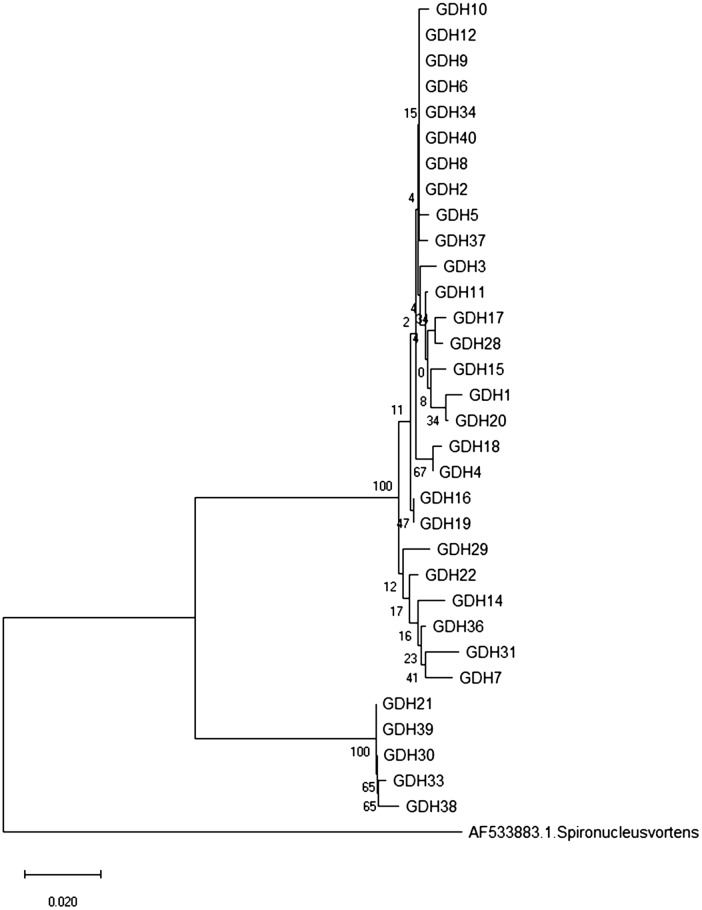
The aim of study was to characterize Giardia isolates genetically among patients in Chandigarh region, India. For this, nested PCR targeting fragment of the glutamate dehydrogenase (GLUD1 earlier named as GDH) gene was used. Phylogenetic analysis was done by constructing neighbor-joining tree made out of the nucleotide sequences of G. intestinalis isolates obtained in this study and with the known sequences published in GenBank.
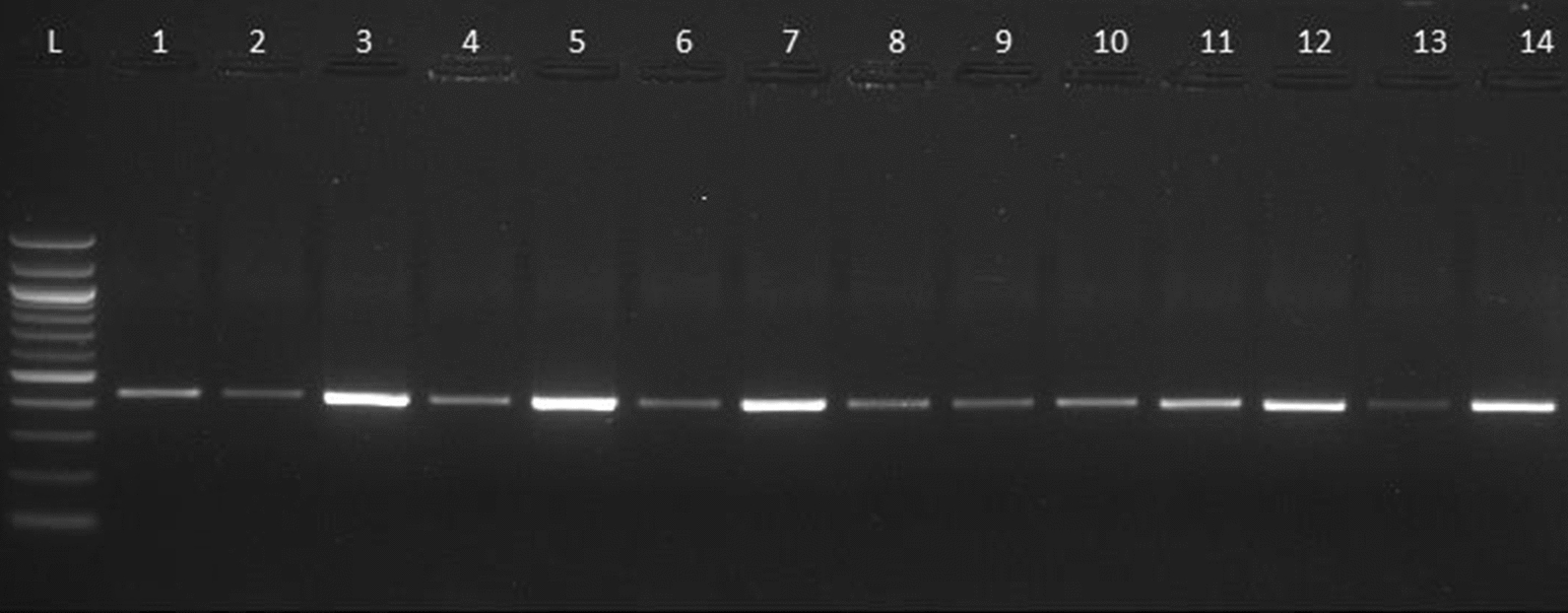
Out of 40 samples, GLUD1 gene was amplified in 33 samples (82.5%). The product of GLUD1 gene was successfully sequenced only in 32 samples. In these samples, assemblage B was found in 27 (84.37%) samples whereas 5 (15.6%) samples had assemblage A. Among assemblage B most of them were of BIII. Therefore, genotyping of Giardia would be helpful in conducting epidemiological studies.
本研究旨在对印度昌迪加尔地区患者中的贾第虫分离株进行基因特征分析。为此,采用了针对谷氨酸脱氢酶(GLUD1,先前称为GDH)基因片段的巢式PCR。通过构建由本研究中获得的肠贾第虫分离株的核苷酸序列以及GenBank中公布的已知序列组成的邻接树进行系统发育分析。
在40个样本中,33个样本(82.5%)扩增出GLUD1基因。仅在32个样本中成功对GLUD1基因产物进行了测序。在这些样本中,27个(84.37%)样本为B群,而5个(15.6%)样本为A群。在B群中,大多数为BIII型。因此,贾第虫的基因分型有助于开展流行病学研究。