Shires Morgan E, Florez Sergio L, Lai Tina S, Curtis Wayne R
Department of Chemical Engineering, The Pennsylvania State University, University Park, PA, 16802-4400, USA.
Biotechnol Lett. 2017 Nov;39(11):1747-1755. doi: 10.1007/s10529-017-2404-4. Epub 2017 Jul 31.
To carry out mass propagation of superior plants to improve agricultural and silvicultural production though advancements in plant cell totipotency, or the ability of differentiated somatic plant cells to regenerate an entire plant.
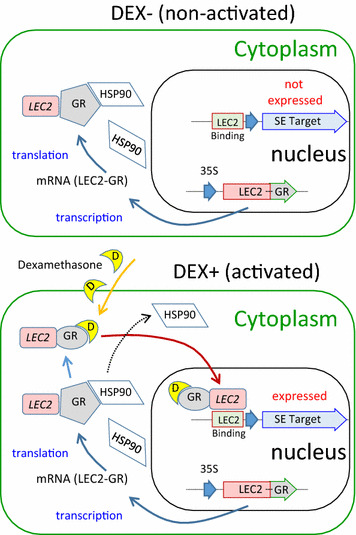
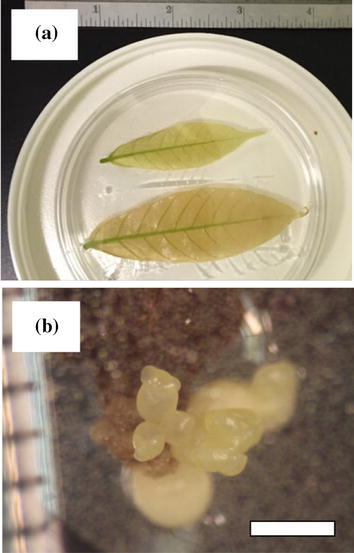
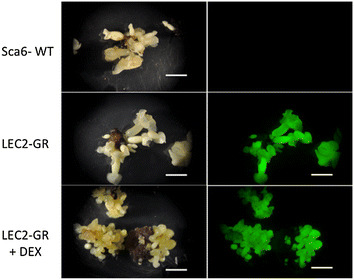
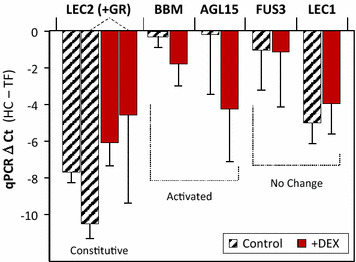
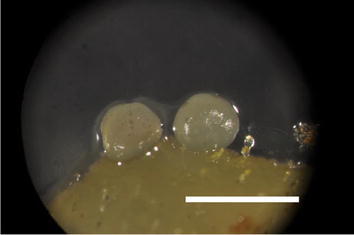
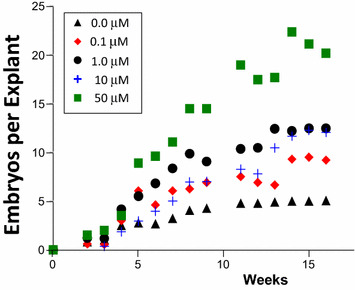
The first demonstration of a titratable control over somatic embryo formation in a commercially relevant plant, Theobroma cacao (Chocolate tree), was achieved using a dexamethasone activatable chimeric transcription factor. This four-fold enhancement in embryo production rate utilized a glucocorticoid receptor fused to an embryogenic transcription factor LEAFY COTYLEDON 2. Where previous T. cacao somatic embryogenesis has been restricted to dissected flower parts, this construct confers an unprecedented embryogenic potential to leaves.
Activatable chimeric transcription factors provide a means for elucidating the regulatory cascade associated with plant somatic embryogenesis towards improving its use for somatic regeneration of transgenics and plant propagation.
通过植物细胞全能性(即分化的体细胞植物细胞再生出完整植株的能力)的进展,开展优良植物的大规模繁殖,以提高农业和林业产量。
使用地塞米松可激活的嵌合转录因子,首次在商业相关植物可可树(巧克力树)中实现了对体细胞胚胎形成的可滴定控制。胚胎生产率提高了四倍,利用了与胚胎发生转录因子LEAFY COTYLEDON 2融合的糖皮质激素受体。以往可可树体细胞胚胎发生仅限于解剖的花部,而这种构建体赋予了叶片前所未有的胚胎发生潜力。
可激活的嵌合转录因子为阐明与植物体细胞胚胎发生相关的调控级联提供了一种手段,以改善其在转基因体细胞再生和植物繁殖中的应用。