From the Office of Device Evaluation.
Office of Science and Engineering Laboratories.
Anesth Analg. 2018 Jun;126(6):1916-1925. doi: 10.1213/ANE.0000000000002329.
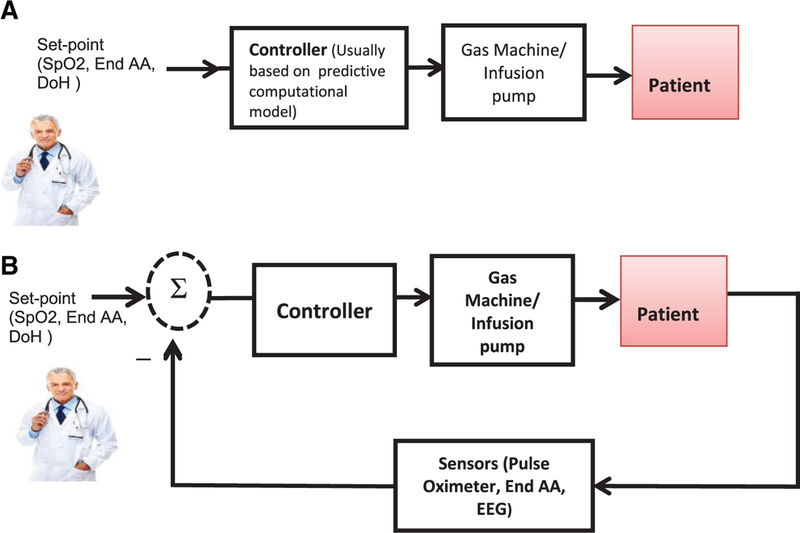
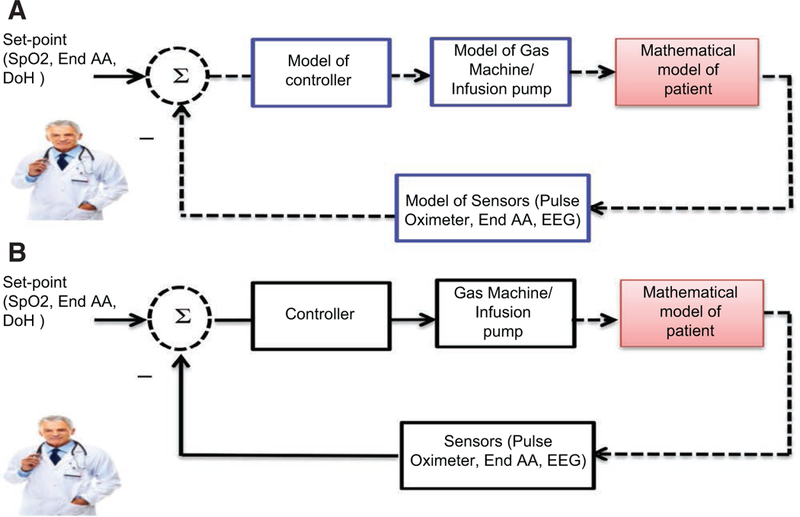
Part of the mission of the Center for Devices and Radiological Health (CDRH) at the US Food and Drug Administration is to facilitate medical device innovation. Therefore, CDRH plays an important role in helping its stakeholders such as manufacturers, health care professionals, patients, patient advocates, academia, and other government agencies navigate the regulatory landscape for medical devices. This is particularly important for innovative physiological closed-loop controlled (PCLC) devices used in critical care environments, such as intensive care units, emergency settings, and battlefield environments. CDRH's current working definition of a PCLC medical device is a medical device that incorporates physiological sensor(s) for automatic manipulation of a physiological variable through actuation of therapy that is conventionally made by a clinician. These emerging devices enable automatic therapy delivery and may have the potential to revolutionize the standard of care by ensuring adequate and timely therapy delivery with improved performance in high workload and high-stress environments. For emergency response and military applications, automatic PCLC devices may play an important role in reducing cognitive overload, minimizing human error, and enhancing medical care during surge scenarios (ie, events that exceed the capability of the normal medical infrastructure). CDRH held an open public workshop on October 13 and 14, 2015 with the aim of fostering an open discussion on design, implementation, and evaluation considerations associated with PCLC devices used in critical care environments. CDRH is currently developing regulatory recommendations and guidelines that will facilitate innovation for PCLC devices. This article highlights the contents of the white paper that was central to the workshop and focuses on the ensuing discussions regarding the engineering, clinical, and human factors considerations.
美国食品和药物管理局设备和放射健康中心(CDRH)的部分使命是促进医疗器械创新。因此,CDRH 在帮助其利益相关者(如制造商、医疗保健专业人员、患者、患者权益倡导者、学术界和其他政府机构)了解医疗器械监管环境方面发挥着重要作用。这对于在重症监护环境(如重症监护病房、急诊环境和战场环境)中使用的创新生理闭环控制(PCLC)设备尤为重要。CDRH 目前对 PCLC 医疗器械的定义是,一种通过对生理变量进行自动操作来整合生理传感器的医疗器械,从而实现治疗的自动传递,而这种治疗通常是由临床医生进行的。这些新兴设备能够实现自动治疗输送,并且有可能通过确保在高工作量和高压力环境中提供充足和及时的治疗来改变护理标准。对于应急响应和军事应用,自动 PCLC 设备在减轻认知负担、最大限度地减少人为错误和增强应急情况下的医疗护理方面可能发挥重要作用(即在超过正常医疗基础设施能力的情况下发生的事件)。CDRH 于 2015 年 10 月 13 日和 14 日举行了公开公众研讨会,旨在就重症监护环境中使用的 PCLC 设备的设计、实施和评估注意事项进行公开讨论。CDRH 目前正在制定监管建议和指南,以促进 PCLC 设备的创新。本文重点介绍了研讨会核心的白皮书内容,并重点讨论了随后关于工程、临床和人为因素考虑的讨论。