Martinez-Useros Javier, Georgiev-Hristov Tihomir, Fernández-Aceñero María Jesús, Borrero-Palacios Aurea, Indacochea Alberto, Guerrero Santiago, Li Weiyao, Cebrián Arancha, Gómez Del Pulgar Teresa, Puime-Otin Alberto, Del Puerto-Nevado Laura, Rodríguez-Remírez María, Pérez Nuria, Celdrán Angel, Gebauer Fátima, Garcia-Foncillas Jesus
Translational Oncology Division, OncoHealth Institute, University Hospital Fundacion Jimenez Diaz (FJD), Madrid, Spain.
Surgery Department, Hospital de Villalba, Collado-Villalba, Spain.
PLoS One. 2017 Aug 1;12(8):e0182044. doi: 10.1371/journal.pone.0182044. eCollection 2017.
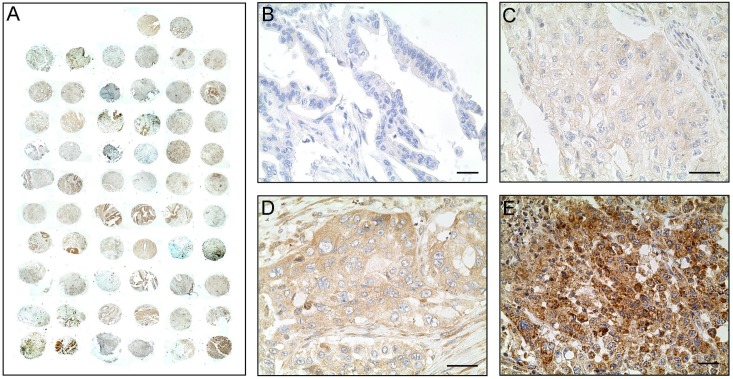
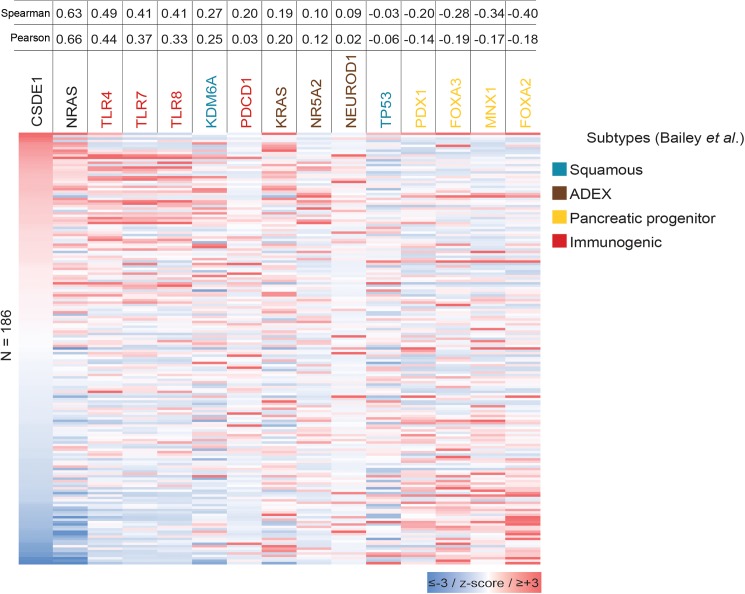
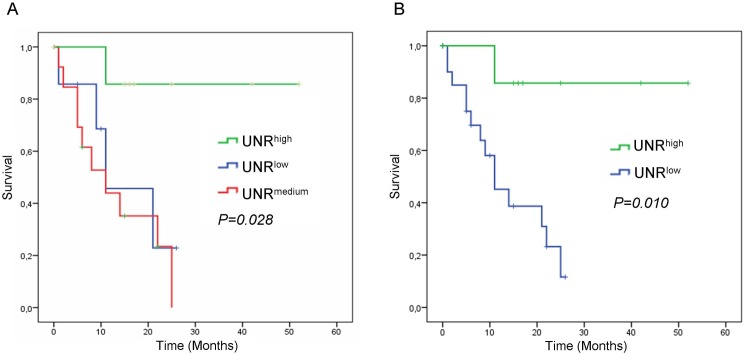
Pancreatic ductal adenocarcinoma is an aggressive form of pancreatic cancer and the fourth leading cause of cancer-related death. When possible, curative approaches are based on surgical resection, though not every patient is a candidate for surgery. There are clinical guidelines for the management of these patients that offer different treatment options depending on the clinical and pathologic characteristics. However, the survival rates seen in this kind of patients are still low. The CDSE1 gene is located upstream of NRAS and encodes an RNA-binding protein termed UNR. The aim of this study was to analyze UNR expression and its correlation with outcome in patients with resectable pancreatic ductal adenocarcinoma (PDAC). For this, samples from resectable PDAC patients who underwent duodenopancreatectomy were used to evaluate UNR protein expression by immunohistochemistry using a tissue microarray. Here, we observed that low UNR expression was significantly associated with shorter progression-free survival after surgery (P = 0.010). Moreover, this prognostic marker remained significant after Cox proportional hazards model (P = 0.036). We further studied the role of CDSE1 expression in patient's prognosis using data from public repositories (GEO and TGCA), confirming our results. Interestingly, CDSE1 expression correlated with that of genes characteristic of an immunogenic molecular subtype of pancreatic cancer. Based on these findings, UNR may be considered a potential prognostic biomarker for resectable PDAC and may serve to guide subsequent adjuvant treatment decisions.
胰腺导管腺癌是胰腺癌的一种侵袭性形式,是癌症相关死亡的第四大主要原因。若有可能,治愈性方法基于手术切除,不过并非每位患者都适合手术。对于这些患者的管理有临床指南,会根据临床和病理特征提供不同的治疗选择。然而,这类患者的生存率仍然很低。CDSE1基因位于NRAS上游,编码一种名为UNR的RNA结合蛋白。本研究的目的是分析可切除胰腺导管腺癌(PDAC)患者中UNR的表达及其与预后的相关性。为此,使用组织微阵列通过免疫组织化学法对接受十二指肠胰切除术的可切除PDAC患者的样本进行评估,以检测UNR蛋白表达。在此,我们观察到低UNR表达与术后无进展生存期较短显著相关(P = 0.010)。此外,在Cox比例风险模型分析后,该预后标志物仍具有显著性(P = 0.036)。我们使用来自公共数据库(GEO和TGCA)的数据进一步研究了CDSE1表达在患者预后中的作用,证实了我们的结果。有趣的是,CDSE1表达与胰腺癌免疫原性分子亚型特征基因的表达相关。基于这些发现,UNR可被视为可切除PDAC的潜在预后生物标志物,并可能有助于指导后续辅助治疗决策。