Wu Qiuyue, Zhang Jing, Zhu Peiran, Jiang Weijun, Liu Shuaimei, Ni Mengxia, Zhang Mingchao, Li Weiwei, Zhou Qing, Cui Yingxia, Xia Xinyi
Institute of Laboratory Medicine, Jinling Hospital, Nanjing University School of Medicine, Nanjing, 210002, People's Republic of China.
BMC Med Genet. 2017 Aug 1;18(1):81. doi: 10.1186/s12881-017-0441-4.
Male infertility is a complex disorder caused by genetic, developmental, endocrine, or environmental factors as well as unknown etiology. Polymorphisms in the follicle stimulating hormone beta subunit (FSHB) (rs10835638, c.-211G > T) and follicle stimulating hormone receptor (FSHR) (rs1394205, c.-29G > A; rs6165, c.919A > G; rs6166, c.2039 A > G) genes might disturb normal spermatogenesis and affect male reproductive ability.
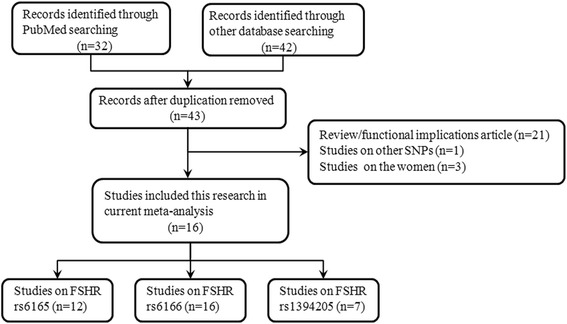
To further ascertain the aforementioned effects, we conducted a case-control study of 255 infertile men and 340 fertile controls from South China using the Mass ARRAY method, which was analyzed by the t-tests and logistic regression analysis using SPSS for Windows 14.0. In addition, a meta-analysis was performed by combining our results with previous reports using STATA 12.0.
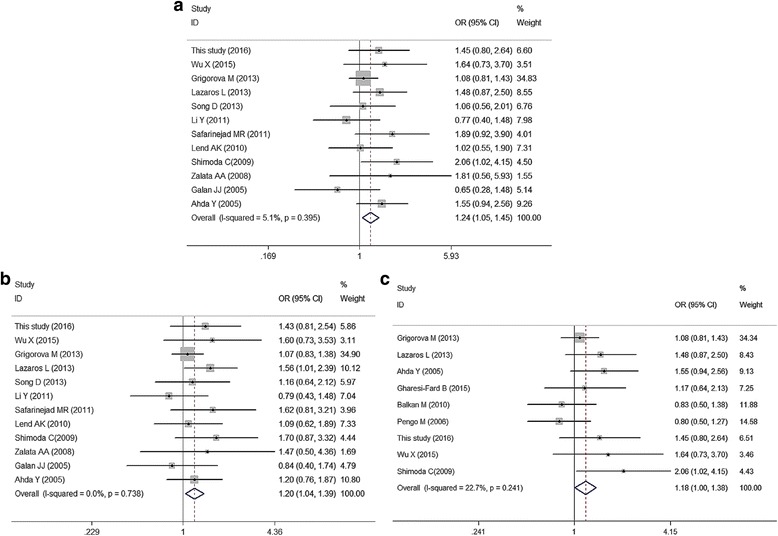
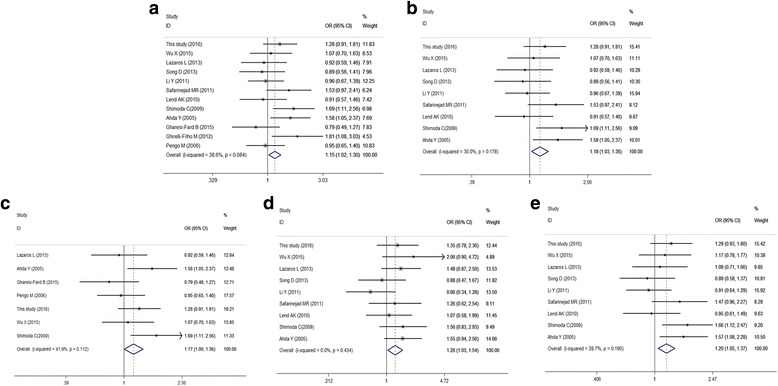
In the FSHB or FSHR gene single nucleotide polymorphism (SNP) evaluation, no statistically-significant difference was found in the frequency of allelic variants or in genotype distribution between cases and controls. However, a significant association for the comparison of GAA (P: 0.022, OR: 0.63, 95%CI: 0.43-0.94) was seen between the oligozoospermia and controls in haplotype analysis of rs1394205/rs6165/rs6166. In the meta-analysis, rs6165G allele and rs6166 GG genotype were associated with increased risk of the male infertility.
This study suggested that FSHR GAA haplotype would exert protective effects against male sterility, which indicated that the combination of three SNP genotypes of FSHR was predicted to have a much stronger impact than either one alone. Then in the meta-analysis, a significant association was seen between FSHR rs6165, rs6166 polymorphisms and male infertility. In terms of male infertility with multifactorial etiology, further studies with larger sample sizes and different ethnic backgrounds or other risk factors are warranted to clarify the potential role of FSHB and FSHR polymorphisms in the pathogenesis of male infertility.
男性不育是一种由遗传、发育、内分泌或环境因素以及不明病因引起的复杂疾病。促卵泡生成素β亚基(FSHB)基因(rs10835638,c.-211G>T)和促卵泡生成素受体(FSHR)基因(rs1394205,c.-29G>A;rs6165,c.919A>G;rs6166,c.2039A>G)中的多态性可能会干扰正常的精子发生并影响男性生殖能力。
为了进一步确定上述影响,我们使用MassARRAY方法对来自中国南方的255名不育男性和340名生育力正常的对照进行了病例对照研究,并使用适用于Windows 14.0的SPSS软件通过t检验和逻辑回归分析进行分析。此外,使用STATA 12.0将我们的结果与先前的报告相结合进行了荟萃分析。
在FSHB或FSHR基因单核苷酸多态性(SNP)评估中,病例组和对照组之间在等位基因变体频率或基因型分布方面未发现统计学上的显著差异。然而,在rs1394205/rs6165/rs6166的单倍型分析中,少精子症患者与对照组之间在GAA比较方面存在显著关联(P:0.022,OR:0.63,95%CI:0.43-0.94)。在荟萃分析中,rs6165G等位基因和rs6166 GG基因型与男性不育风险增加相关。
本研究表明,FSHR GAA单倍型对男性不育具有保护作用,这表明FSHR的三种SNP基因型的组合预计比单独一种具有更强的影响。然后在荟萃分析中,发现FSHR rs6165、rs6166多态性与男性不育之间存在显著关联。对于病因多因素的男性不育,有必要进行更大样本量、不同种族背景或其他风险因素的进一步研究,以阐明FSHB和FSHR多态性在男性不育发病机制中的潜在作用。