Trujillo-Ocampo Abel, Cázares-Raga Febe Elena, Del Angel Rosa María, Medina-Ramírez Fernando, Santos-Argumedo Leopoldo, Rodríguez Mario H, Hernández-Hernández Fidel de la Cruz
Departamento de Infectómica y Patogénesis Molecular, Centro de Investigación y de Estudios Avanzados del Instituto Politécnico Nacional (CINVESTAV-IPN), Ciudad de México, Mexico.
Departamento de Biomedicina Molecular, Centro de Investigación y de Estudios Avanzados del Instituto Politécnico Nacional (CINVESTAV-IPN), Ciudad de México, Mexico.
Parasit Vectors. 2017 Aug 1;10(1):362. doi: 10.1186/s13071-017-2267-5.
Better knowledge of the innate immune system of insects will improve our understanding of mosquitoes as potential vectors of diverse pathogens. The ubiquitously expressed 14-3-3 protein family is evolutionarily conserved from yeast to mammals, and at least two isoforms of 14-3-3, the ε and ζ, have been identified in insects. These proteins have been shown to participate in both humoral and cellular immune responses in Drosophila. As mosquitoes of the genus Aedes are the primary vectors for arboviruses, causing several diseases such as dengue fever, yellow fever, Zika and chikungunya fevers, cell lines derived from these mosquitoes, Aag-2 from Aedes aegypti and C6/36 HT from Aedes albopictus, are currently used to study the insect immune system. Here, we investigated the role of 14-3-3 proteins (ε and ζ isoform) in phagocytosis, the main cellular immune responses executed by the insects, using Aedes spp. cell lines.
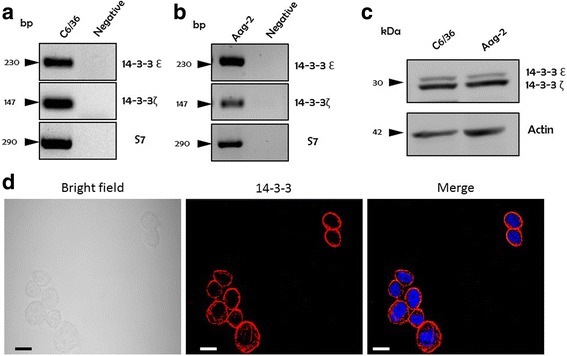
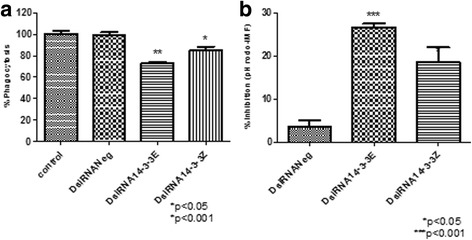
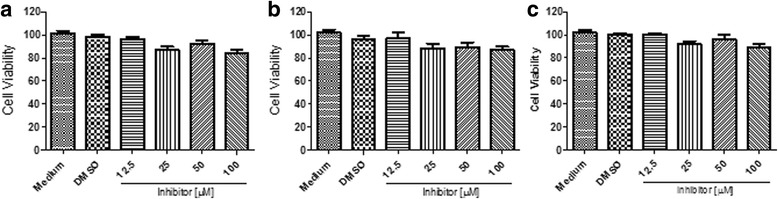
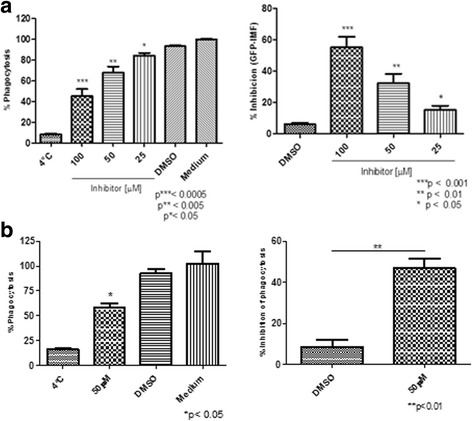
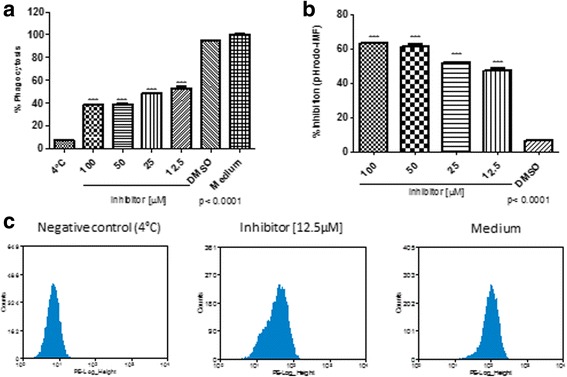
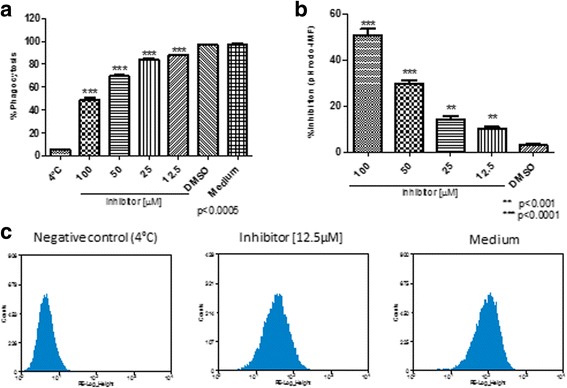
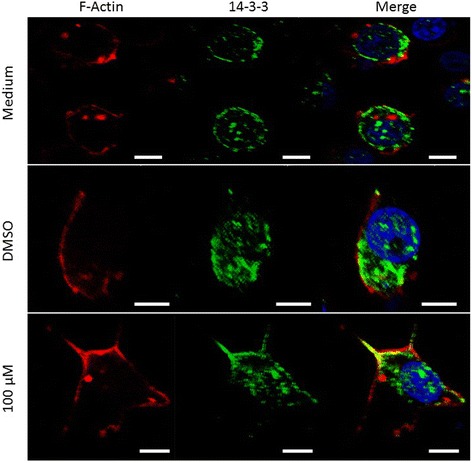
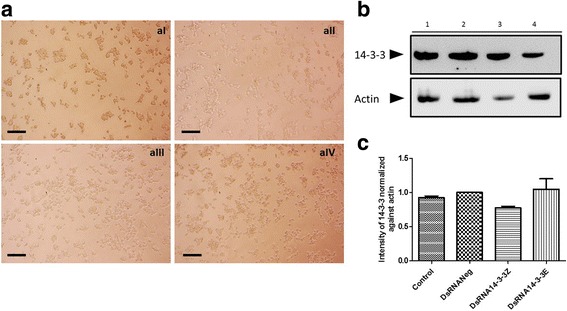
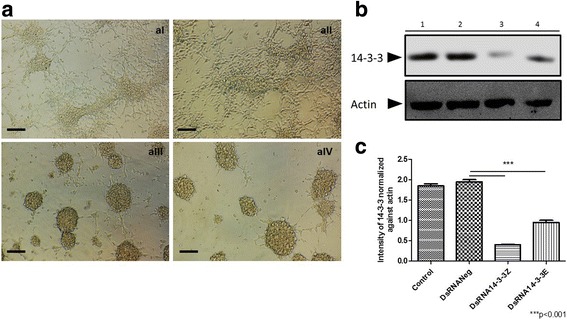
We evaluated the mRNA and protein expression of 14-3-3ε and 14-3-3ζ in C6/36 HT and Aag-2 cells, and demonstrated that both proteins were localised in the cytoplasm. Further, in C6/36 HT cells treated with a 14-3-3 specific inhibitor we observed a notable modification of cell morphology with filopodia-like structure caused through cytoskeleton reorganisation (co-localization of 14-3-3 proteins with F-actin), more importantly the decrease in Salmonella typhimurium, Staphylococcus aureus and E. coli phagocytosis and reduction in phagolysosome formation. Additionally, silencing of 14-3-3ε and 14-3-3ζ expression by mean of specific DsiRNA confirmed the decreased phagocytosis and phagolysosome formation of pHrodo labelled E. coli and S. aureus bacteria by Aag-2 cells.
The 14-3-3ε and 14-3-3ζ proteins modulate cytoskeletal remodelling, and are essential for phagocytosis of Gram-positive and Gram-negative bacteria in Aedes spp. cell lines.
深入了解昆虫的先天免疫系统将增进我们对蚊子作为多种病原体潜在传播媒介的认识。普遍表达的14-3-3蛋白家族在从酵母到哺乳动物的进化过程中是保守的,并且在昆虫中已鉴定出至少两种14-3-3亚型,即ε和ζ。这些蛋白质已被证明参与果蝇的体液免疫和细胞免疫反应。由于伊蚊属蚊子是虫媒病毒的主要传播媒介,可导致多种疾病,如登革热、黄热病、寨卡和基孔肯雅热,源自这些蚊子的细胞系,即埃及伊蚊的Aag-2细胞系和白纹伊蚊的C6/36 HT细胞系,目前被用于研究昆虫免疫系统。在此,我们利用伊蚊属细胞系研究了14-3-3蛋白(ε和ζ亚型)在吞噬作用中的作用,吞噬作用是昆虫执行的主要细胞免疫反应。
我们评估了C6/36 HT和Aag-2细胞中14-3-3ε和14-3-3ζ的mRNA和蛋白表达,并证明这两种蛋白都定位于细胞质中。此外,在用14-3-3特异性抑制剂处理的C6/36 HT细胞中,我们观察到细胞形态发生了显著改变,出现了由细胞骨架重组引起的丝状伪足样结构(14-3-3蛋白与F-肌动蛋白共定位),更重要的是,鼠伤寒沙门氏菌、金黄色葡萄球菌和大肠杆菌的吞噬作用降低,吞噬溶酶体形成减少。此外,通过特异性DsiRNA沉默14-3-3ε和14-3-3ζ的表达,证实了Aag-2细胞对pHrodo标记的大肠杆菌和金黄色葡萄球菌细菌的吞噬作用和吞噬溶酶体形成减少。
14-3-3ε和14-3-3ζ蛋白调节细胞骨架重塑,对伊蚊属细胞系中革兰氏阳性和革兰氏阴性细菌的吞噬作用至关重要。